TAP Series Food Handler Course
Food Safety in Schools: Cafeteria Compliance and Allergen Safety
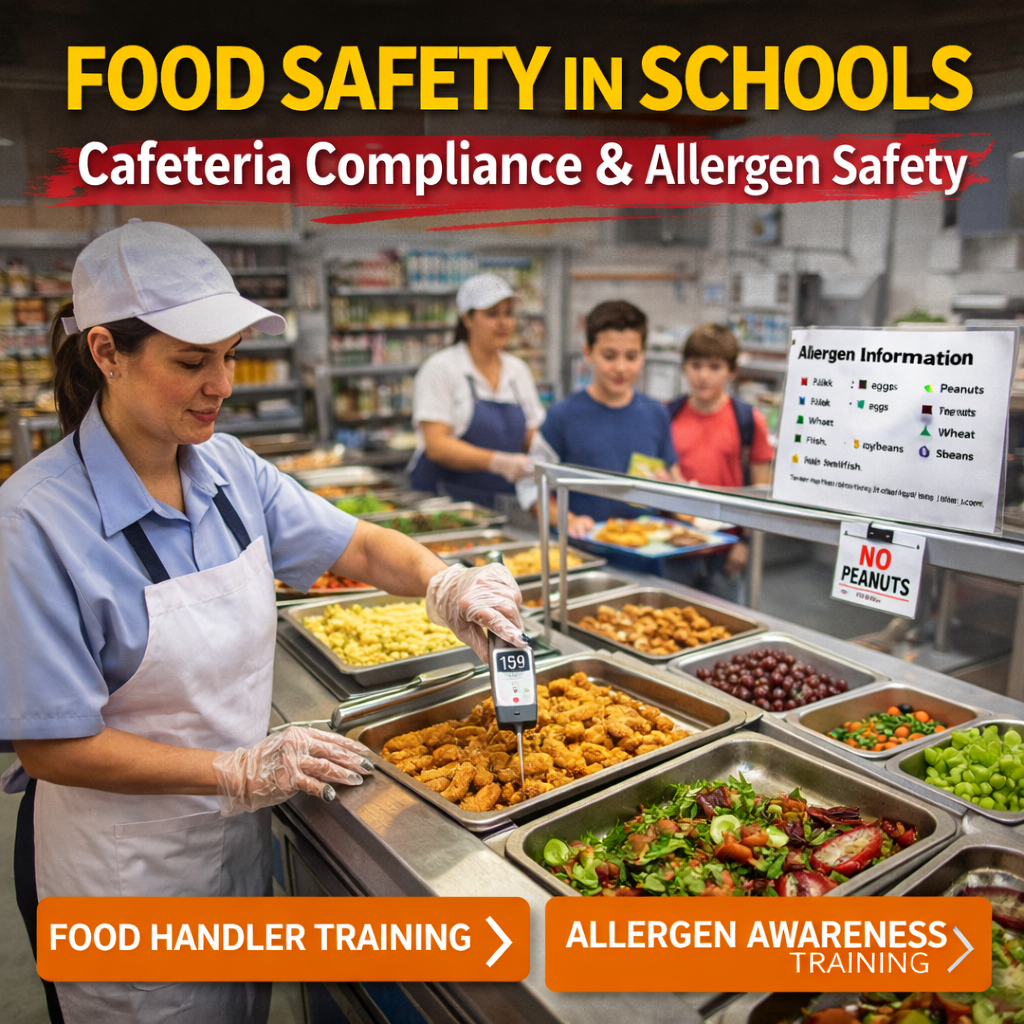
Food safety in schools is more than a regulatory requirement. It is a daily responsibility that directly impacts student health, district liability, and community trust. Across the United States, school cafeterias serve millions of meals each day. Every tray represents an obligation to maintain strict compliance standards and protect students from foodborne illness and allergen exposure.
For school districts and education organizations, cafeteria compliance and allergen safety must be treated as operational priorities.
Why Cafeteria Compliance Matters
School nutrition programs operate under federal, state, and local health regulations. Inspections evaluate whether food is handled, stored, and prepared according to established safety standards.
Common compliance risks in school cafeterias include:
- Improper time and temperature control
- Inadequate handwashing practices
- Cross contamination during prep
- Poor cleaning and sanitizing procedures
- Incomplete documentation or monitoring logs
Noncompliance can lead to:
- Health inspection violations
- Loss of program funding
- Parental complaints
- Legal exposure
- Damage to district reputation
Strong training programs reduce these risks significantly.
The Critical Role of Time and Temperature Control
Micro-organisms thrive when food is held in unsafe temperature ranges. Cafeteria staff must understand how time and temperature directly affect foodborne illness risk.
Key safety priorities include:
- Proper thermometer calibration and use
- Monitoring hot and cold holding temperatures
- Rapid cooling procedures
- Safe receiving and storage practices
Without consistent monitoring, even well prepared food can become hazardous.
Personal Hygiene and Contamination Prevention
Food safety begins with employee behavior.
Effective cafeteria programs reinforce:
- Proper handwashing techniques
- Illness reporting policies
- Safe glove use
- Clean uniforms and workspaces
- Separation of raw and ready to eat foods
Clear policies combined with ongoing education create accountability at every stage of food handling.
Allergen Safety in School Cafeterias
Food allergies are a growing concern in U.S. schools. Even minimal cross contact can trigger severe allergic reactions.
Cafeteria teams must be trained to:
- Identify key food allergens
- Assess cross contact risks during preparation and service
- Implement separation and labeling procedures
- Communicate clearly with school staff and students
- Recognize early signs of allergic reactions
Failure to manage allergens properly can lead to medical emergencies and significant legal consequences.
Food Handler Training for School Nutrition Teams
TAP Series offers comprehensive Food Handler Training designed to equip cafeteria staff with essential food safety skills.
Participants learn to:
- Understand the relationship between time, temperature, and foodborne illness
- Prevent contamination at every stage of food handling
- Apply effective cleaning and sanitizing procedures
- Identify temperature control challenges and implement solutions
- Strengthen personal hygiene practices
Upon completion, staff receive certification that reflects their commitment to food safety compliance.
Allergen Awareness Training for Education Settings
TAP Series also provides Allergen Awareness Training to strengthen allergen management in school environments.
This course helps staff:
- Identify major food allergens
- Mitigate cross contact risks
- Communicate allergen information clearly
- Detect early signs of allergic reactions
- Respond appropriately to protect student safety
When allergen protocols are clearly defined and consistently followed, schools reduce emergency incidents and liability exposure.
Building a Culture of Cafeteria Compliance
School administrators can strengthen food safety by:
- Requiring certification for cafeteria staff
- Conducting internal audits before inspections
- Reinforcing documentation and monitoring procedures
- Encouraging open communication about allergen concerns
- Providing regular refresher training
Compliance should not rely on inspection day preparation. It must be embedded into daily operations.
Protecting Students Through Proactive Food Safety
School cafeterias serve one of the most vulnerable populations. Students rely on districts to provide safe meals every day.
Investing in structured training programs such as Food Handler and Allergen Awareness ensures consistent compliance, reduces health risks, and protects educational institutions from avoidable legal exposure.
Strong school food safety programs safeguard student health, maintain regulatory compliance, and reinforce community confidence in the education system.