TAP Series Allergen And Choke Saving Course
Employee Errors in Grocery: Small Deli Mistakes That Create Violations
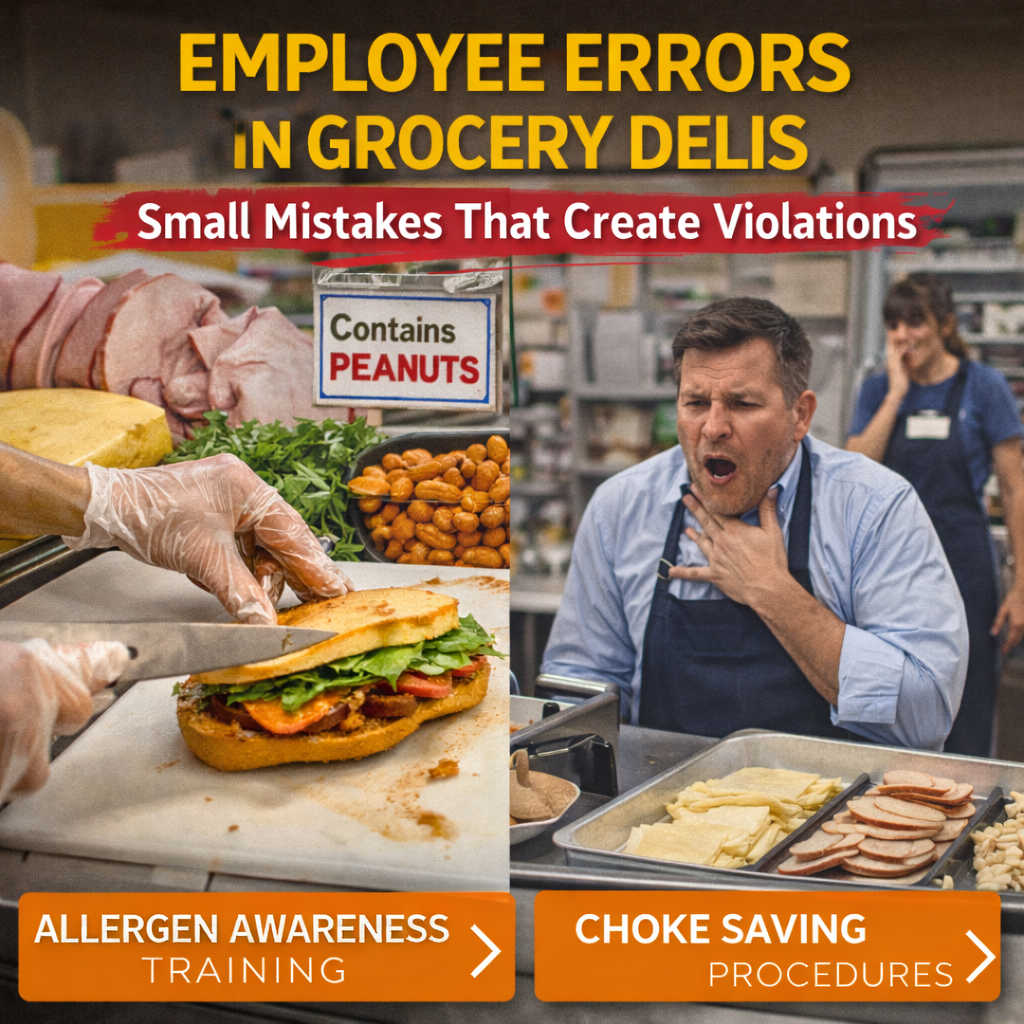
Employee errors in the grocery industry often begin with small, routine deli tasks. A rushed sandwich order, a shared cutting board, or a mislabeled container can quickly turn into a health inspection violation. In busy grocery delis across the United States, minor lapses in attention can expose stores to citations, lawsuits, and serious customer health risks.
Small mistakes are rarely intentional. They are usually the result of inconsistent training and unclear procedures. The impact, however, can be significant.
Common Deli Mistakes That Lead to Violations
Grocery delis operate in fast paced environments where food safety must remain constant. The most common violations often stem from everyday habits.
1. Allergen Cross Contact
- Using the same slicer for allergen free and allergen containing products
- Reusing gloves between tasks
- Storing allergen ingredients next to ready to eat items
2. Improper Labeling
- Missing allergen declarations
- Inaccurate ingredient lists
- Failure to update labels after recipe changes
3. Inadequate Communication
- Failing to confirm allergen requests with the kitchen
- Misunderstanding special orders
- Lack of documentation for allergen sensitive customers
4. Unsafe Food Handling
- Poor handwashing practices
- Inconsistent cleaning and sanitizing
- Improper storage of prepared foods
Each of these errors can trigger inspection findings and, in some cases, serious health emergencies.
When Allergen Mistakes Become Legal Problems
Food allergies are a growing concern in retail food environments. Even trace amounts of allergens can cause severe reactions.
If a customer experiences an allergic reaction due to cross contact or misinformation, grocery stores may face:
- Medical expense claims
- Civil lawsuits
- Health department investigations
- Increased regulatory scrutiny
- Reputational damage
Training is often the first factor examined during legal review. Stores that cannot demonstrate structured allergen education face greater liability risk.
TAP Series provides Allergen Awareness Training to help grocery teams identify and manage allergen risks effectively.
Employees learn to:
- Identify key food allergens
- Assess cross contact risks in deli operations
- Implement practical mitigation strategies
- Communicate allergen information clearly
- Recognize early signs of allergic reactions
Structured allergen training reduces violations and protects both customers and employees.
Choking Hazards in Deli Environments
Prepared foods, sliced meats, and grab and go items also present choking risks. Grocery staff must be prepared to respond quickly if an emergency occurs.
Common risk factors include:
- Large or improperly cut food pieces
- Inadequate supervision in seating areas
- Delayed response to choking symptoms
Without proper response training, valuable seconds can be lost.
TAP Series offers Choke Saving Procedures Training to equip employees with life saving response skills.
Participants learn to:
- Recognize signs and symptoms of choking
- Identify potential choking hazards
- Apply step by step response procedures
- Perform Heimlich Maneuver techniques
- Administer CPR when necessary
Being prepared to respond confidently can prevent tragic outcomes and reduce organizational liability.
Strengthening Deli Compliance Through Training
To reduce violations and emergency incidents, grocery operators should focus on:
1. Standardized Allergen Protocols
Clear separation, labeling, and cleaning procedures for allergen control.
2. Visible Communication Systems
Ticket alerts and confirmation steps for special orders.
3. Routine Sanitation Audits
Regular checks of slicers, prep tables, and storage areas.
4. Emergency Response Preparedness
Ensure all deli staff understand choking response steps.
5. Ongoing Refresher Training
Reinforce safety expectations regularly rather than relying on one time instruction.
When leadership prioritizes education and accountability, small mistakes become far less frequent.
Preventing Violations Before They Happen
In grocery delis, minor oversights can quickly escalate into citations or medical emergencies. Proactive training ensures employees understand both the risks and the correct procedures.
By implementing Allergen Awareness and Choke Saving Procedures training, U.S. grocery companies strengthen compliance, protect customer safety, and reduce exposure to avoidable violations.
Small improvements in daily deli operations create safer stores, stronger inspection outcomes, and greater confidence for both employees and customers.