TAP Series Alcohol Server Training
Alcohol Liability in Restaurants: Understanding Legal Exposure from Alcohol Service
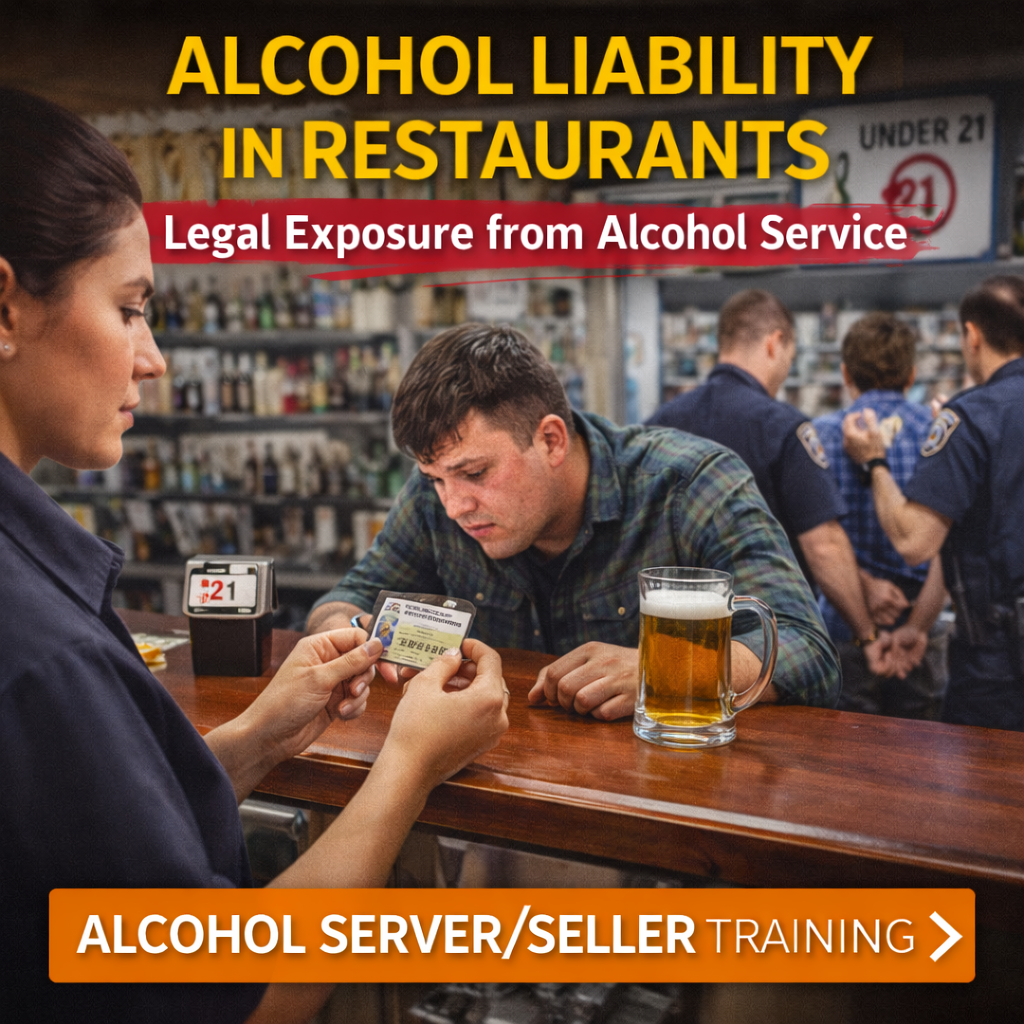
Alcohol liability in the restaurant industry presents significant legal exposure for U.S. operators. Serving alcohol increases revenue potential, but it also increases risk. When service decisions are mishandled, the consequences can extend far beyond the dining room.
From overservice to improper age verification, alcohol related incidents can result in lawsuits, license suspension, and criminal penalties. Responsible alcohol service is not optional. It is a legal obligation.
How Alcohol Service Creates Legal Risk
Restaurants that serve beer, wine, or spirits assume responsibility under state dram shop laws and other regulations. Legal exposure typically arises in several common scenarios.
1. Serving Underage Guests
- Failure to verify identification
- Accepting invalid or tampered IDs
- Inconsistent age verification procedures
2. Overservice of Intoxicated Patrons
- Ignoring visible signs of impairment
- Continuing service after behavioral warning signs
- Lack of communication between staff members
3. Alcohol Related Incidents After Service
- Drunk driving accidents
- Physical altercations
- Property damage
- Injuries to third parties
Courts often examine whether the establishment took reasonable steps to prevent foreseeable harm.
The Financial and Operational Impact
Alcohol liability claims can result in:
- Civil lawsuits for damages
- Criminal charges in severe cases
- Suspension or revocation of liquor licenses
- Increased insurance premiums
- Regulatory fines
- Reputational damage
Even one incident can disrupt operations and damage long term brand trust.
The Responsibility of Alcohol Servers
Every server plays a direct role in minimizing legal exposure. Alcohol service requires more than basic customer interaction skills.
Key responsibilities include:
- Verifying age with valid identification
- Recognizing signs of intoxication
- Refusing service when necessary
- Documenting incidents properly
- Following company policies consistently
Failure to act appropriately can place both the individual employee and the organization at risk.
Why Alcohol Server Training Is Essential
Structured education is one of the strongest defenses against alcohol related liability.
TAP Series offers comprehensive Alcohol Server/Seller Training designed for U.S. restaurant operators.
Participants learn to:
- Practice responsible alcohol service
- Understand recommended signage and its compliance value
- Master age verification procedures
- Identify signs of ID tampering and forgery
- Recognize when to refuse service
- Maintain incident logs effectively
- Understand how alcohol is absorbed and affects behavior
When staff understand both the legal requirements and the science behind alcohol impairment, they are better equipped to make responsible decisions.
Strengthening Compliance Through Policy and Documentation
Training must be reinforced by strong operational controls.
Restaurants should implement:
- Clear alcohol service policies
- Visible signage regarding age restrictions
- Structured incident log procedures
- Manager oversight during peak service hours
- Regular refresher training for staff
Incident logs are particularly important. Documentation demonstrates that the restaurant actively monitors and manages alcohol service risks.
Protecting the Business and the Community
Responsible alcohol service protects more than the establishment. It protects patrons and the broader community.
Proactive training helps reduce:
- Alcohol related accidents
- Violent incidents
- Regulatory investigations
- Costly litigation
For U.S. restaurant companies, investing in Alcohol Server/Seller Training strengthens compliance, reduces liability exposure, and supports safer dining environments.
Legal exposure from alcohol service can be substantial. With structured training and clear accountability, restaurants can manage risk effectively while maintaining responsible beverage programs.