TAP Series Active Shooter Awareness
Violence Preparedness in Education: Building Safer Schools Through Proactive Planning
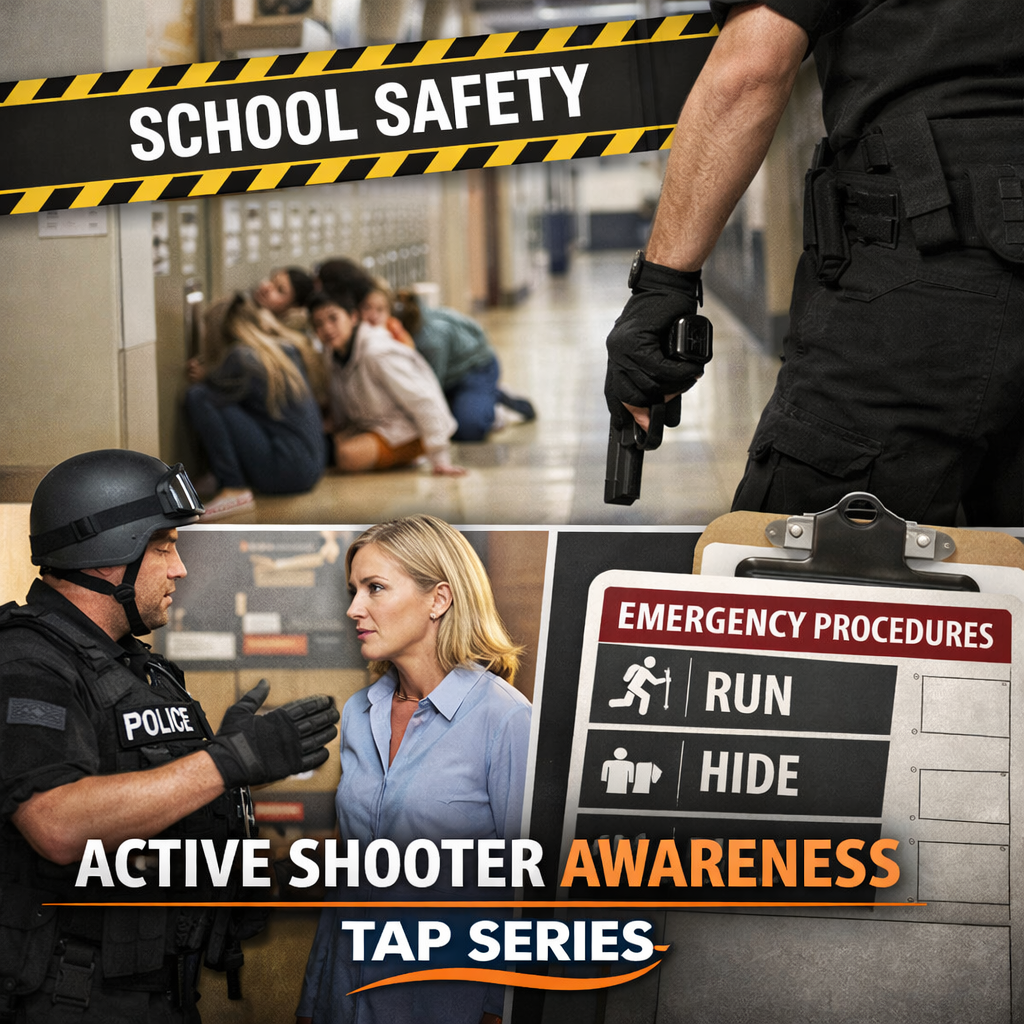
Violence preparedness in the education industry is no longer optional. For school districts, private institutions, charter networks, and higher education campuses across the United States, preparedness planning is now a fundamental responsibility tied directly to student safety, staff well being, and institutional liability.
School leaders are entrusted with more than academic success. They are responsible for creating secure learning environments where students and educators can focus without fear. Preparedness planning provides the structure, clarity, and confidence needed to respond effectively during critical incidents.
Why Preparedness Planning Matters for Schools
Educational institutions face unique challenges:
- Open campuses and multiple access points
- High daily foot traffic including visitors and vendors
- Large gatherings such as assemblies, athletic events, and performances
- Students and staff with varying levels of crisis awareness
Without a clearly defined violence preparedness plan, confusion can escalate quickly. Delayed decisions, unclear communication, and untrained staff can increase risk and liability exposure.
Proactive planning:
- Reduces response time during emergencies
- Minimizes panic and misinformation
- Improves coordination with local law enforcement
- Protects institutional reputation
- Demonstrates due diligence in risk management
Preparedness is not about fear. It is about responsibility.
What Effective School Violence Preparedness Looks Like
A strong preparedness framework goes beyond lockdown drills. It integrates prevention, response, and recovery strategies.
1. Threat Recognition and Reporting Systems
Staff and faculty must understand how to identify concerning behaviors and warning signs. Early recognition can prevent escalation.
2. Clear Emergency Action Protocols
Every employee should know what to do during an active threat. This includes lockdown procedures, evacuation protocols, and communication chains.
3. Law Enforcement Coordination
Schools should align response procedures with local authorities to ensure smooth collaboration during a crisis.
4. Post Incident Recovery Planning
Preparedness includes managing the aftermath. Communication with parents, counseling resources, and operational continuity planning are critical.
5. Ongoing Training and Refreshers
Annual training ensures preparedness does not become outdated or forgotten.
Preparedness planning transforms reactive institutions into resilient ones.
The Role of Training in Violence Preparedness
Policies alone do not create safety. Training does.
When administrators, teachers, and support staff understand the realities of workplace violence and active shooter scenarios, they gain the confidence to act decisively.
The Active Shooter Awareness course by TAP Series equips education professionals with practical knowledge that strengthens school preparedness planning.
Learn more about the course here:
Active Shooter Awareness | Tap Series®
What the Active Shooter Awareness Course Covers
This comprehensive program helps school employees:
- Identify and Describe an Active Shooter
Recognize potential threats and understand common characteristics. - Spot Workplace Violence Indicators
Detect warning signs early and report concerns appropriately. - Take Swift Action During an Active Shooter Situation
Apply life saving strategies in high pressure scenarios. - Interact Effectively with Law Enforcement
Understand how to respond when officers arrive on scene. - Prevent and Prepare for Potential Incidents
Strengthen proactive planning and internal coordination. - Manage Post Incident Consequences
Address operational and emotional impacts following a crisis.
For school districts and education companies across the U.S., this training supports compliance initiatives, strengthens risk management strategies, and reinforces a culture of accountability.
Supporting Administrators and School Boards
School boards and administrators are increasingly evaluated on how well they protect their communities. Inadequate preparation can lead to:
- Legal liability
- Reputational damage
- Loss of community trust
- Increased insurance scrutiny
Investing in structured safety training demonstrates leadership. It shows parents, regulators, and employees that the institution prioritizes prevention and preparedness.
Preparedness planning is also scalable. Districts can deploy consistent training across multiple campuses, ensuring alignment in procedures and response standards.
Creating a Culture of Awareness, Not Fear
Violence preparedness does not create anxiety. It creates clarity.
When educators understand their roles during an emergency, uncertainty decreases. When staff recognize warning signs, intervention becomes possible. When response plans are practiced and reinforced, execution improves.
Preparedness planning fosters:
- Confidence
- Coordination
- Consistency
- Community trust
Schools are meant to be safe spaces for growth and learning. Structured training and clear protocols protect that mission.
Strengthen Your School’s Preparedness Strategy
For U.S. education organizations seeking a practical and accessible training solution, TAP Series offers a structured way to support faculty and staff.
Explore the Active Shooter Awareness course today:
Active Shooter Awareness | Tap Series®
Prepared schools are resilient schools. By prioritizing training and proactive planning, education leaders can reinforce safety standards, reduce risk exposure, and build stronger response systems through comprehensive school safety training.