Workplace Safety Training For Retail Employees
Customer Conflict in Retail: Protecting Staff Through De-Escalation Awareness
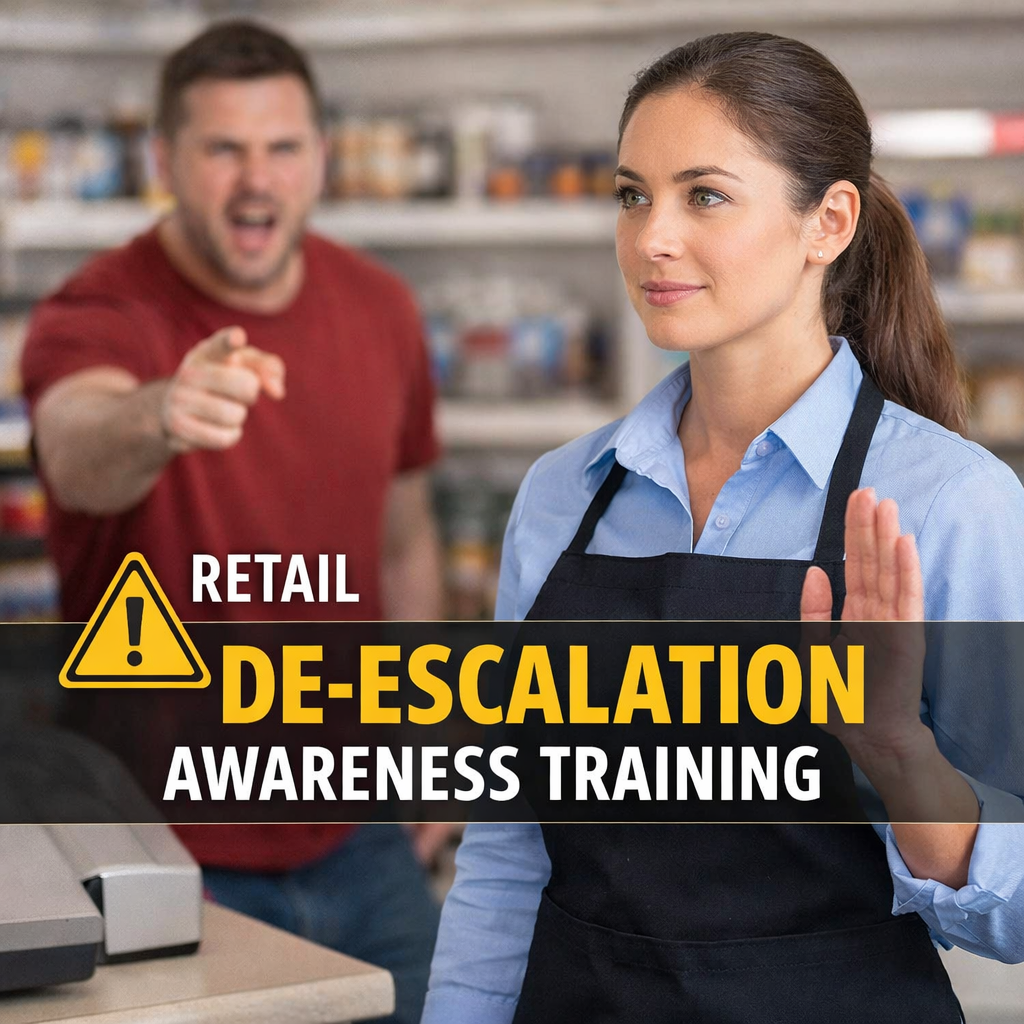
Retail businesses interact with hundreds or even thousands of customers each week. While most interactions are positive, situations can arise where emotions escalate quickly. Frustrated customers, long wait times, product shortages, or policy disagreements can turn a simple conversation into a tense confrontation.
Customer conflict in retail environments is more than a service issue. It is a workplace safety concern. Retail staff are often the first and only employees present when these situations occur. Without proper training, employees may feel unprepared to respond effectively.
Developing strong de-escalation skills allows retail teams to manage difficult encounters calmly, reduce risks, and maintain a safe environment for both staff and customers.
Why Customer Conflict Happens in Retail Settings
Retail environments are fast paced and customer focused, which can sometimes lead to misunderstandings or frustration. Common triggers include:
- Product availability issues when items are out of stock
- Return and refund policies that customers disagree with
- Long wait times at checkout or service counters
- Pricing disputes or promotions that are misunderstood
- Customer stress or personal frustrations carried into the store
Employees on the sales floor often face these situations directly. When tension increases, the risk of verbal aggression or unsafe behavior rises. Retail workers who understand how to recognize warning signs and respond appropriately are better equipped to keep situations under control.
The Safety Risks of Escalating Customer Interactions
Customer conflicts can escalate quickly if not handled correctly. What begins as a complaint may become a heated argument or threatening behavior.
Retail employees may face:
- Verbal abuse or intimidation
- Threatening body language
- Aggressive or disruptive behavior
- Unsafe confrontations near exits, counters, or crowds
Without proper preparation, employees may react emotionally or unintentionally worsen the situation. This can increase safety risks for staff, customers, and managers.
Training staff to recognize escalation signals early helps prevent conflicts from reaching dangerous levels.
Key De-Escalation Skills Retail Staff Should Develop
De-escalation is not about winning an argument with a customer. It is about reducing tension and guiding the interaction toward a safe resolution.
Retail employees benefit from learning several essential skills.
Empathy
Understanding a customer's emotions helps employees respond calmly and respectfully. When customers feel heard, they are more likely to cooperate.
Active Listening
Listening without interruption allows staff to identify the real concern behind a complaint. Simple techniques like paraphrasing and acknowledging concerns can lower tension.
Clear Communication
Employees should use calm language, steady tone, and respectful body language to keep interactions professional.
Emotional Regulation
Retail staff must manage their own stress and avoid reacting defensively. Maintaining composure is critical during difficult encounters.
Situational Awareness
Recognizing warning signs such as raised voices, aggressive gestures, or crowd attention allows employees to respond early and safely.
Creating Safer Retail Environments Through Training
Retail safety improves when de-escalation becomes part of everyday operations. Training programs help employees build confidence when facing challenging customer situations.
The Retail De-Escalation Awareness Training course from TAP Series equips retail staff with the practical tools they need to manage conflicts safely.
Course Highlights
- Empathy Development
Employees learn how to understand customer emotions and perspectives. - Active Listening Techniques
Training teaches methods to fully understand customer concerns before responding. - Effective De-escalation Strategies
Staff learn techniques to calm tense interactions and prevent conflicts from escalating. - Communication Skills
Participants strengthen both verbal and nonverbal communication skills. - Emotional Regulation Skills
Employees learn how to stay calm and professional in stressful situations. - Risk Awareness and Crisis Response
Training includes recognizing warning signs and responding appropriately to potential safety threats.
Retail organizations can learn more about the course here:
Retail De-Escalation Awareness Training | Tap Series®
Course Topics That Strengthen Retail Conflict Management
The training program provides structured lessons designed for real retail environments.
Topics include:
- The Need for De-escalation Awareness Training
- Conflict Prevention
- Communication Skills
- Emotional Regulation
- Crisis Intervention
- Understanding Behavior
- Cultural Sensitivity
- Risk Assessment
- Team Collaboration
- Legal and Ethical Considerations
These lessons help employees recognize early signs of conflict and apply proven techniques to reduce tension.
Measuring Employee Progress and Training Success
Effective training programs also allow organizations to monitor progress and ensure employees fully understand the material.
The course includes:
- Progress tracking for each employee
- Reports that analyze training performance
- Real time updates on participation and completion
- Interactive assessments that reinforce learning
Participants must achieve a minimum score of 70 percent to demonstrate understanding of the material. Immediate feedback helps employees strengthen their knowledge and apply it in real situations.
Supporting Retail Staff Safety and Customer Experience
Retail employees play a critical role in maintaining a safe and welcoming shopping environment. When staff members feel confident handling difficult customer interactions, both safety and service quality improve.
Training programs that focus on de-escalation awareness help organizations protect their employees while also improving the customer experience.
Investing in structured learning such as Retail De-Escalation Awareness Training allows retail teams to respond to conflict calmly, professionally, and safely. Businesses that prioritize this type of training build stronger teams and safer workplaces for everyone involved.