Food Allergy Compliance Restaurants
When a Simple Ingredient Becomes a Legal Risk for Restaurants
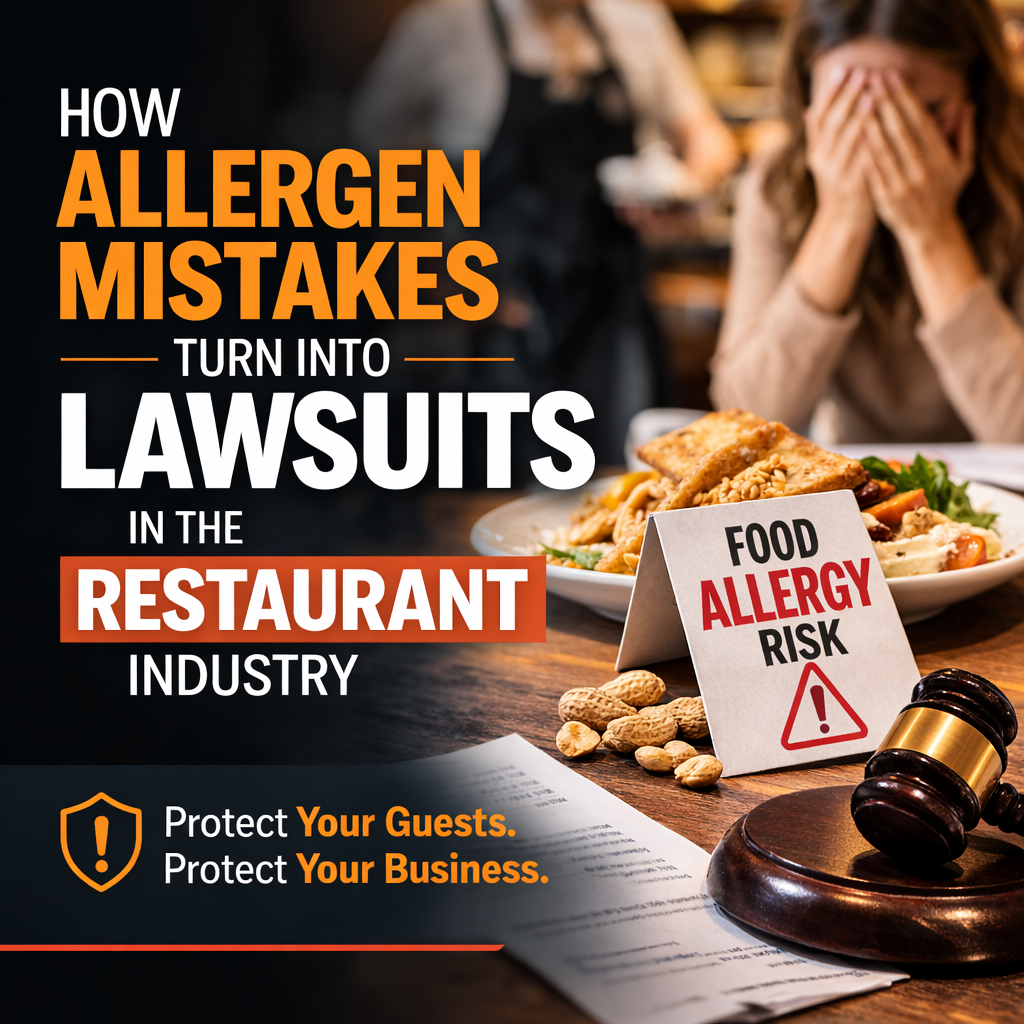
Food allergies are not a minor inconvenience for many diners. For millions of Americans, a single ingredient mistake can trigger a severe allergic reaction that requires emergency medical care. When that happens inside a restaurant, the situation can quickly shift from a customer service issue to a serious legal claim.
Across the United States, allergen-related lawsuits against restaurants are increasing. Many of these cases start with a simple operational mistake such as a server misunderstanding a request, a cook overlooking an ingredient, or cross-contact occurring in the kitchen.
For restaurant operators, allergen awareness is no longer optional. It is a critical part of food safety, risk management, and customer trust.
Why Allergen Incidents Quickly Turn Into Lawsuits
Food allergy cases often lead to legal action because the consequences can be life threatening. When a restaurant serves a customer food containing an allergen after the customer clearly disclosed their allergy, it can be interpreted as negligence.
Several factors make allergen incidents particularly risky:
1. Severe medical consequences
- Allergic reactions can escalate quickly
- Some reactions lead to hospitalization or anaphylaxis
- Medical expenses and damages often become part of legal claims
2. Documented communication
- Customers often inform staff of their allergies before ordering
- Written orders, POS notes, or witness statements may become evidence
3. Preventable operational errors
Many lawsuits highlight avoidable mistakes such as:
- Serving the wrong dish
- Failing to verify ingredients
- Cross-contact during food preparation
- Miscommunication between servers and kitchen staff
When these failures occur, courts often view them as preventable through proper training and procedures.
Common Restaurant Mistakes That Lead to Allergen Claims
Most allergen lawsuits stem from breakdowns in routine restaurant operations rather than intentional wrongdoing. However, small gaps in procedures can create serious risk.
Common examples include:
1. Menu knowledge gaps
Staff members may not fully understand which ingredients contain allergens. This can lead to incorrect assurances given to customers.
2. Cross-contact in the kitchen
Even when a dish does not contain an allergen ingredient, cross-contact can occur through:
- Shared cooking surfaces
- Fryers used for multiple foods
- Utensils or cutting boards
- Improper cleaning between orders
3. Poor communication between front and back of house
A server may take note of an allergy but fail to clearly communicate it to the kitchen. In busy service periods, that detail can easily be overlooked.
4. Lack of clear procedures
Without standardized processes for handling allergen orders, staff may rely on memory or assumptions rather than following safety protocols.
The Growing Importance of Allergen Awareness in U.S. Restaurants
The United States recognizes nine major food allergens responsible for the majority of allergic reactions:
- Milk
- Eggs
- Fish
- Shellfish
- Tree nuts
- Peanuts
- Wheat
- Soy
- Sesame
Restaurants must be able to identify these allergens and manage them responsibly within daily operations. This includes ingredient awareness, cross-contact prevention, and effective communication with customers.
Failure to manage these risks can lead to:
- Customer injuries
- Health department scrutiny
- Negative publicity
- Costly legal claims
For restaurant businesses operating in competitive markets, even one highly publicized allergen incident can damage brand trust.
Training Staff to Prevent Allergen Incidents
One of the most effective ways to reduce allergen-related risk is structured employee training. When staff understand how allergens work and how cross-contact occurs, they are far more likely to follow safe procedures.
The TAP Series Allergen Awareness training course helps restau rants build this knowledge across their teams.
The training provides practical guidance for foodservice employees, including:
- Identifying the nine major food allergens commonly found in restaurant ingredients
- Understanding the difference between allergies and food intolerances
- Recognizing cross-contact risks during preparation, storage, cooking, and service
- Using safe food handling practices to reduce allergen exposure
- Communicating allergen information clearly with customers and coworkers
- Recognizing symptoms of allergic reactions and understanding emergency response procedures
The course aligns with ASTM E2659 training standards and includes a 20 question assessment. Employees who complete the program can immediately download a Certificate of Achievement valid for three years.
Operational Practices That Reduce Allergen Risk
Beyond training, restaurants can implement several operational practices to strengthen allergen safety.
1. Clear allergen communication protocols
- Require servers to document allergen requests clearly
- Confirm allergy orders verbally with the kitchen
- Encourage staff to ask clarifying questions when unsure
2. Dedicated preparation procedures
- Use separate utensils or equipment when possible
- Clean preparation areas thoroughly between allergen orders
- Avoid shared fryers for allergen-sensitive meals
3. Ingredient transparency
- Maintain updated ingredient lists
- Ensure managers can verify allergens in sauces, dressings, and pre made items
4. Staff awareness during busy service
Even during high volume periods, allergen orders should receive special attention. A single oversight can create significant risk.
Protecting Guests and Protecting Your Business
Food allergies affect millions of Americans, and many rely on restaurants to provide safe dining experiences. When restaurants take allergen safety seriously, they protect both their customers and their business.
Investing in staff education and clear operational procedures reduces the likelihood of mistakes that can lead to medical emergencies or legal claims.
Programs such as the Allergen Awareness course from TAP Series help res taurants build a stronger safety culture by ensuring employees understand how allergens work and how to manage them responsibly in daily foodservice operations.
In an industry where trust is essential, allergen awareness training helps restaurants serve every guest with greater confidence and care.