Handling Aggressive Customers Retail
From Theft to Violence: The Growing Risk in Retail Stores
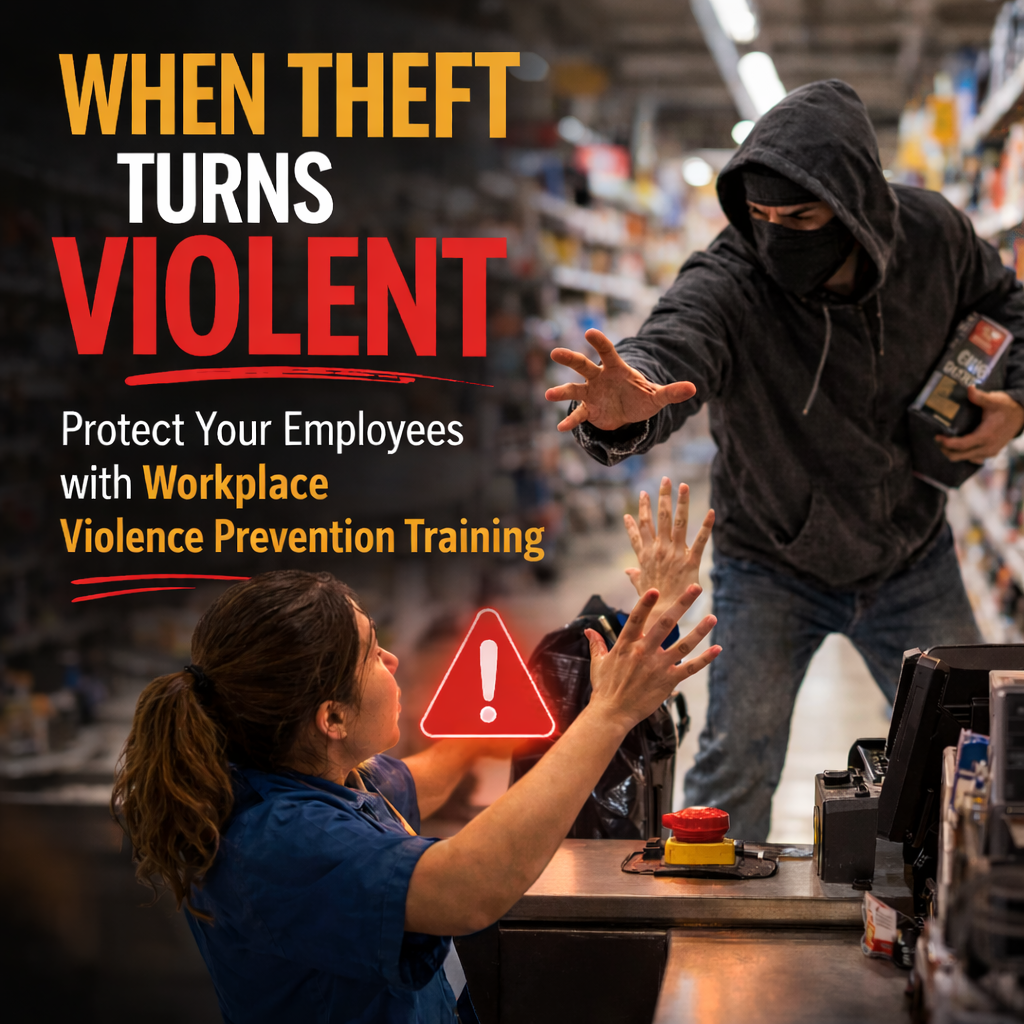
Retail theft has long been a challenge for stores across the United States. However, a growing concern in recent years is how quickly routine shoplifting incidents can escalate into violent confrontations. What may begin as a simple attempt to steal merchandise can suddenly place employees, customers, and managers in dangerous situations.
For retail businesses, theft is no longer just a loss prevention issue. It is increasingly a workplace safety issue. Employees working the sales floor, at registers, or in stockrooms are sometimes placed directly in the path of aggressive individuals who may react unpredictably when confronted.
Understanding how these incidents escalate and how staff should respond is essential for protecting people and maintaining a safe retail environment.
Why Theft Incidents Are Becoming More Dangerous
Retail theft incidents can become volatile for several reasons. Individuals attempting to steal may feel pressured when confronted, especially if they believe they may face consequences. In those moments, emotions can escalate quickly.
Several factors commonly contribute to these situations becoming violent:
1. Confrontation during theft attempts
Employees who attempt to stop suspected shoplifters may unintentionally trigger aggressive reactions. Some individuals respond with verbal threats, intimidation, or physical aggression when challenged.
2. Organized retail crime activity
In some cases, theft is not an isolated act. Organized groups may work together to steal high value items, and they may attempt to overwhelm employees or security personnel.
3. Heightened stress in retail environments
Busy stores, understaffed shifts, and high customer traffic can increase tension. When theft occurs during these periods, employees may feel pressured to intervene without clear guidance.
4. Lack of training on response procedures
Many workers are unsure how to safely handle confrontational situations. Without training, employees may react instinctively rather than following safe response protocols.
How Retail Theft Escalates Into Violence
Retail theft rarely begins as a violent event. Escalation typically happens in stages.
Stage 1: Suspicious behavior
Employees may notice signs such as:
- Concealing merchandise
- Avoiding staff interaction
- Moving quickly between aisles
- Attempting to exit without paying
Stage 2: Confrontation or challenge
A confrontation may occur when:
- An employee questions the individual
- A manager approaches the suspected shoplifter
- Security personnel attempt to intervene
Stage 3: Escalation
At this point, the situation may become dangerous. Individuals may respond with:
- Verbal threats
- Intimidation or aggressive behavior
- Physical pushing or striking
- Display of a weapon
Once a situation reaches this stage, the priority must shift from protecting merchandise to protecting people.
Warning Signs Employees Should Recognize
Recognizing early warning signs can help employees avoid escalating situations.
Common indicators include:
- Raised voices or aggressive tone
- Clenched fists or tense body language
- Refusal to cooperate or follow instructions
- Sudden emotional changes such as anger or panic
Employees who recognize these signals early are more likely to respond in ways that reduce risk.
Training Employees to Respond Safely
Retail workers are often the first to encounter theft related incidents. Without clear guidance, they may feel responsible for stopping the situation themselves, which can increase danger.
The TAP Series Workplace Violence Prevention course helps organizations prepare empl oyees for these situations by teaching practical safety strategies.
This training helps employees understand:
- The definition and types of workplace violence
- Common warning signs and behavioral indicators of potential violence
- Organizational policies and reporting procedures for safety incidents
- Methods for recognizing hazards and mitigating risk within the workplace
- De-escalation techniques during confrontational situations
- Response strategies such as the run, hide, fight protocol for volatile events
The course also addresses the role of managers and supervisors in responding to incidents, maintaining incident logs, and implementing workplace violence prevention plans.
By educating employees about appropriate responses, businesses reduce the likelihood of unsafe confrontations.
Practical Steps Retail Businesses Can Take
Preventing violent incidents related to theft requires a combination of training, policies, and workplace awareness.
Retail organizations can strengthen safety practices through the following actions.
1. Establish clear safety policies
Employees should understand that personal safety takes priority over merchandise recovery.
2. Train staff on de-escalation techniques
Teaching employees how to communicate calmly and avoid confrontation can reduce tension during suspicious situations.
3. Encourage incident reporting
Employees should feel comfortable reporting suspicious behavior, safety concerns, or prior incidents without fear of retaliation.
4. Strengthen store security practices
This may include improved surveillance, visible security presence, and clear procedures for contacting management or law enforcement.
Creating a Safer Retail Workplace
Retail theft may never disappear completely, but the risks associated with it can be reduced through preparation and training. When employees understand how violence develops and how to respond safely, they are far better equipped to protect themselves and others.
Programs such as the Workplace Violence Prevention training from TAP Series help organizations bu ild a safety focused culture by teaching employees how to recognize warning signs, respond to threats, and follow structured response procedures.
In retail environments where public interaction is constant, proactive training plays an essential role in keeping both employees and customers safe when difficult situations arise.