TAP Series Food Safety Training Grocery
Small Deli Mistakes That Create Big Violations in Grocery Stores
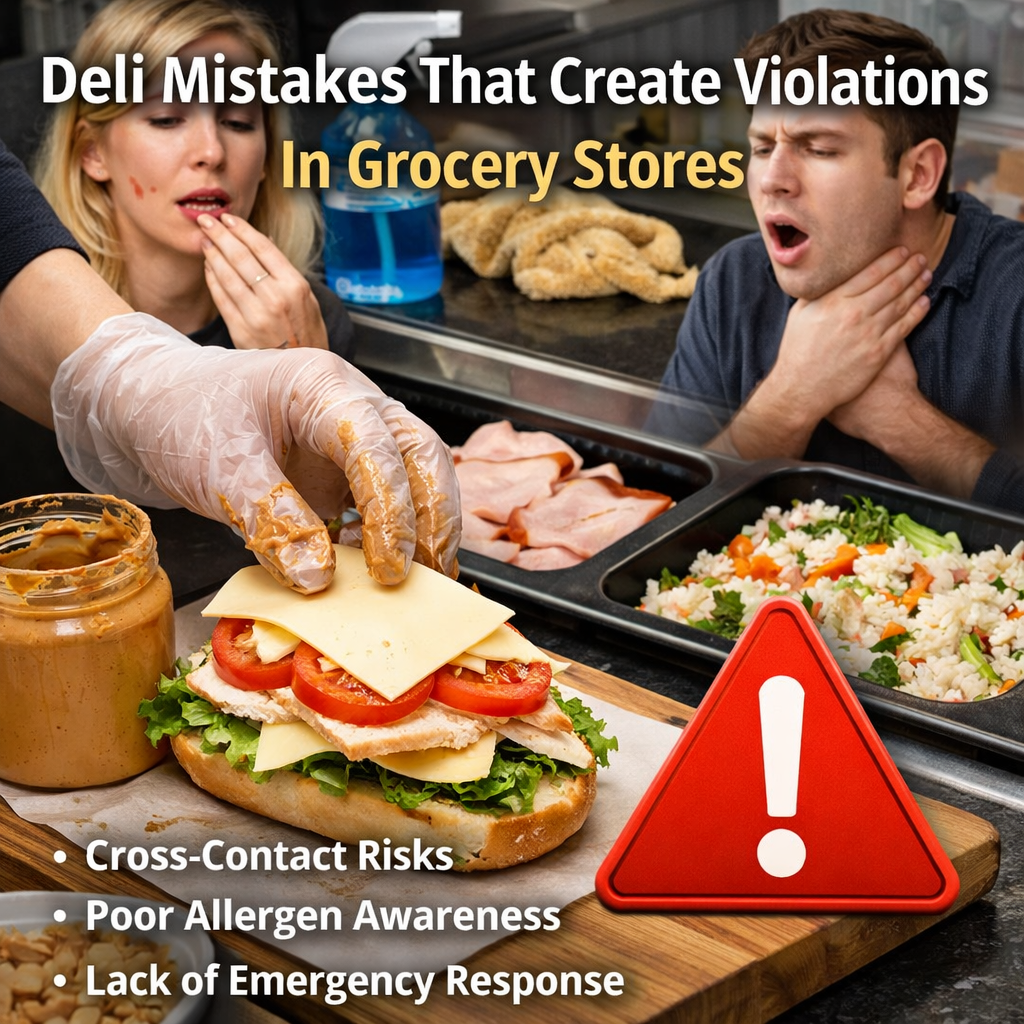
In busy grocery store delis, small employee mistakes often go unnoticed until they turn into serious compliance violations. What seems like a minor shortcut or oversight can quickly lead to food safety risks, failed inspections, and damaged customer trust. For U.S. grocery operations, these errors are not just operational issues, they are regulatory concerns that directly impact safety and reputation.
Why Small Mistakes Matter in Deli Operations
Deli environments involve constant food handling, customer interaction, and fast-paced preparation. This creates multiple opportunities for error.
Even minor mistakes can:
- Trigger health inspection violations
- Cause allergen exposure incidents
- Lead to customer illness or injury
- Result in fines or temporary closures
- Damage brand credibility and customer loyalty
Consistency and awareness are what separate compliant delis from those that repeatedly fail inspections.
Common Employee Errors That Lead to Violations
1. Cross-Contact Between Allergenic Foods
Employees may use the same gloves, utensils, or surfaces for multiple food items without proper cleaning.
Examples:
- Slicing cheese after handling nuts without sanitizing equipment
- Using shared prep areas for allergen and non-allergen foods
Result: Undeclared allergens reaching customers, which is one of the most serious violations.
2. Poor Communication About Ingredients
When staff are unsure about ingredients, they may provide incorrect or incomplete information to customers.
Examples:
- Guessing allergen content instead of verifying
- Failing to notify customers about cross-contact risks
Result: Increased liability and risk of allergic reactions.
3. Improper Cleaning and Sanitizing Practices
Rushed cleaning routines can leave behind contaminants.
Examples:
- Skipping sanitizer steps between tasks
- Reusing dirty cloths across surfaces
Result: Bacterial growth and cross-contamination violations.
4. Inadequate Response to Customer Emergencies
Employees may not know how to respond if a customer begins choking or having a reaction.
Examples:
- Hesitation or panic during emergencies
- Lack of knowledge of proper response techniques
Result: Delayed response, increased harm, and potential legal consequences.
5. Inconsistent Use of Gloves and Handwashing
Basic hygiene lapses are among the most cited violations.
Examples:
- Not changing gloves between tasks
- Skipping handwashing during busy periods
Result: Direct contamination of ready-to-eat foods.
How Training Prevents These Violations
Employee errors are rarely intentional. They are often the result of unclear procedures or lack of training. Structured training ensures that staff understand both the risks and the correct actions to take.
Strengthening Allergen Safety with Proper Training
The Allergen Awareness course helps deli teams build critical knowledge to prevent one of the most dangerous types of violations.
Key skills employees gain:
- Identifying the nine major food allergens
- Understanding how cross-contact occurs in real workflows
- Applying practical prevention methods during prep and service
- Communicating clearly with customers and team members
- Recognizing symptoms of allergic reactions and acting quickly
Learn more here:
Allergen Awareness | Tap Series®
This training equips employees to make safer decisions in everyday deli operations, reducing both risk and liability.
Preparing Staff for Emergency Situations
Even with strong prevention, emergencies can still happen. That is why response training is equally important.
The Choke Saving Procedures course focuses on immediate, life-saving action.
What employees will learn:
- How to recognize choking signs quickly
- Identifying common choking hazards in deli environments
- Step-by-step response actions using proven methods
- Proper use of the Heimlich maneuver in different situations
- Basic CPR knowledge for emergency support
Learn more here:
Choke Saving Procedures Training | Tap Series®
Having trained staff on-site ensures faster response times and a safer environment for customers.
Building a Culture That Prevents Mistakes
Reducing violations is not just about rules. It is about creating a culture where employees understand the impact of their actions.
Best practices for grocery deli teams:
- Reinforce training regularly, not just during onboarding
- Encourage employees to ask questions instead of guessing
- Standardize procedures for cleaning, prep, and communication
- Conduct routine checks during shifts
- Prioritize safety even during peak hours
Conclusion: Small Actions, Big Impact on Compliance
Small deli mistakes may seem insignificant in the moment, but they are often the root cause of major violations in grocery operations. By investing in targeted training and reinforcing daily best practices, grocery stores can reduce risk, improve compliance, and protect their customers. A well-trained team is the strongest defense against preventable errors in food safety operations.