Warehouse Safety Training Programs USA
Reducing Forklift Accidents and Liability Risks
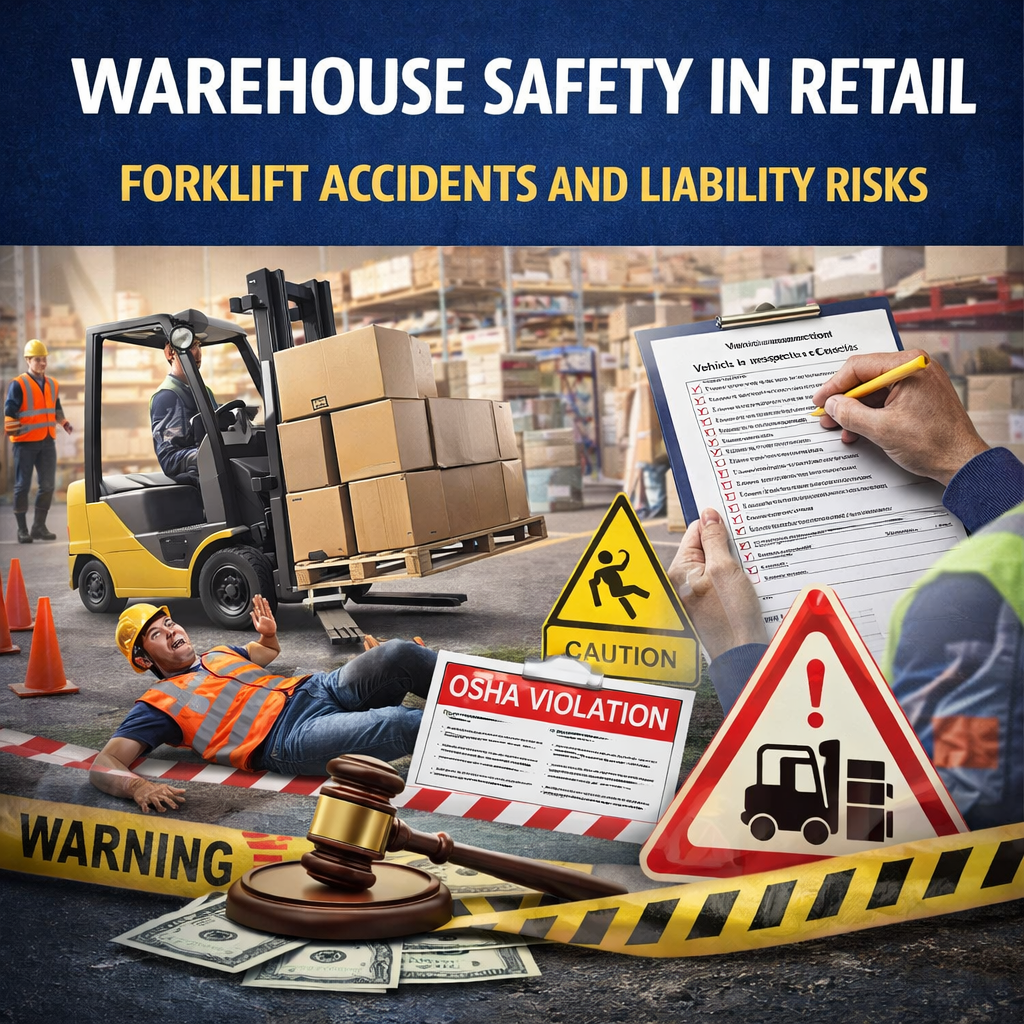
Warehouse safety in retail environments is a critical operational priority, especially when forklifts are involved. Forklift accidents remain one of the leading causes of workplace injuries in warehouses, and the liability often falls on employers who fail to train, supervise, or enforce proper safety protocols.
For retail companies across the United States, preventing forklift-related incidents is not just about compliance. It is about protecting employees, maintaining productivity, and avoiding costly legal exposure.
Why Forklift Accidents Are a Major Liability Risk
Forklifts are essential in retail warehouses, but they also introduce significant risk when not handled properly.
Common causes of forklift accidents include:
- Inadequate operator training
- Poor visibility and blind spots
- Unsafe speeds in busy environments
- Improper loading and unloading practices
- Lack of pedestrian safety controls
When accidents occur, businesses may face:
- Employee injuries or fatalities
- OSHA violations and penalties
- Workers compensation claims
- Operational downtime
- Legal liability and lawsuits
High-Risk Scenarios in Retail Warehouses
Retail warehouse environments are fast-moving and often crowded, increasing the likelihood of incidents.
1. Shared Spaces with Pedestrians
- Employees walking near active forklift zones
- Lack of clearly marked pathways
2. Loading Dock Hazards
- Improper ramp navigation
- Unsecured loads during transport
3. Tight Storage Areas
- Limited maneuvering space
- Increased risk of collisions with racks or inventory
4. Improper Equipment Use
- Operating forklifts without proper inspection
- Using equipment beyond its capacity
How to Reduce Forklift Accidents in Retail Operations
Preventing accidents requires a combination of training, enforcement, and operational discipline.
1. Ensure Proper Operator Training
- Only certified employees should operate forklifts
- Provide refresher training regularly
2. Enforce Daily Equipment Inspections
- Check brakes, controls, and safety features
- Remove unsafe equipment from use immediately
3. Improve Warehouse Layout and Traffic Flow
- Clearly mark forklift lanes and pedestrian zones
- Install warning signs and mirrors in blind spots
4. Implement Safe Loading Practices
- Balance loads properly
- Avoid overloading or unstable stacking
5. Strengthen Pedestrian Safety Measures
- Train employees on awareness in shared spaces
- Use barriers or designated walkways
Training That Reduces Risk and Liability
Forklift safety is not just about operating equipment. It is about understanding risks, following regulations, and maintaining control in dynamic environments.
The Forklift Operator Safety course from TAP Series provides comprehensive training designed for real-world warehouse conditions.
Learn more here:
Forklift Certification Training | Tap Series®
What Employees Learn in Forklift Operator Safety Training
- Safe and confident forklift operation
Understand controls, functions, and proper handling techniques - Hazard identification and prevention
Recognize risks before they lead to accidents - OSHA safety regulations and best practices
Stay compliant with workplace safety standards - Proper loading and unloading procedures
Handle materials safely and efficiently - Navigation in complex environments
Operate safely on ramps, docks, and tight spaces - Daily inspections and maintenance
Ensure equipment is safe before use - Emergency response protocols
Act quickly and effectively during incidents - Pedestrian safety awareness
Reduce risks in shared workspaces
Who Should Take This Training
- Warehouse operators and forklift drivers
- Retail distribution center employees
- Warehouse supervisors and managers
- Safety and compliance officers
Anyone involved in material handling operations should be properly trained.
Build a Safer and More Efficient Warehouse
Forklift accidents are preventable with the right systems, training, and accountability.
Retail organizations that invest in safety:
- Reduce workplace injuries
- Minimize liability risks
- Improve operational efficiency
- Strengthen compliance with safety regulations
Take proactive steps to protect your workforce and your business with forklift safety training for retail warehouses.