Food Safety Certification For Retailers
What Grocery Inspectors Really Look For During Store Inspections
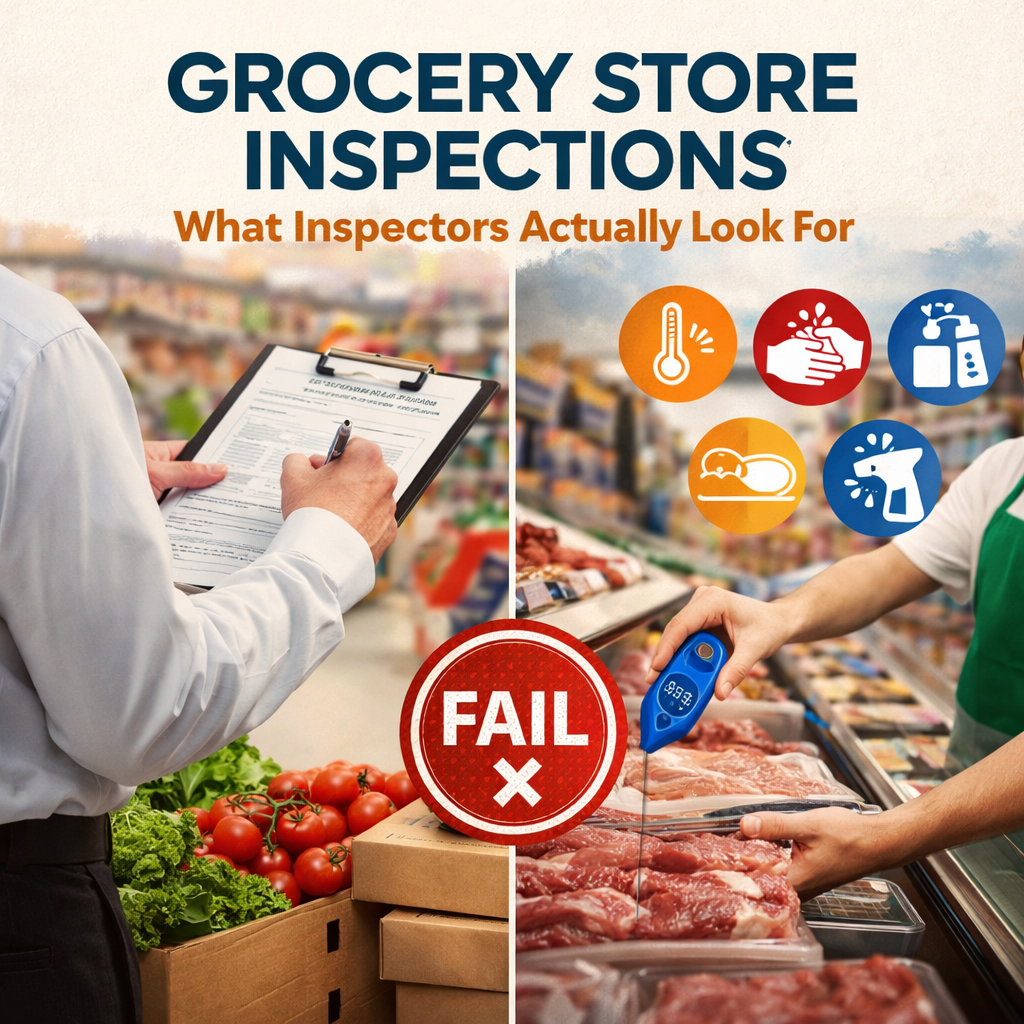
For grocery retailers across the U.S., regulatory inspections are not random or unpredictable. Health inspectors follow structured guidelines that focus on food safety risks that can directly impact public health. Understanding what inspectors actually check is critical to avoiding violations, fines, and reputational damage.
Many stores believe they are compliant until inspection day proves otherwise. The reality is simple. Inspectors are trained to identify specific risk factors that often go unnoticed during daily operations.
The Reality of Grocery Inspections
Inspections are not about catching minor mistakes. They are designed to identify conditions that can lead to foodborne illness.
Inspectors typically focus on:
- High risk food handling practices
- Employee hygiene and behavior
- Temperature control and monitoring
- Cross contamination risks
- Cleaning and sanitation procedures
- Facility maintenance and pest control
Even a single failure in these areas can result in violations or immediate corrective actions.
Top Violations Found in Grocery Stores
Across the industry, the same issues appear repeatedly. These are not isolated problems. They are systemic gaps in training and accountability.
1. Improper Time and Temperature Control
Failure to keep food within safe temperature ranges is one of the most cited violations. This includes improper cooling, reheating, and holding practices.
2. Poor Personal Hygiene Practices
Employees not washing hands properly or working while ill creates serious contamination risks.
3. Cross Contamination
Raw and ready to eat foods stored or handled incorrectly can spread harmful bacteria.
4. Inadequate Cleaning and Sanitizing
Dirty equipment, utensils, and surfaces are immediate red flags during inspections.
5. Lack of Active Managerial Control
When managers fail to enforce food safety systems, risks multiply across operations.
What Inspectors Actually Check Step by Step
To better prepare your team, it helps to understand how inspections typically unfold.
1. Employee Practices
Inspectors observe how staff handle food in real time. This includes handwashing, glove use, and general hygiene.
2. Temperature Logs and Equipment
They verify if thermometers are accurate and if temperature records are properly maintained.
3. Food Storage and Flow
Inspectors check how food is received, stored, thawed, prepared, and served.
4. Cleaning and Sanitation Procedures
They review whether proper cleaning schedules and sanitizing methods are followed.
5. Facility Conditions
This includes pest control, waste management, and overall cleanliness of the environment.
Why Many Grocery Stores Fail Inspections
Failure is rarely due to lack of effort. It is usually caused by inconsistent training and lack of awareness.
Common gaps include:
- Employees unaware of proper food safety procedures
- Managers not enforcing standards consistently
- Lack of documentation and monitoring systems
- Reactive approach instead of proactive prevention
Without structured training, even experienced staff can overlook critical risks.
How Training Helps You Stay Inspection Ready
The most effective way to pass inspections consistently is to build a culture of food safety through training.
Key benefits include:
- Improved employee awareness of food safety risks
- Consistent execution of safe handling practices
- Better compliance with health regulations
- Reduced likelihood of violations and penalties
- Stronger accountability at all levels
Training turns daily routines into inspection ready habits.
Recommended Training for Grocery Teams
To help grocery retailers meet regulatory expectations, TAP Series offers practical, easy to implement training solutions:
- Food Handler Training | Tap Series®
Covers time and temperature control, personal hygiene, contamination prevention, and cleaning procedures. Helps employees understand how their daily actions impact food safety. - Retail Food Safety Manager Certification Training | Tap Series®
Focuses on managerial responsibility, HACCP systems, foodborne illness prevention, and active managerial control. Designed to equip leaders with the tools to enforce compliance and maintain safe operations.
What your team will gain:
- Strong understanding of food safety fundamentals
- Ability to prevent contamination at every stage
- Confidence in handling inspections
- Improved documentation and monitoring practices
- Leadership skills to enforce food safety standards
Conclusion: Inspections Are a Test of Daily Operations
Grocery inspections are not about preparing for a single day. They reflect how your store operates every day. When teams are trained, consistent, and accountable, inspections become routine instead of stressful.
Investing in food safety education ensures your business stays compliant, protects customers, and operates with confidence through grocery compliance training.