Retail Risk Management Workplace Safety
OSHA Violations in Retail Are More Common Than You Think
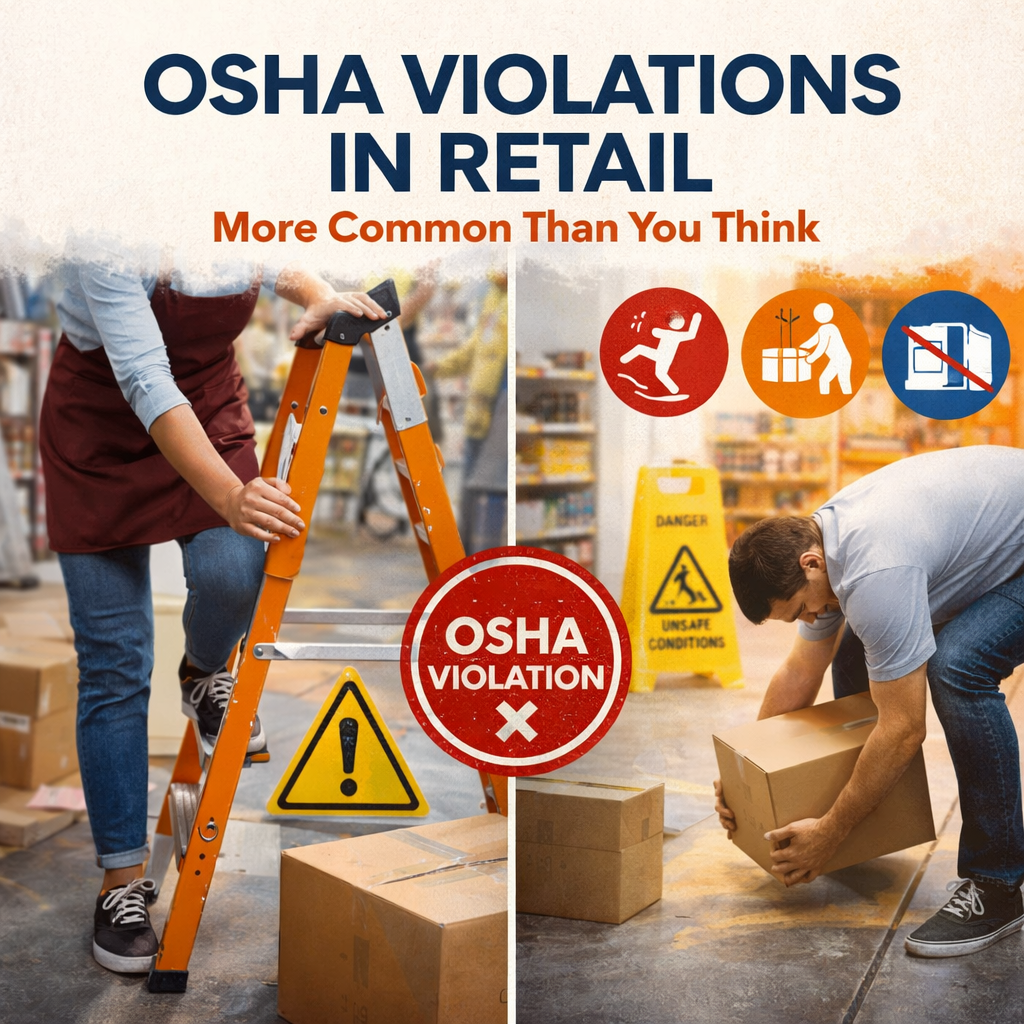
In retail environments across the U.S., OSHA violations are not rare incidents. They happen daily in stockrooms, sales floors, and loading areas. While many businesses focus heavily on customer experience, workplace safety is often overlooked until an incident or inspection brings it to the surface.
Retail operations move fast. Employees juggle multiple tasks, from handling inventory to assisting customers. Without proper safety awareness, this pace creates conditions where violations can easily occur.
The Hidden Risks Inside Retail Operations
Retail spaces may seem low risk compared to construction or manufacturing, but they still present serious hazards.
Common OSHA risks in retail include:
- Slips, trips, and falls on wet or cluttered floors
- Improper lifting and material handling injuries
- Blocked emergency exits or aisles
- Unsafe ladder use during stocking
- Poorly maintained equipment or fixtures
- Inadequate hazard communication
These risks are not just safety concerns. They are compliance issues that inspectors actively look for.
Most Common OSHA Violations in Retail
Certain violations appear repeatedly across retail businesses. These are often tied to gaps in training and oversight.
1. Walking and Working Surface Violations
Wet floors, loose cords, and cluttered aisles are leading causes of workplace injuries.
2. Improper Material Handling
Employees lifting heavy items without proper technique or assistance can lead to serious injuries.
3. Exit Route Obstructions
Blocked exits or poorly marked escape routes are major violations during inspections.
4. Ladder Safety Issues
Using damaged ladders or improper climbing practices increases the risk of falls.
5. Lack of Safety Training
Employees unaware of OSHA standards are more likely to make unsafe decisions.
What OSHA Inspectors Actually Look For
Understanding inspection priorities can help retail teams stay prepared.
Inspectors typically check:
- Clear and accessible emergency exits
- Proper storage and organization of inventory
- Safe use of ladders and equipment
- Employee awareness of safety procedures
- Clean and hazard free walking surfaces
- Documentation of safety training and compliance
Retailers who fail in these areas risk citations, fines, and increased scrutiny.
Why Violations Keep Happening
Most violations are not intentional. They are the result of inconsistent safety practices and lack of awareness.
Common causes include:
- Limited or outdated safety training
- High employee turnover with minimal onboarding
- Pressure to prioritize speed over safety
- Lack of accountability from management
- Absence of routine safety checks
Without a structured approach, safety becomes reactive instead of proactive.
How OSHA Safety Training Reduces Risk
Training is one of the most effective ways to prevent violations and create safer workplaces.
With proper OSHA safety awareness training, teams can:
- Recognize hazards before they cause harm
- Follow correct procedures for lifting, stocking, and equipment use
- Maintain safe and compliant work environments
- Respond effectively to potential risks
- Build a culture of accountability and safety
When employees understand the why behind safety rules, compliance becomes part of daily operations.
Recommended Training for Retail Teams
To help retail businesses meet OSHA standards and reduce workplace risks, TAP Series offers accessible training solutions:
- OSHA Safety Awareness Training
Provides essential knowledge on workplace hazards, safety procedures, and compliance expectations. Designed to help employees identify risks and follow OSHA guidelines in real world retail environments.
What your team will gain:
- Strong understanding of OSHA requirements
- Improved hazard recognition and prevention
- Safer daily operations across all store areas
- Reduced risk of violations and workplace injuries
- Confidence during inspections and audits
Conclusion: Safety Compliance Starts with Awareness
OSHA violations in retail are preventable when safety becomes a priority at every level of the organization. Businesses that invest in training not only reduce risk but also protect their employees and operations.
By strengthening workplace knowledge and accountability, retailers can maintain compliance and operate with confidence through retail safety training programs.