Retail Safety And Security Training
Why De-escalation Skills Protect Staff Safety
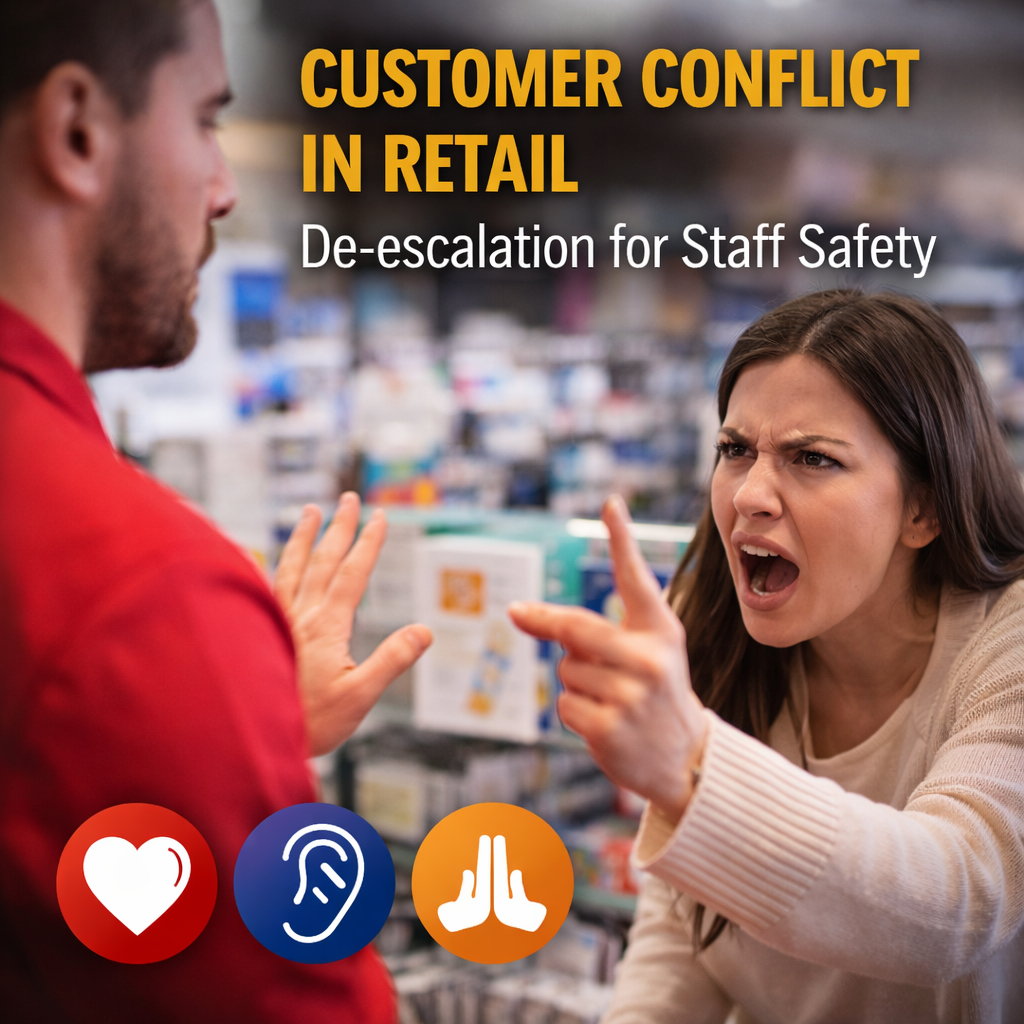
Retail environments are built on customer interaction, but not every interaction is positive. Employees regularly face frustrated, impatient, or upset customers, and in some cases, these situations can escalate into verbal or even physical confrontations.
For retail businesses across the United States, customer conflict is no longer just a service challenge. It is a workplace safety concern. Without proper training, frontline staff may not know how to respond effectively, increasing the risk of escalation and harm.
De-escalation skills help employees manage tension, reduce conflict, and maintain a safer environment for both staff and customers.
Why Customer Conflicts Escalate in Retail Settings
Retail spaces can become high pressure environments, especially during peak hours, sales events, or staffing shortages. When expectations are not met, emotions can rise quickly.
Common triggers of customer conflict include:
- Long wait times at checkout
- Product availability issues
- Refund or return disputes
- Pricing disagreements
- Miscommunication or perceived poor service
When these situations are not handled carefully, they can escalate from frustration to confrontation.
The Risks of Poor Conflict Handling
When employees are not trained to manage difficult interactions, they may respond in ways that unintentionally increase tension.
Potential risks include:
- Verbal arguments escalating into aggressive behavior
- Threats or intimidation toward staff
- Physical altercations
- Negative experiences that impact brand reputation
In these moments, the priority must always be employee safety rather than winning an argument or resolving a transaction.
Key De-escalation Skills Every Retail Employee Needs
De-escalation is not about avoiding conflict entirely. It is about managing situations in a way that reduces intensity and prevents harm.
Effective skills include:
1. Empathy
- Acknowledge the customer’s feelings
- Show understanding without immediately challenging their perspective
2. Active listening
- Focus on what the customer is saying
- Avoid interrupting or dismissing concerns
- Clarify details to ensure accurate understanding
3. Calm communication
- Maintain a steady tone of voice
- Use respectful language even in tense situations
- Avoid defensive or confrontational responses
4. Emotional regulation
- Stay composed under pressure
- Avoid reacting emotionally to aggressive behavior
5. Situational awareness
- Recognize warning signs of escalation
- Know when to involve a manager or security personnel
Training Retail Staff to Handle Conflict Safely
Providing employees with structured training is one of the most effective ways to reduce workplace incidents related to customer conflict.
The Retail De-Escalation Awareness training equips retail teams with practical tools to manage difficult interactions.
This training helps employees:
- Develop empathy and understand customer perspectives
- Apply active listening techniques to resolve concerns
- Use proven de-escalation strategies to reduce tension
- Strengthen verbal and non verbal communication skills
- Regulate emotions during high stress situations
- Recognize warning signs and assess risk levels
The course also covers crisis intervention techniques, cultural sensitivity, team collaboration, and legal considerations, helping employees respond appropriately across a wide range of scenarios.
With interactive modules and assessments, employees can build confidence in handling real world situations.
Practical Steps to Reduce Customer Conflict in Retail
Retail businesses can take proactive steps to minimize conflict and improve safety outcomes.
1. Set clear customer service expectations
- Provide guidelines on how employees should handle complaints and disputes
- Ensure consistency across all staff interactions
2. Encourage early intervention
- Address customer concerns before they escalate
- Empower employees to seek assistance when needed
3. Support employees during incidents
- Train managers to step in during high risk situations
- Reinforce a culture where safety comes first
4. Promote ongoing training and awareness
- Regularly reinforce de-escalation techniques
- Provide refreshers to maintain employee confidence
Creating Safer Retail Environments Through De-escalation
Customer conflict is an unavoidable part of retail operations, but how employees respond makes a significant difference. With the right training and support, staff can manage challenging situations without escalating risk.
Programs such as the Retail De-Escalation Awareness training from TAP Series help organizations build safer workplaces by equipping employees with the skills to communicate effectively, recognize warning signs, and respond appropriately.
By prioritizing de-escalation, retail businesses can protect their employees, improve customer interactions, and create a more secure environment for everyone involved.