School Nutrition Staff Safety Training
Food Safety in Schools: Ensuring Cafeteria Compliance and Allergen Protection
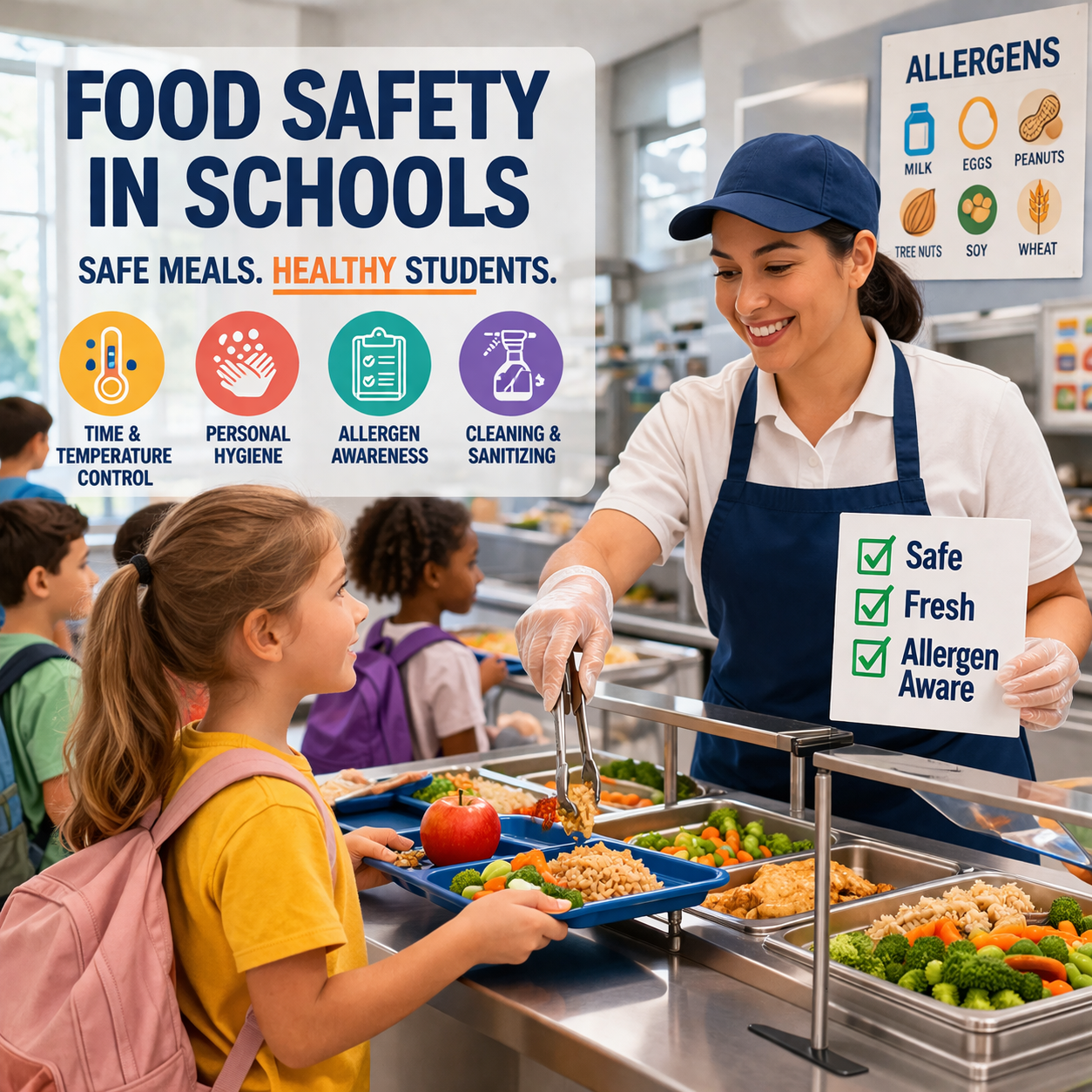
Food safety in school cafeterias plays a critical role in protecting student health and maintaining compliance with regulations across the United States. With hundreds or even thousands of meals served daily, even a small lapse in food handling or allergen management can lead to serious consequences.
Cafeteria compliance and allergen safety are not just operational priorities. They are essential responsibilities that directly impact student well-being and institutional accountability.
Why Food Safety Matters in School Cafeterias
School cafeterias serve a vulnerable population, including young children and students with food allergies. This increases the importance of strict food safety practices.
Without proper controls, schools risk:
- Foodborne illness outbreaks
- Severe allergic reactions
- Health inspection violations
- Legal liability and compliance issues
- Loss of trust from parents and communities
Common Food Safety Risks in School Environments
Cafeterias face unique challenges that require consistent monitoring and training.
1. Improper Time and Temperature Control
- Food not stored or held at safe temperatures
- Inadequate monitoring of hot and cold foods
2. Cross Contamination
- Raw and ready-to-eat foods handled improperly
- Poor cleaning and sanitizing practices
3. Poor Personal Hygiene
- Inconsistent handwashing
- Employees working while ill
4. Allergen Mismanagement
- Cross-contact between allergen and non-allergen foods
- Lack of clear labeling or communication
5. Inadequate Cleaning and Sanitation
- Improperly sanitized equipment and surfaces
- Failure to follow cleaning schedules
Understanding Allergen Risks in Schools
Food allergies are a growing concern in educational environments. Even trace amounts of allergens can trigger severe reactions.
Schools must focus on:
- Identifying major food allergens
- Preventing cross-contact during preparation and service
- Communicating clearly with staff and students
- Responding quickly to allergic reactions
Allergen safety requires awareness, coordination, and strict adherence to procedures.
How Schools Can Strengthen Cafeteria Compliance
Effective food safety programs rely on consistency, training, and accountability.
1. Standardize Food Handling Procedures
- Establish clear guidelines for receiving, storing, and preparing food
- Monitor compliance daily
2. Train Staff on Time and Temperature Control
- Use thermometers correctly
- Maintain safe holding and cooking temperatures
3. Reinforce Personal Hygiene Practices
- Enforce handwashing policies
- Prevent sick employees from handling food
4. Implement Strong Cleaning and Sanitizing Protocols
- Follow proper cleaning schedules
- Use approved sanitizing methods
5. Develop Allergen Safety Procedures
- Separate allergen and non-allergen foods
- Train staff on communication and response protocols
Training That Supports Safe School Food Operations
Proper training ensures that cafeteria staff understand risks and apply best practices consistently.
The Food Handler Training from TAP Series provides essential knowledge for safe food preparation and handling.
Learn more here:
Food Handler Training | Tap Series®
What Staff Learn in Food Handler Training
- Time and temperature control
Understand how improper handling leads to foodborne illness - Personal hygiene and safe practices
Prevent contamination through proper behavior and procedures - Cross-contamination prevention
Apply safe food handling at every stage - Cleaning and sanitizing protocols
Maintain a safe and hygienic kitchen environment - Food safety fundamentals
Recognize risks and apply preventive measures
Strengthening Allergen Awareness in School Cafeterias
In addition to general food safety, allergen awareness is essential for protecting students.
The Allergen Awareness Training helps staff manage allergen risks effectively.
Learn more here:
Allergen Awareness | Tap Series®
What Staff Learn in Allergen Awareness Training
- Identify major food allergens
Recognize the most common triggers in foodservice - Understand cross-contact risks
Learn how allergens spread during food handling - Prevent allergen exposure
Apply proper preparation and cleaning techniques - Communicate allergen information clearly
Ensure accurate communication with students and staff - Respond to allergic reactions
Act quickly and appropriately in emergencies
Who Should Take This Training
- School cafeteria staff
- Food service managers
- Kitchen supervisors
- School administrators overseeing food programs
Anyone involved in food preparation and service plays a role in student safety.
Protect Students Through Strong Food Safety Practices
Food safety in schools is a shared responsibility that requires training, consistency, and accountability.
Schools that prioritize cafeteria compliance and allergen awareness:
- Reduce health risks for students
- Improve inspection outcomes
- Strengthen trust with families
- Maintain compliance with food safety standards
Build a safer school environment with effective cafeteria food safety training.