Grocery Risk Management Food Safety
How Small Deli Mistakes Lead to Major Violations
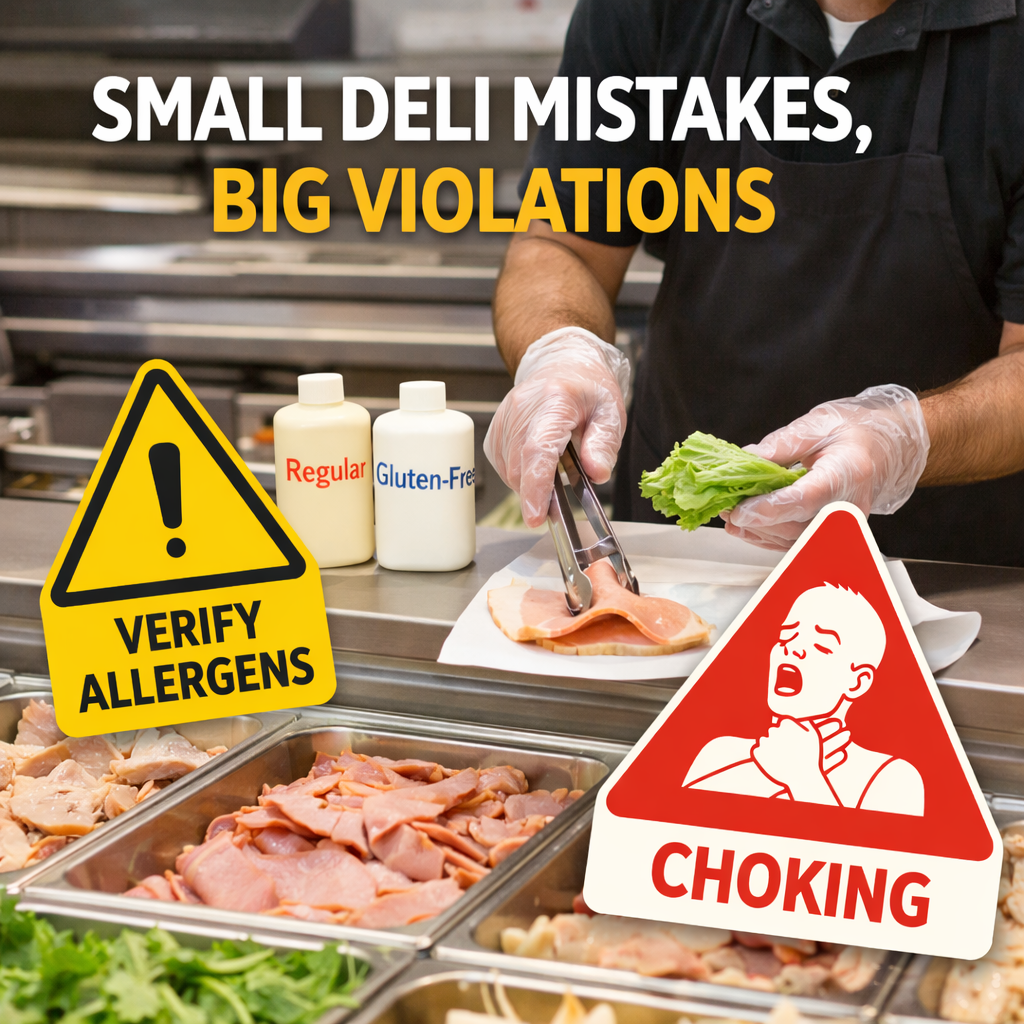
Employee errors in grocery deli operations often seem minor in the moment, but small mistakes can quickly turn into serious violations. From improper allergen handling to delayed emergency response, these oversights can impact customer safety, trigger compliance issues, and expose businesses to liability.
In busy grocery environments across the United States, preventing these errors starts with awareness, consistency, and proper training.
Why Small Mistakes Matter in Deli Operations
Deli counters are fast-paced and highly interactive. Employees handle food, communicate with customers, and manage multiple orders at once.
This creates risk when:
- Procedures are skipped to save time
- Communication is unclear or incomplete
- Staff are not fully trained on safety protocols
- Attention to detail declines during peak hours
Even a single lapse can result in food safety violations or medical emergencies.
Common Deli Mistakes That Lead to Violations
Seemingly small actions can have significant consequences.
1. Allergen Cross-Contact
- Using the same utensils for different foods
- Not cleaning surfaces between orders
- Mislabeling or failing to disclose ingredients
2. Poor Communication with Customers
- Not confirming allergen concerns
- Providing incorrect product information
3. Improper Food Handling
- Inadequate hand hygiene
- Cross-contamination between raw and ready-to-eat items
4. Ignoring Early Signs of Choking Hazards
- Serving improperly prepared food
- Not recognizing risky food textures or sizes
5. Delayed Emergency Response
- Staff unsure how to respond to choking incidents
- Lack of confidence in emergency procedures
The Risks Behind These Errors
Small deli mistakes can escalate into serious issues:
- Allergic reactions and medical emergencies
- Health code violations and failed inspections
- Legal liability and customer complaints
- Loss of customer trust and brand reputation
Prevention requires both knowledge and action.
How Grocery Stores Can Reduce Employee Errors
Strong operational discipline and training are key to minimizing risk.
1. Reinforce Allergen Awareness
- Train staff to identify major allergens
- Implement strict procedures to prevent cross-contact
2. Standardize Food Handling Practices
- Enforce hand hygiene and cleaning protocols
- Use separate tools and surfaces when necessary
3. Improve Customer Communication
- Encourage employees to ask clarifying questions
- Ensure accurate and transparent responses
4. Prepare for Emergency Situations
- Train staff to recognize choking signs
- Practice immediate response procedures
5. Build a Culture of Accountability
- Monitor compliance regularly
- Address mistakes quickly and consistently
Training That Prevents Costly Mistakes
Training transforms everyday tasks into safe and compliant practices.
The Allergen Awareness Training from TAP Series equips employees with the knowledge to manage allergen risks effectively.
Learn more here:
Allergen Awareness | Tap Series®
What Employees Learn in Allergen Awareness Training
- Identify major food allergens
Recognize common triggers in deli and foodservice environments - Understand cross-contact risks
Learn how allergens spread during preparation and service - Prevent allergen exposure
Apply proper cleaning and food handling techniques - Communicate allergen information clearly
Support safe interactions with customers - Respond to allergic reactions
Act quickly and follow emergency protocols
Strengthening Emergency Response with Choke Saving Procedures
In addition to food safety, employees must be ready to respond to choking incidents.
The Choke Saving Procedures course prepares staff to act immediately in critical situations.
Learn more here:
Choke Saving Procedures Training | Tap Series®
What Employees Learn in Choke Saving Procedures Training
- Recognize choking symptoms
Identify when someone is in distress - Understand choking hazards
Prevent risks during food preparation and service - Apply choke response steps
Take immediate and effective action - Perform the Heimlich Maneuver
Use proper techniques for different scenarios - Administer CPR when needed
Provide life-saving support until help arrives
Who Should Take This Training
- Deli staff and food handlers
- Grocery store associates
- Supervisors and department managers
- Customer-facing employees
Anyone involved in food preparation and service should be properly trained.
Turn Small Actions Into Safe Outcomes
Employee errors in grocery deli operations are preventable with the right training and attention to detail.
Organizations that prioritize safety:
- Reduce violations and compliance risks
- Protect customers from harm
- Improve employee confidence and performance
- Strengthen overall operational standards
Invest in grocery food safety training to prevent small mistakes from becoming major violations.