TAP Series OSHA Training
The Cost of Overlooking OSHA Risks in Retail Operations
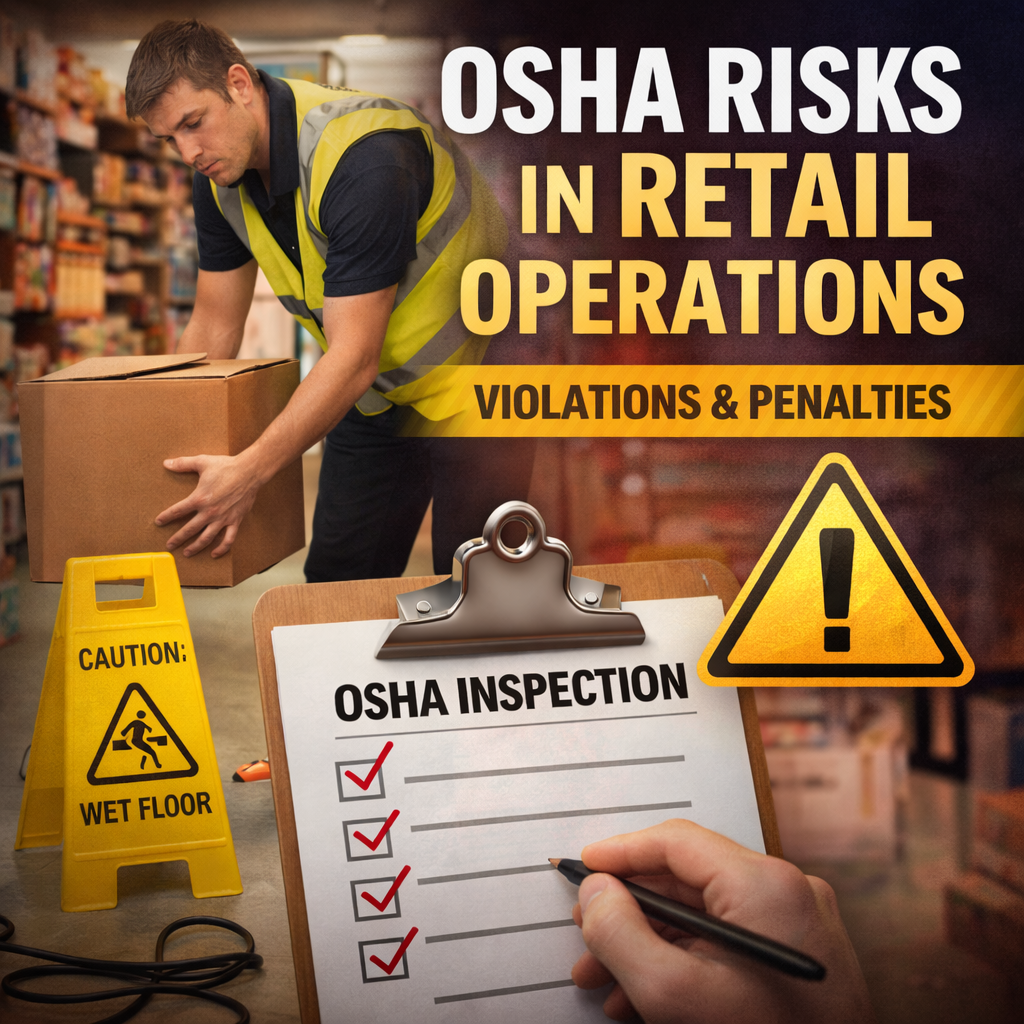
OSHA risks in retail operations are often underestimated because the environment feels controlled and familiar. But behind daily tasks like stocking shelves, handling inventory, or assisting customers are real hazards that can lead to violations, injuries, and costly penalties.
For retail businesses across the United States, OSHA compliance is not optional. It is a critical part of protecting employees, maintaining operations, and avoiding enforcement actions that can disrupt business continuity.
Where OSHA Violations Commonly Happen in Retail
Retail environments may seem low risk, but violations often stem from routine activities.
Common problem areas include:
- Improper lifting and material handling leading to musculoskeletal injuries
- Blocked exits and cluttered aisles that create fire and evacuation hazards
- Unsecured shelving or falling merchandise causing struck-by incidents
- Lack of hazard communication for cleaning chemicals and substances
- Missing or improper use of personal protective equipment
- Poor housekeeping practices resulting in slips, trips, and falls
These issues are frequently overlooked because they develop gradually during busy operations.
How Small Operational Gaps Lead to OSHA Citations
Most OSHA violations are not caused by major incidents. They result from small gaps that go unaddressed.
- Inconsistent safety practices across shifts
Employees follow different procedures depending on who is working - Lack of proper training for new hires
Workers are expected to learn on the job without structured guidance - Failure to identify hazards early
Minor risks are ignored until they lead to incidents - No clear reporting or documentation process
Issues are not tracked, making compliance difficult to prove
When these gaps accumulate, they create conditions that inspectors can easily cite during an OSHA visit.
The Real Impact of OSHA Violations on Retail Businesses
OSHA violations affect more than compliance. They impact your entire operation.
- Financial penalties and fines that strain budgets
- Increased workers' compensation claims
- Operational downtime due to investigations or corrective actions
- Damage to brand reputation and customer trust
- Lower employee morale and higher turnover
Retail businesses operate on tight margins, making even a single violation costly.
Why OSHA Safety Awareness Training Is Essential
Training is the foundation of a compliant and safe retail environment.
Employees who understand OSHA safety principles can:
- Recognize hazards before they cause harm
- Follow proper lifting and handling techniques
- Maintain clean and safe workspaces
- Use equipment and protective gear correctly
- Respond appropriately to incidents and emergencies
Without consistent training, safety becomes reactive instead of proactive.
Strengthen Retail Safety with TAP Series OSHA Safety Awareness Training
The TAP Series OSHA Safety Awareness course is designed to help retail teams understand workplace hazards and maintain compliance in day to day operations.
Learn more here:
TAP Series® | Training And Cloud Solutions
What your team will gain:
- Understanding OSHA fundamentals
Learn key regulations and how they apply to retail environments - Hazard identification skills
Spot risks in stockrooms, sales floors, and loading areas - Safe work practices
Apply proper techniques for lifting, handling, and daily tasks - Workplace safety responsibilities
Know what is expected from both employees and management - Incident prevention awareness
Reduce the likelihood of injuries and compliance violations
Creating a Safer Retail Environment Through Consistency
Safety is not a one time effort. It requires consistency across all operations.
Retail leaders can reduce OSHA risks by:
- Standardizing safety procedures across all locations
- Providing regular training and refreshers
- Encouraging employees to report hazards early
- Conducting routine safety checks and audits
- Leading by example at the management level
When safety becomes part of the daily workflow, compliance follows naturally.
Final Takeaway: Proactive Safety Prevents Costly Violations
OSHA violations in retail are preventable, but only when businesses take a proactive approach to safety. Investing in structured training like OSHA Safety Awareness training helps teams identify risks early, maintain compliance, and protect both employees and operations.
In a fast paced retail environment, staying prepared is the most effective way to reduce OSHA exposure and ensure long term success.