Grocery Regulatory Compliance Food Safety
Manager Liability in Grocery Operations Starts with Food Safety Accountability
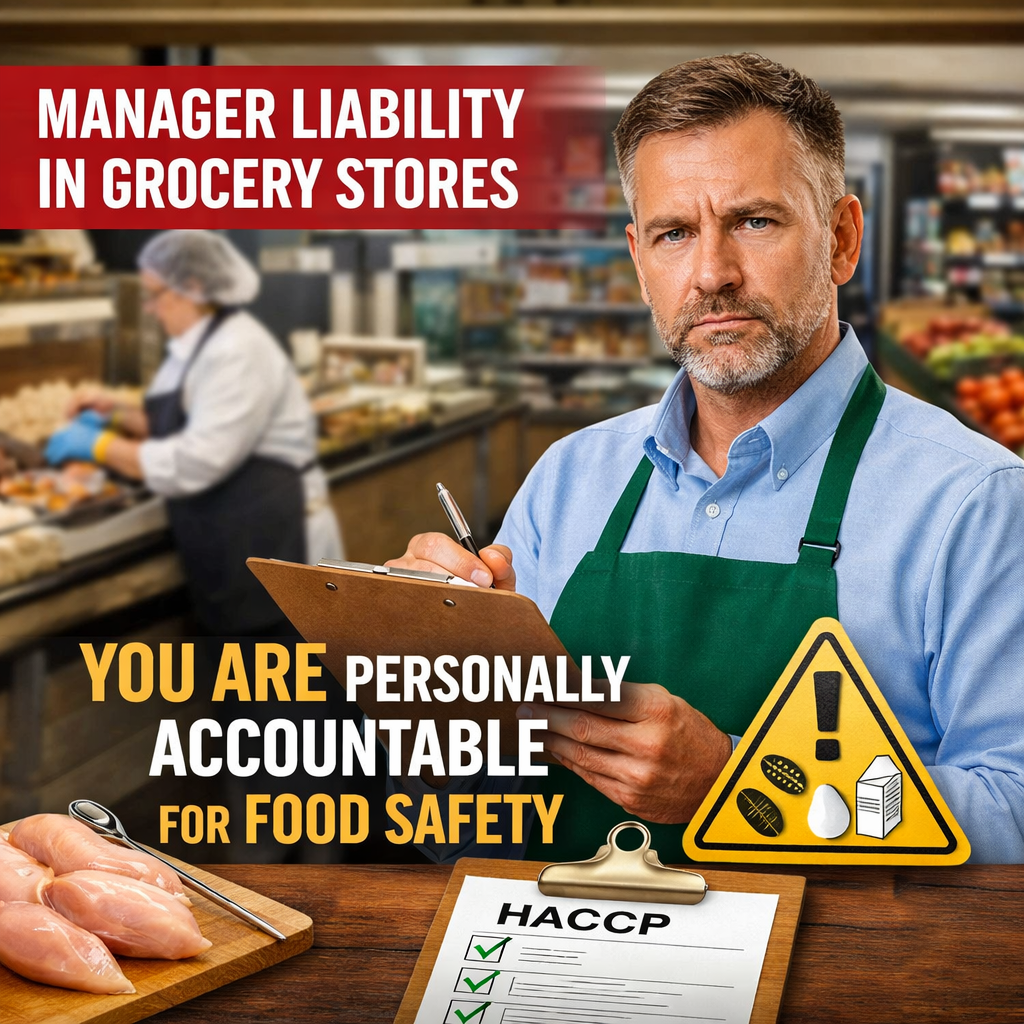
Managers are personally accountable for food safety, and in today’s grocery environment, that responsibility goes far beyond supervision. From deli counters to prepared foods and in-store bakeries, every decision made at the management level can directly impact public health, regulatory compliance, and brand reputation.
For U.S. grocery businesses, the risk is not just operational. It is legal, financial, and personal.
Why Food Safety Accountability Falls on Managers
Food safety failures are rarely caused by a single mistake. They are often the result of gaps in oversight, training, and enforcement. These are all areas that fall under managerial control.
When violations occur, investigators and regulators often look at:
- Training programs and enforcement
- Sanitation and hygiene standards
- Food handling procedures
- Allergen protocols and communication
- Documentation and compliance systems
If these systems are weak or inconsistent, managers can be held directly responsible.
Common Grocery Risks That Lead to Manager Liability
Even small operational oversights can escalate into serious violations. Managers must actively prevent.
1. Improper Food Handling
- Cross contamination between raw and ready to eat foods
- Incorrect cooking, cooling, or reheating temperatures
- Employees working while sick
- Inadequate handwashing compliance
2. Sanitation Failures
- Improper cleaning schedules
- Unsanitized equipment and surfaces
3. Allergen Mismanagement
- Incorrect labeling or missing allergen disclosures
- Lack of clear procedures for allergen requests
4. Lack of Active Managerial Control
- No monitoring systems in place
- Failure to implement HACCP-based practices
Each of these risks reflects a breakdown in leadership, not just frontline execution.
The Role of Active Managerial Control
Active managerial control is the difference between reactive problem solving and proactive risk prevention.
Managers must:
- Identify risks before they become violations
- Implement structured food safety systems
- Train staff consistently and verify understanding
- Monitor and document daily operations
- Correct issues immediately and effectively
Without this level of oversight, even well-trained employees can unintentionally create unsafe conditions.
How TAP Series Strengthens Manager Accountability
To reduce liability and improve operational control, structured training is essential.
1. Food Safety Manager Certification
Retail Food Safety Manager Certification Training | Tap Series®
This course equips grocery managers with the knowledge and systems needed to maintain safe operations.
Key areas include:
- Foodborne illness prevention and control
- Proper food handling from receiving to service
- Cleaning, sanitizing, and pest control procedures
- Personal hygiene enforcement
- HACCP and active managerial control systems
Why it matters:
Managers gain the tools to build and enforce a food safety culture, not just follow checklists.
2. Allergen Plan Development Training
Allergen Plan Development | Tap Series®
Allergen risks are one of the fastest-growing liability concerns in grocery operations.
This course helps managers:
- Develop clear allergen response procedures
- Identify where allergen risks occur in operations
- Establish appropriate levels of allergen accommodation
- Create a structured allergen management plan
Why it matters:
A single allergen mistake can result in severe health consequences and legal exposure. Managers must ensure systems are clear, consistent, and enforced.
Building a Culture of Accountability in Grocery Operations
Strong food safety performance starts with leadership. Managers set the tone for compliance, consistency, and accountability.
To reduce risk:
- Standardize procedures across departments
- Train and retrain staff regularly
- Document everything from inspections to corrective actions
- Communicate clearly about allergens and safety expectations
- Lead by example in daily operations
When managers take ownership, teams follow.
The Cost of Inaction Is Personal and Preventable
Manager liability in grocery operations is not theoretical. It is enforced through inspections, lawsuits, and regulatory actions. The difference between compliance and violation often comes down to preparation and training.
By investing in structured programs like TAP Series, grocery managers can protect:
- Their customers
- Their business
- Their professional accountability
Food safety leadership is not optional. It is a responsibility that defines operational success and risk management in every grocery environment.