HACCP Grocery Stores
Why Grocery Stores Fail Inspections and How to Avoid It
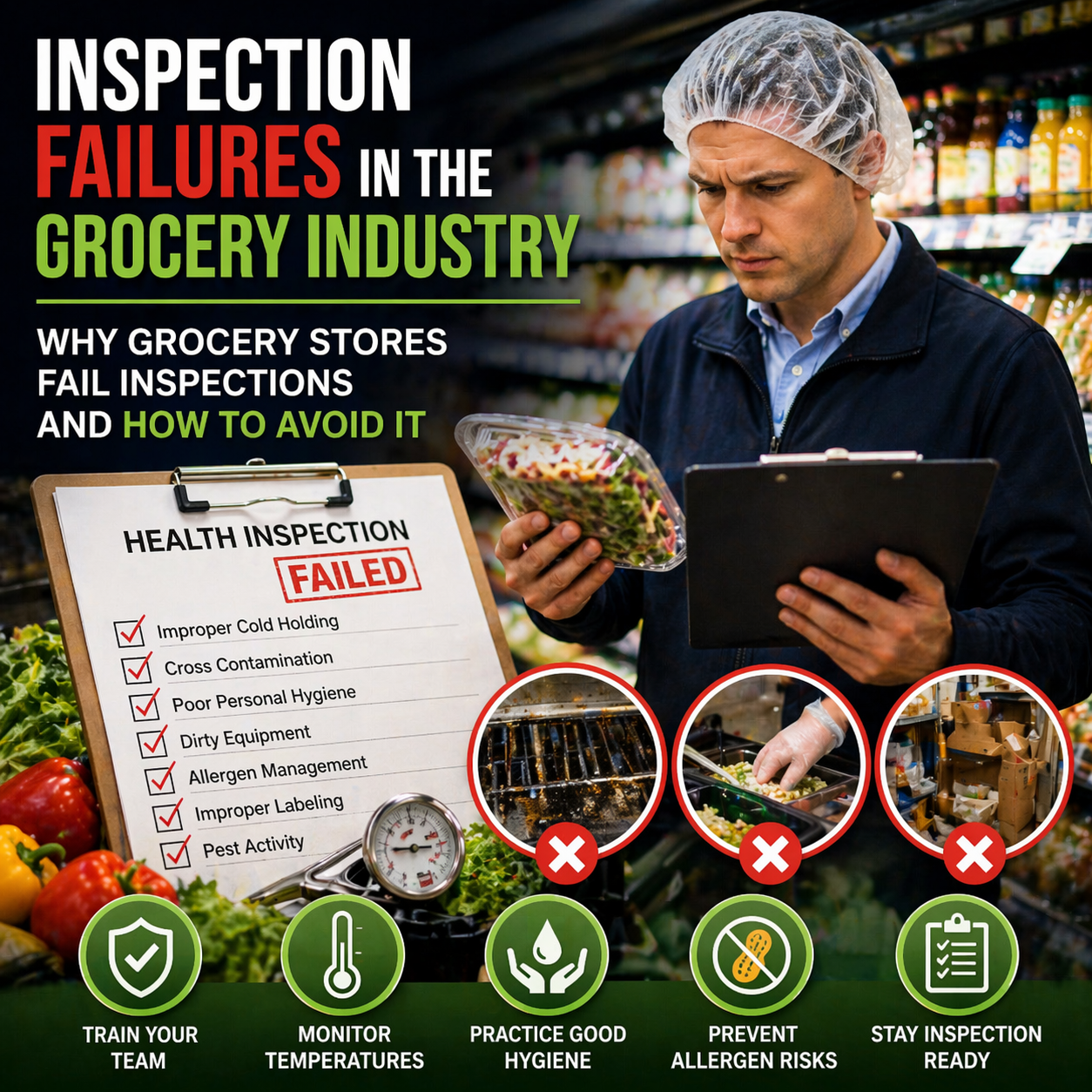
Inspection failures in grocery stores often come down to small, repeated mistakes that signal larger gaps in training and oversight. In the United States, health inspectors evaluate grocery operations based on strict food safety standards, and even minor violations can quickly add up to failed inspections, fines, or operational disruptions.
Understanding why grocery stores fail inspections is the first step toward preventing them.
Why Grocery Stores Fail Health Inspections
Grocery stores operate multiple food handling areas such as deli, bakery, produce, and prepared foods. Each area introduces its own risks, making consistency difficult without strong management control.
Common reasons for inspection failures include:
- Lack of consistent food safety training across departments
- Poor enforcement of hygiene and sanitation practices
- Incomplete or outdated temperature logs
- Weak oversight from management
- Limited allergen awareness among staff
When these issues overlap, inspectors see patterns that indicate systemic problems.
Most Common Violations Found in Grocery Inspections
Inspectors frequently cite similar violations across grocery locations. These are often preventable with proper training and procedures.
Common violations include:
- Improper hot and cold holding temperatures
- Cross contamination between raw and ready to eat foods
- Poor personal hygiene such as inadequate handwashing
- Dirty equipment and unsanitized food contact surfaces
- Improper food storage and labeling
- Lack of allergen controls and communication
These violations not only affect compliance but also increase the risk of foodborne illness and customer harm.
How Allergen Mistakes Contribute to Inspection Failures
Allergen safety is becoming a major focus during inspections. Grocery stores must ensure that allergen risks are controlled, especially in deli and prepared food areas.
Common allergen related issues include:
- Cross contact from shared equipment
- Missing or incorrect allergen labels
- Employees unable to identify major allergens
- Poor communication with customers about ingredients
Failure to manage allergens properly can lead to both inspection violations and serious health incidents.
How Grocery Stores Can Avoid Inspection Failures
Preventing inspection failures requires a proactive and consistent approach led by management.
Steps to improve compliance include:
- Standardize Food Safety Procedures
Ensure all departments follow the same food safety guidelines and expectations. - Strengthen Employee Training
Provide consistent training so staff understand proper food handling, hygiene, and safety practices. - Implement Active Managerial Control
Monitor operations daily, correct issues immediately, and document compliance efforts. - Improve Allergen Awareness
Train staff to identify allergens, prevent cross contact, and communicate clearly with customers. - Maintain Cleanliness and Organization
Regular cleaning schedules and proper storage reduce inspection risks.
TAP Series Training Solutions for Grocery Compliance
TAP Series provides practical training solutions to help grocery stores meet inspection standards and reduce violations.
Food Safety Manager Training
The Food Safety Manager course equips managers and staff with essential knowledge to maintain compliance and prevent food safety risks.
Topics covered include:
- Foodborne illness awareness and prevention
- Personal hygiene standards
- Safe food handling from receiving to serving
- Temperature control and monitoring
- Cleaning and sanitizing procedures
- Pest control and facility management
- Active managerial control and HACCP systems
Learn more here:
Retail Food Safety Manager Certification Training | Tap Series®
Allergen Awareness Training
The Allergen Awareness course helps grocery teams understand and manage allergen risks effectively.
This training covers:
- Identifying the nine major food allergens
- Understanding and preventing cross contact
- Safe food handling and preparation practices
- Clear communication of allergen information
- Recognizing and responding to allergic reactions
Learn more here:
Allergen Awareness | Tap Series®
Building Inspection Ready Grocery Operations
Inspection failures are rarely caused by a single issue. They result from repeated gaps in training, oversight, and daily execution. Grocery stores that prioritize food safety and allergen awareness create stronger, more consistent operations that meet regulatory expectations.
For US grocery companies, investing in Food Safety Manager and Allergen Awareness training through TAP Series is a practical way to reduce violations, protect customers, and maintain inspection readiness year round.