TAP Series Food Safety Training
Why Food Safety in School Cafeterias Requires Constant Attention
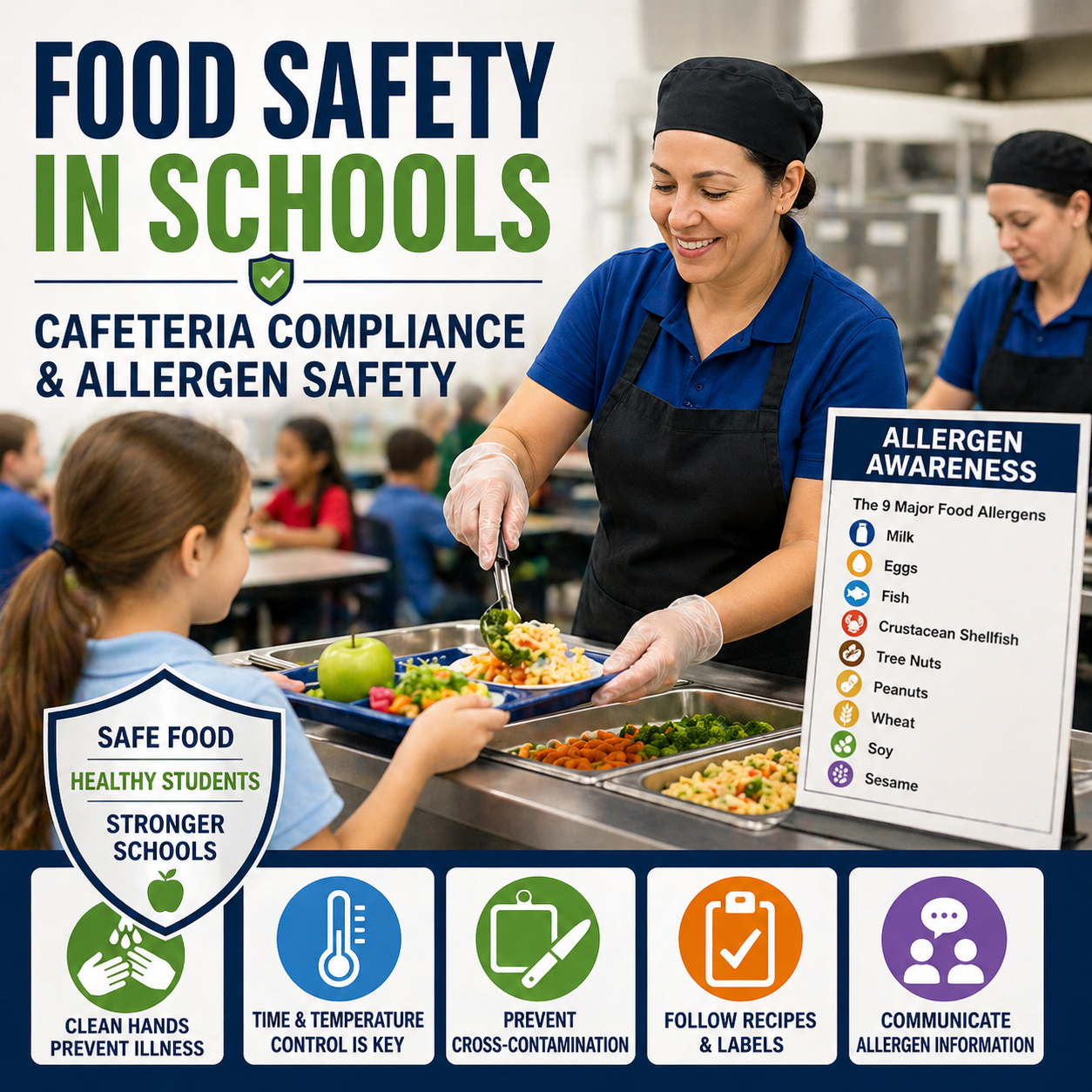
Food safety in schools goes far beyond serving meals on time. School cafeterias are responsible for feeding large groups of students daily, including children with food allergies, dietary restrictions, and health vulnerabilities. A single food safety mistake can lead to foodborne illness outbreaks, allergic reactions, compliance violations, and damaged trust with parents and communities.
For schools across the United States, cafeteria compliance and allergen safety must remain a top priority to protect students and maintain safe learning environments.
Common Food Safety Risks in School Cafeterias
School foodservice teams face multiple risks every day during preparation and service.
Common compliance concerns include:
- Improper food storage temperatures that increase bacterial growth
- Cross-contamination between raw and ready-to-eat foods
- Poor employee hygiene practices
- Improper cleaning and sanitation of equipment
- Failure to properly label allergen-containing foods
- Cross-contact involving allergen ingredients during preparation
Because schools often prepare meals at high volume under tight schedules, small mistakes can quickly create major health risks.
Why Allergen Awareness Is Critical in Educational Settings
Food allergies can create life-threatening situations for students.
The nine major food allergens include:
- Milk
- Eggs
- Fish
- Crustacean shellfish
- Tree nuts
- Peanuts
- Wheat
- Soy
- Sesame
Without proper allergen awareness training, cafeteria staff may unintentionally expose students to dangerous ingredients through improper food preparation or communication failures.
Examples of common allergen mistakes include:
- Using shared utensils without proper cleaning
- Mislabeling cafeteria meals
- Failing to communicate ingredient substitutions
- Ignoring allergy-related meal requests
Even minor oversights can trigger serious allergic reactions.
How Compliance Failures Impact Schools
Food safety violations can create legal, financial, and reputational consequences.
Schools may face:
- Health department violations
- Parent complaints and lawsuits
- Student medical emergencies
- Operational disruptions
- Loss of community trust
Preventative training helps schools avoid these risks before incidents occur.
Strengthening Cafeteria Safety with TAP Series Food Handler Training
The TAP Series Food Handler course helps cafeteria employees build strong food safety fundamentals that support compliance and student health.
Learn more here:
Food Handler Training | TAP Series®
Key training topics include:
- Identifying food-related health risks
- Preventing food contamination
- Recognizing health concerns and reporting issues
- Managing proper time and temperature controls
- Maintaining hygiene during preparation and service
These core practices help reduce foodborne illness risks in school cafeterias.
Building Allergen Safety with TAP Series Allergen Awareness Training
The TAP Series Allergen Awareness course helps school foodservice teams reduce allergy-related risks and improve communication.
Learn more here:
Allergen Awareness | Tap Series®
Key training topics include:
- Identifying the nine major food allergens
- Understanding cross-contact risks
- Preventing allergen contamination
- Communicating allergen information clearly
- Recognizing allergic reaction symptoms and emergency response procedures
This training helps cafeteria teams protect students with food allergies and create safer meal service environments.
Creating a Safer School Cafeteria Culture
Food safety requires consistency from every member of the cafeteria team.
School leaders can improve compliance by:
- Providing ongoing food safety training
- Updating allergen protocols regularly
- Conducting internal safety inspections
- Encouraging clear communication between staff and school nurses
- Reviewing emergency response plans for allergic reactions
When food safety becomes part of daily cafeteria operations, schools reduce risk and build confidence among parents and students.
Final Takeaway: Safer Cafeterias Protect Student Health
School cafeterias play a critical role in student wellness. Investing in Food Handler training and Allergen Awareness training helps schools improve compliance, prevent health emergencies, and create safer dining environments for every student.
Strong food safety practices protect more than compliance. They protect lives.