TAP Series Alcohol Training
Alcohol Liability in Restaurants: Understanding Legal Exposure from Alcohol Service
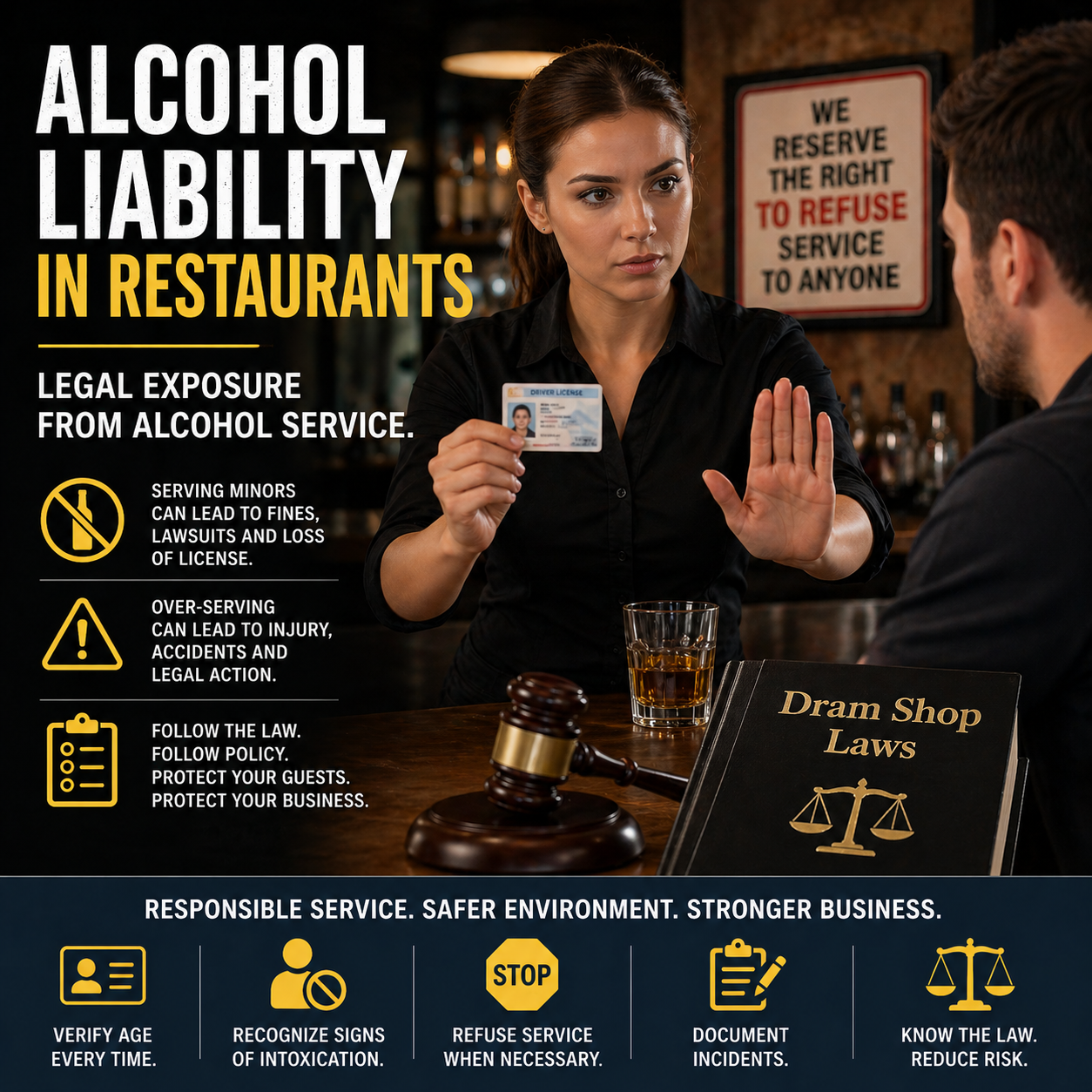
Serving alcohol can increase revenue and enhance the guest experience, but it also introduces serious legal risk. For restaurants across the United States, alcohol service is one of the most common sources of lawsuits, regulatory penalties, and liability claims.
When alcohol is served irresponsibly, the consequences can extend far beyond the establishment. Incidents involving intoxicated patrons can lead to injuries, accidents, property damage, and even fatalities. In many cases, restaurants are held legally responsible for what happens after a guest leaves the premises.
Understanding alcohol liability is essential for protecting your staff, your customers, and your business.
Why Alcohol Service Creates Legal Exposure
Restaurants that serve alcohol are subject to dram shop laws, which hold businesses accountable if they serve alcohol to visibly intoxicated individuals or minors who later cause harm.
Legal exposure can arise from:
- Serving alcohol to underage customers
- Over-serving intoxicated patrons
- Failing to verify identification
- Ignoring signs of intoxication
- Inadequate staff training
- Poor documentation of incidents
Learn more about alcohol policy and regulations through the National Institute on Alcohol Abuse and Alcoholism (NIAAA): https://www.niaaa.nih.gov/
Common Alcohol Service Mistakes That Lead to Lawsuits
Many alcohol-related legal cases stem from preventable errors during routine service.
1. Failure to Verify Age Properly
Accepting fake or invalid identification can result in serving alcohol to minors.
Common issues include:
- Not checking ID at all
- Rushing through verification
- Accepting expired or altered IDs
- Lack of confidence in identifying fraudulent documents
Serving a minor can result in fines, license suspension, or legal action.
2. Over-Serving Intoxicated Guests
Continuing to serve alcohol to visibly intoxicated patrons is one of the most common causes of liability.
Warning signs often ignored include:
- Slurred speech
- Impaired coordination
- Aggressive behavior
- Delayed reaction times
- Loud or disruptive conduct
Over-service increases the risk of accidents, injuries, and violent incidents.
3. Poor Staff Communication
Front-of-house and bar staff may fail to communicate about a guest’s level of intoxication.
This can lead to:
- Multiple staff members serving the same intoxicated guest
- Lack of awareness of previous drinks served
- Missed opportunities to stop service early
4. Lack of Incident Documentation
When incidents occur, failure to document them properly can weaken a business’s legal defense.
Examples include:
- Not recording refusal of service
- Missing details of disruptive behavior
- Incomplete incident logs
- Lack of witness statements
5. Improper Refusal of Service
Employees may hesitate to refuse service due to fear of confrontation or lack of training.
Improper handling can escalate situations and increase liability.
The Real Cost of Alcohol-Related Incidents
Alcohol liability can have serious financial and operational consequences.
Restaurants may face:
- Lawsuits and legal fees
- Settlement payouts
- Liquor license suspension or revocation
- Increased insurance premiums
- Regulatory fines
- Negative publicity
- Loss of customer trust
One incident can impact a business for years.
How Restaurants Can Reduce Alcohol Liability
1. Train Staff on Responsible Alcohol Service
All employees involved in alcohol service should understand:
- Legal responsibilities
- Signs of intoxication
- Proper service limits
- When to refuse service
2. Strengthen Age Verification Procedures
Implement strict ID checking protocols:
- Check every guest who appears underage
- Verify ID authenticity
- Train staff to detect fake IDs
3. Monitor Guest Consumption
Track how much alcohol is being served to each guest and watch for behavioral changes.
4. Use Clear Communication Systems
Ensure staff communicate effectively about guest status, especially during busy shifts.
5. Maintain Detailed Incident Logs
Accurate documentation helps protect the business and supports compliance efforts.
Why Alcohol Training Is Essential for Restaurants
Proper training is the most effective way to reduce alcohol-related risk.
TAP Series Alcohol Training equips restaurant teams wi th the knowledge and skills to:
- Practice responsible alcohol service
- Understand server responsibilities
- Master age verification techniques
- Identify valid and fake identification
- Refuse service appropriately
- Maintain accurate incident logs
- Understand alcohol absorption and its effects
- Use signage to support compliance
This training helps create a safer environment for both staff and customers while reducing legal exposure.
Protect Your Business from Alcohol Liability Risks
Alcohol service can be profitable, but it comes with responsibility. Without proper training and procedures, small mistakes can lead to major legal consequences.
Restaurants that prioritize responsible alcohol service, employee training, and clear policies are better positioned to reduce risk and operate safely.
Investing in alcohol training today helps protect your business from costly liability tomorrow.