Emergency Drills And Simulations Schools
Violence Preparedness in Education: Building Safer Schools Through Proactive Planning
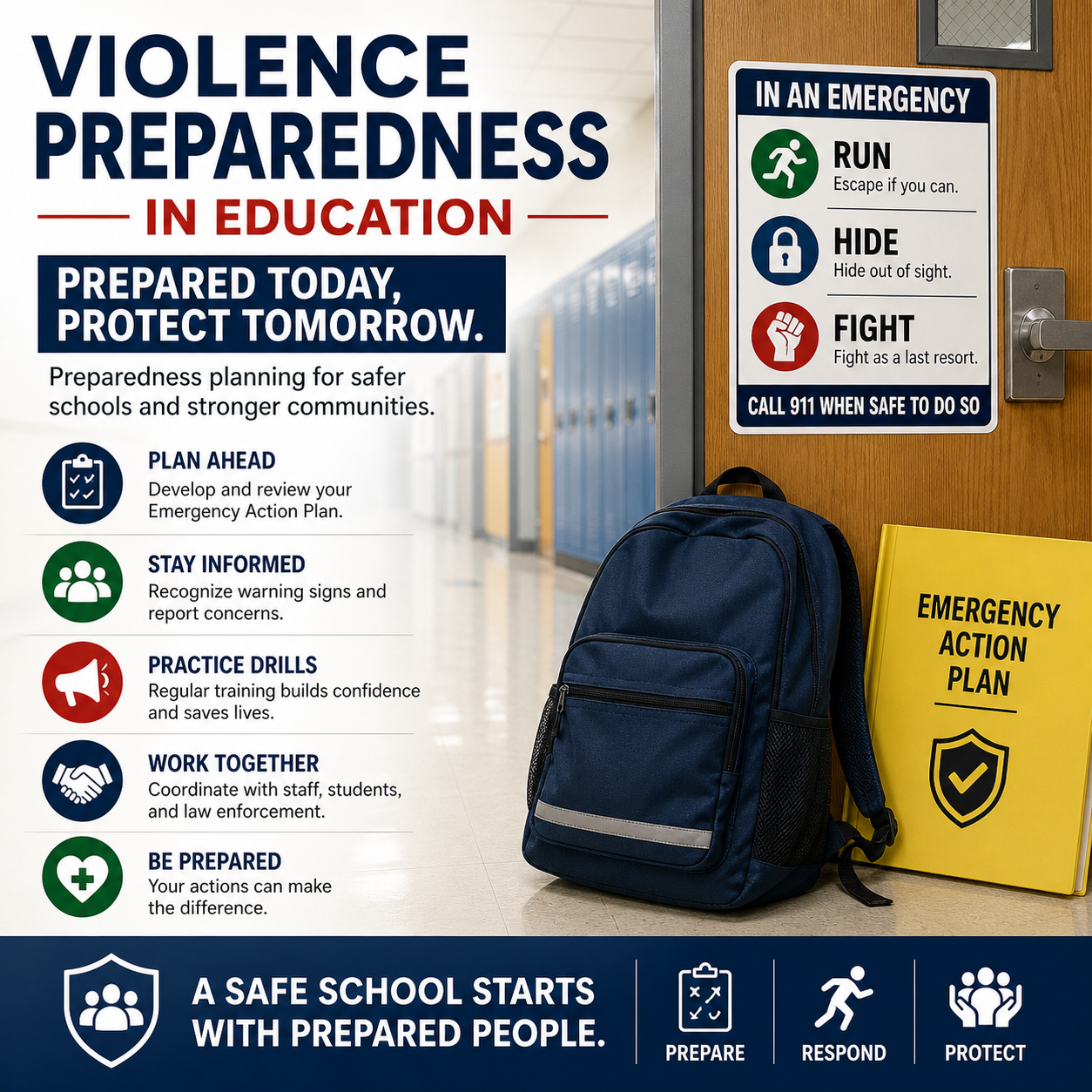
Violence preparedness in schools is no longer optional. Across the United States, educational institutions are expected to implement structured safety protocols that protect students, staff, and visitors. Preparedness planning for schools is critical to reducing risk, improving response time, and ensuring that everyone knows what to do when it matters most.
Without a clear plan, even well-intentioned staff can hesitate or make decisions that increase danger. Preparation transforms uncertainty into coordinated action.
Why Violence Preparedness Matters in Schools
Schools are dynamic environments with high foot traffic, diverse populations, and open access points. These factors make preparedness essential for:
- Protecting students and staff from harm
- Ensuring rapid and organized emergency response
- Maintaining compliance with safety expectations and regulations
- Reducing panic and confusion during critical incidents
Preparedness is not about fear. It is about readiness and confidence in handling serious situations.
Common Gaps in School Safety Planning
Many schools have basic safety measures in place, but gaps often remain in execution and training.
1. Lack of Clear Emergency Action Plans (EAPs)
Plans may exist on paper but are not consistently practiced or updated.
2. Limited Awareness of Warning Signs
Staff and students may not recognize behavioral indicators of potential violence.
3. Inconsistent Communication Protocols
During emergencies, unclear communication can delay response and increase risk.
4. Insufficient Drill and Simulation Training
Without practice, even well-designed procedures can fail under pressure.
5. Uncertainty in Law Enforcement Coordination
Staff may not fully understand how to respond when authorities arrive.
The Impact of Poor Preparedness
When schools are unprepared, the consequences can be severe.
- Delayed response times during critical incidents
- Increased injuries and safety risks
- Emotional trauma for students and staff
- Legal exposure and liability concerns
- Loss of trust within the community
Preparedness planning directly affects how effectively a school can protect its people.
Key Elements of an Effective School Preparedness Plan
Strong violence preparedness strategies are practical, repeatable, and clearly communicated.
1. Develop a Comprehensive Emergency Action Plan
Include evacuation, shelter-in-place, and lockdown procedures tailored to your campus.
2. Train Staff to Recognize Warning Signs
Early identification of concerning behavior can prevent escalation.
3. Establish Clear Communication Systems
Ensure staff and students understand alerts, instructions, and reporting channels.
4. Conduct Regular Drills and Simulations
Practice builds confidence and helps identify gaps before real incidents occur.
5. Coordinate with Law Enforcement and First Responders
Alignment with local authorities ensures faster and more effective response.
How Active Shooter Awareness Training Strengthens School Safety
Preparedness requires more than policies. It requires training that equips individuals with actionable knowledge.
The Active Shooter Awareness course from TAP Series is designed to help schools build confident and capable teams.
Explore the course here:
Active Shooter Awareness | Tap Series®
What participants will learn:
- How to identify and describe an active shooter situation
- How to recognize warning signs of workplace and school violence
- How to take immediate action using proven response strategies
- How to interact effectively with law enforcement during emergencies
- How to prevent incidents through proactive awareness
- How to manage post-incident response and recovery
Key topics covered:
- Introduction to active shooter situations
- Recognizing potential warning signs
- Run, Hide, Fight protocol
- Developing an Emergency Action Plan
- Communication and coordination strategies
- Evacuation and shelter-in-place procedures
- First aid and emergency response basics
- Post-incident procedures and recovery
- Drills, simulations, and compliance considerations
- Cultural awareness and inclusivity in safety planning
Creating a Culture of Safety in Education
Preparedness is not a one-time initiative. It is an ongoing commitment to safety and awareness. Schools that invest in training and planning create environments where staff and students feel more secure and empowered.
- Encourage open communication about safety concerns
- Reinforce training through regular refreshers
- Continuously review and improve safety procedures
A culture of safety strengthens both prevention and response.
Conclusion: Turning Preparedness Into Protection
Preparedness planning for schools is a responsibility that directly impacts lives. With structured strategies and effective training like Active Shooter Awareness, educational institutions can move from reactive to proactive safety practices, ensuring stronger protection and confidence across their communities.