TAP Series Food Safety Training
Manager Liability in Grocery Stores Starts With Food Safety Leadership
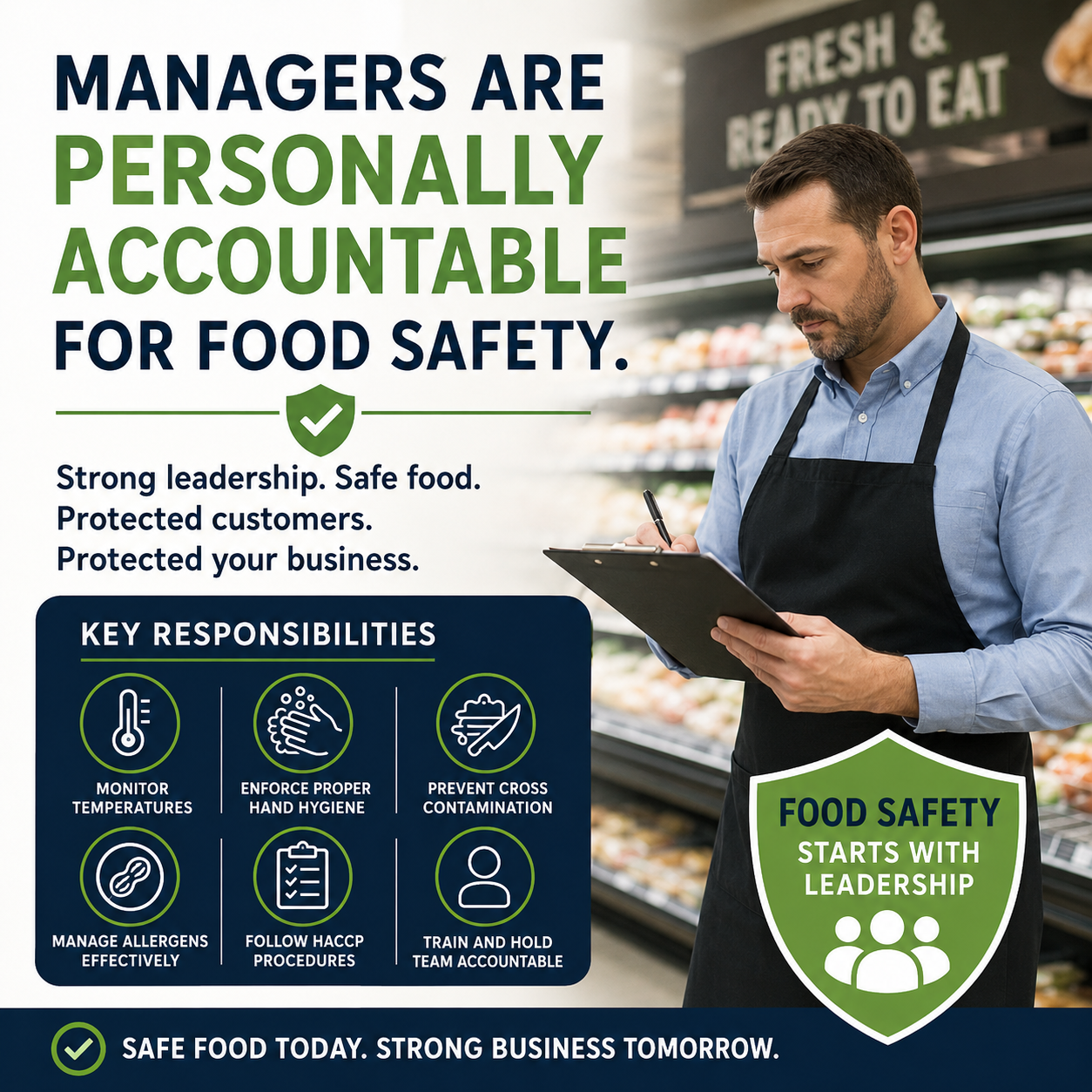
In the grocery industry, food safety is no longer viewed as just a back-of-house responsibility. Across the United States, grocery managers are increasingly being held personally accountable for food safety breakdowns, allergen incidents, and preventable contamination risks. From deli counters and prepared foods to bakery operations and refrigerated storage, management decisions directly impact customer safety, employee performance, and regulatory compliance.
For grocery businesses, strong food safety leadership is not optional. It is part of operational risk management, brand protection, and day-to-day accountability.
Why Grocery Managers Face Greater Accountability Today
Food safety violations can lead to serious consequences for grocery retailers, including:
- Health department penalties
- Product recalls
- Civil lawsuits
- Loss of customer trust
- Increased insurance exposure
- Employee disciplinary actions
- Long-term brand damage
Managers are often the individuals responsible for enforcing procedures, correcting unsafe behaviors, documenting incidents, and ensuring staff training is completed. When systems fail, investigators and legal teams frequently examine whether management oversight contributed to the issue.
In many grocery environments, managers supervise:
- Food handling procedures
- Temperature monitoring
- Employee hygiene enforcement
- Allergen communication
- Cross contamination prevention
- Cleaning and sanitation schedules
- Incident response procedures
Without structured training, even experienced managers can overlook critical risks that create liability for both the business and themselves.
Common Grocery Store Food Safety Risks That Create Liability
Grocery operations involve multiple departments handling food simultaneously. This creates a wide range of food safety challenges that managers must oversee daily.
Cross Contamination Between Departments
Raw meats, seafood, deli items, bakery products, and ready-to-eat foods often operate in close proximity. Poor workflow management or improper sanitation can quickly spread contamination throughout an operation.
Managers are expected to:
- Monitor food separation procedures
- Enforce cleaning schedules
- Verify proper equipment usage
- Ensure staff follow handling protocols
Failure to supervise these areas can increase the risk of foodborne illness outbreaks.
Improper Temperature Monitoring
One of the most common operational failures in grocery stores involves temperature control. Refrigeration units, hot holding stations, and prepared food displays require consistent oversight.
Unsafe temperatures may occur because of:
- Equipment malfunctions
- Missed temperature logs
- Inadequate employee training
- Poor shift communication
Managers who fail to verify monitoring procedures may be viewed as negligent during investigations.
The Growing Importance of Allergen Management
Food allergens present one of the highest liability risks in grocery operations today. Prepared food sections, bakeries, salad bars, and deli counters all create opportunities for accidental allergen exposure.
Customers increasingly expect grocery stores to provide accurate allergen information and safe food handling practices. A single mistake involving allergen cross contact can lead to severe medical emergencies and legal action.
Managers play a critical role in:
- Establishing allergen response procedures
- Training staff on allergen communication
- Preventing cross contact
- Managing labeling practices
- Responding appropriately to customer concerns
Without a structured allergen management plan, grocery operations may struggle to maintain consistency across departments and shifts.
Building Stronger Food Safety Leadership Through Training
Effective food safety management begins with educated leadership. Managers who understand operational risks are better equipped to enforce standards, guide employees, and respond quickly to potential hazards.
The TAP Series Food Safety Manager training helps grocery managers strengthen operational oversight through practical, compliance-focused education.
Topics covered include:
- Preventing food borne illness
- PDA's five most common risk factors
- Managerial role and challenges
- Identifying causes of food borne illness
- The Big 6 food borne illnesses
- Handling employee illness reports
- Cross contamination awareness
- Flow of food procedures
- Temperature monitoring
- Safe food handling guidelines
- Setting up HACCP plans
Learn more about the course here:
Retail Food Safety Manager Certification Training | Tap Series®
Creating a Reliable Allergen Management Strategy
Food safety leadership also requires a clear allergen management framework that employees can consistently follow across the operation.
The TAP Series Allergen Plan Development course helps grocery managers build practical allergen response systems tailored to their facility.
The course helps managers:
- Develop clear allergen response guidelines
- Understand allergen risks throughout operations
- Evaluate appropriate levels of allergen accommodation
- Create a foundational allergen management plan
- Improve communication procedures between staff and customers
Learn more about the course here:
Allergen Plan Development | Tap Series®
What Strong Food Safety Leadership Looks Like in Grocery Operations
Managers who actively support food safety create stronger operational consistency and reduce preventable risks. Effective leadership often includes:
- Conducting routine safety checks
- Verifying employee compliance daily
- Reinforcing sanitation expectations
- Documenting incidents properly
- Reviewing allergen procedures regularly
- Addressing unsafe practices immediately
- Supporting continuous employee training
Food safety culture starts at the management level. Employees are far more likely to follow procedures when leadership consistently demonstrates accountability and attention to detail.
Training Is a Preventative Business Decision
Many grocery businesses only revisit food safety procedures after a complaint, inspection failure, or customer incident. Proactive training helps organizations reduce operational gaps before they become costly problems.
For grocery managers, training is not just about compliance. It supports:
- Customer protection
- Legal risk reduction
- Operational consistency
- Team accountability
- Brand reputation
- Safer workplace practices
Investing in food safety leadership development helps grocery businesses build stronger operations while protecting both customers and management teams from avoidable risks.
Conclusion
Manager accountability in grocery operations continues to grow as food safety expectations become stricter across the industry. Grocery leaders who prioritize training, allergen planning, and operational oversight are better prepared to protect customers, employees, and their business from preventable incidents. TAP Series provides practical food safety education designed to help grocery managers strengthen compliance, improve accountability, and support safer daily operations through effective allergen management and food handling practices.