TAP Series Sexual Harassment Training
Workplace Culture in Restaurants Directly Impacts Retention and Risk
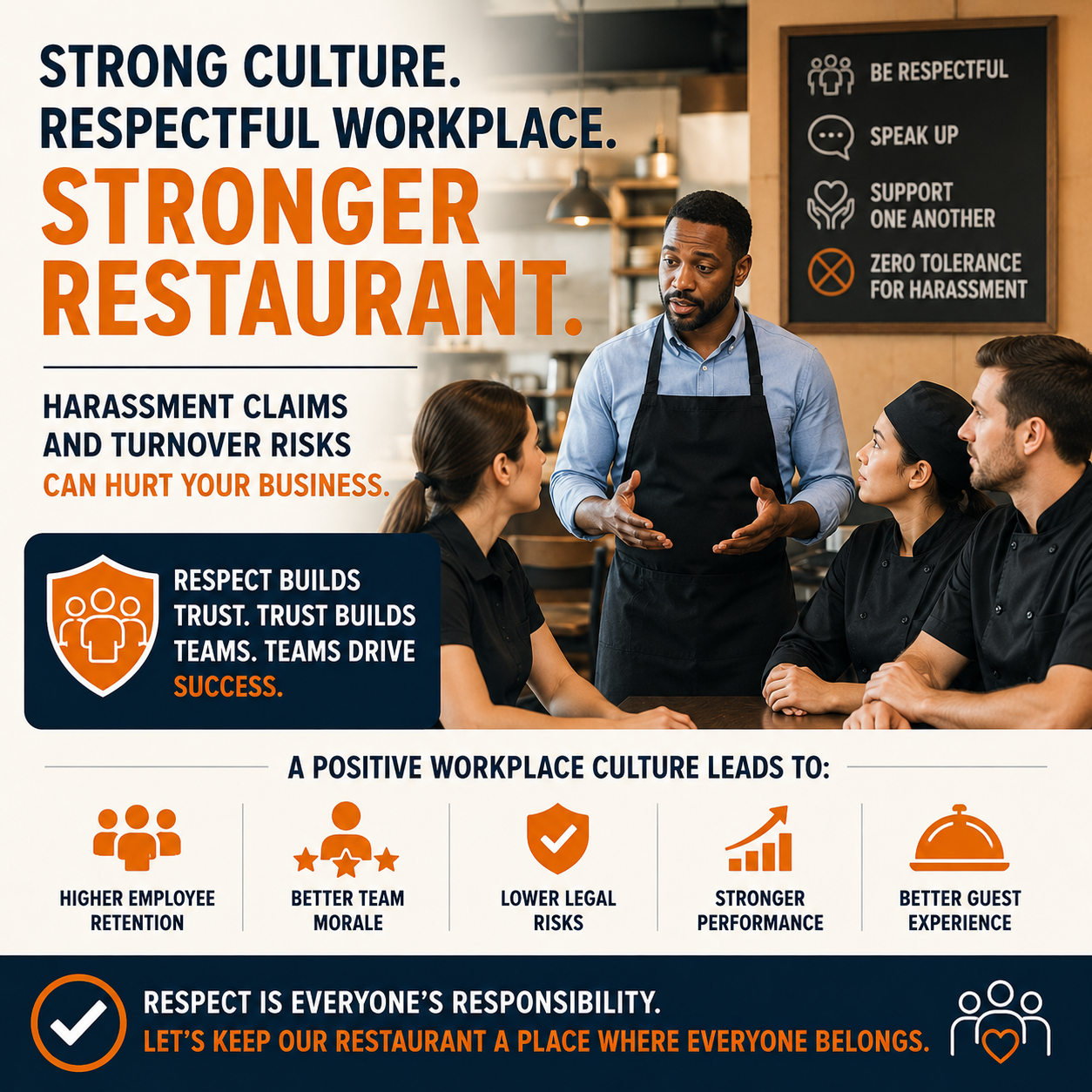
Restaurant workplaces operate in fast paced, high pressure environments where teamwork, communication, and professionalism are critical to daily operations. But when workplace culture is ignored, restaurants can quickly face serious challenges involving harassment claims, employee turnover, low morale, and operational disruption.
Across the United States, restaurant businesses are under growing pressure to create safer, more respectful work environments for employees at every level. A toxic workplace culture not only affects staff wellbeing, but can also expose businesses to legal liability, reputational damage, and staffing instability.
Building a strong culture starts with leadership, accountability, and consistent workplace harassment training.
Why Workplace Culture Matters in the Restaurant Industry
Restaurants rely heavily on collaboration between front-of-house teams, kitchen staff, supervisors, and management. Poor workplace behavior can spread quickly when expectations are unclear or policies are inconsistently enforced.
Negative workplace culture often contributes to:
- Increased employee turnover
- Higher absenteeism
- Reduced productivity
- Low team morale
- Customer service problems
- Workplace conflicts
- Legal complaints and investigations
Restaurant employees frequently work long hours under stressful conditions. Without proper training and clear workplace standards, inappropriate behavior can become normalized, creating risks for both employees and employers.
Harassment Claims Create Serious Business Risks
Sexual harassment remains one of the most significant workplace liability concerns in the restaurant industry. Restaurants often involve close working conditions, late shifts, customer interactions, and hierarchical management structures that can increase vulnerability to misconduct if safeguards are not in place.
Harassment claims may involve:
- Inappropriate comments or jokes
- Unwanted physical contact
- Retaliation after complaints
- Abusive management behavior
- Hostile work environments
- Misuse of authority by supervisors
When businesses fail to address complaints properly, they may face:
- Legal action
- Regulatory penalties
- Increased insurance costs
- Public reputation damage
- Loss of employee trust
- Difficulty recruiting new staff
Preventative training helps reduce these risks by setting clear expectations and reinforcing professional conduct throughout the workplace.
High Turnover Often Reflects Workplace Culture Problems
The restaurant industry already experiences some of the highest turnover rates in the workforce. Employees are more likely to leave organizations where they feel unsafe, unsupported, or disrespected.
Common workplace culture issues that contribute to turnover include:
- Lack of accountability
- Poor supervisor behavior
- Failure to address complaints
- Inconsistent policy enforcement
- Fear of retaliation
- Communication breakdowns
Replacing employees is expensive and disruptive. High turnover impacts scheduling, service quality, onboarding costs, and team performance.
Restaurants that invest in respectful workplace training often create stronger employee retention and healthier workplace relationships.
Creating a Respectful Restaurant Workplace
A strong workplace culture requires more than written policies. Employees and supervisors must understand what behaviors are unacceptable, how to report concerns, and how management should respond appropriately.
The TAP Series Sexual Harassment Employee Training course helps restaurant staff recognize prohibited workplace behaviors and understand their role in maintaining a respectful environment.
Topics covered include:
- Identification of behaviors classified as sexual harassment
- Understanding legal implications and consequences
- Strategies to prevent and combat workplace harassment
- Creating a safe and respectful work environment
- Information on support services for victims
- Consequences associated with workplace misconduct
- Importance of following workplace policies and procedures
Learn more about the course here:
Sexual Harassment Training | TAP Series®
The Critical Role of Restaurant Supervisors
Managers and supervisors have a direct influence on workplace culture. Employees often look to leadership teams to determine whether complaints will be taken seriously and whether policies are consistently enforced.
The TAP Series Sexual Harassment Supervisor Training course helps restaurant leadership teams strengthen compliance and improve workplace accountability.
Supervisors learn how to:
- Define sexual harassment comprehensively
- Understand relevant state and federal laws
- Advocate for strong anti-harassment policies
- Effectively document harassment incidents
- Respond appropriately to complaints
- Support a safer workplace culture
Proper supervisor training can help reduce legal exposure while improving employee trust and communication.
Learn more about the course here:
Sexual Harassment Training | TAP Series®
Workplace Training Supports Long Term Operational Stability
Restaurant businesses that prioritize workplace culture often experience stronger operational consistency and employee engagement. Respectful workplaces help teams communicate better, resolve conflicts faster, and maintain higher service standards.
Training programs support businesses by helping them:
- Reduce harassment risks
- Improve employee confidence
- Strengthen leadership accountability
- Encourage professional conduct
- Support employee retention
- Protect brand reputation
- Create safer working environments
Consistent education also demonstrates that management takes workplace concerns seriously and is committed to employee wellbeing.
Strong Workplace Culture Starts With Leadership
Restaurant culture is shaped daily through management behavior, employee interactions, and operational expectations. Businesses that ignore workplace misconduct risks may struggle with turnover, legal claims, and declining morale.
By investing in workplace harassment education for both employees and supervisors, restaurants can create stronger teams, improve accountability, and support long term operational success.
Conclusion
Restaurant workplace culture directly affects employee retention, operational performance, and legal risk exposure. Businesses that provide harassment prevention training and strengthen supervisor accountability are better positioned to create respectful, professional work environments. TAP Series helps restaurant organizations support safer workplaces through practical training designed to reduce harassment risks, improve compliance, and strengthen workplace culture across every level of the operation.