TAP Series Forklift Course
Warehouse Safety in Retail Starts With Forklift Accountability and Training
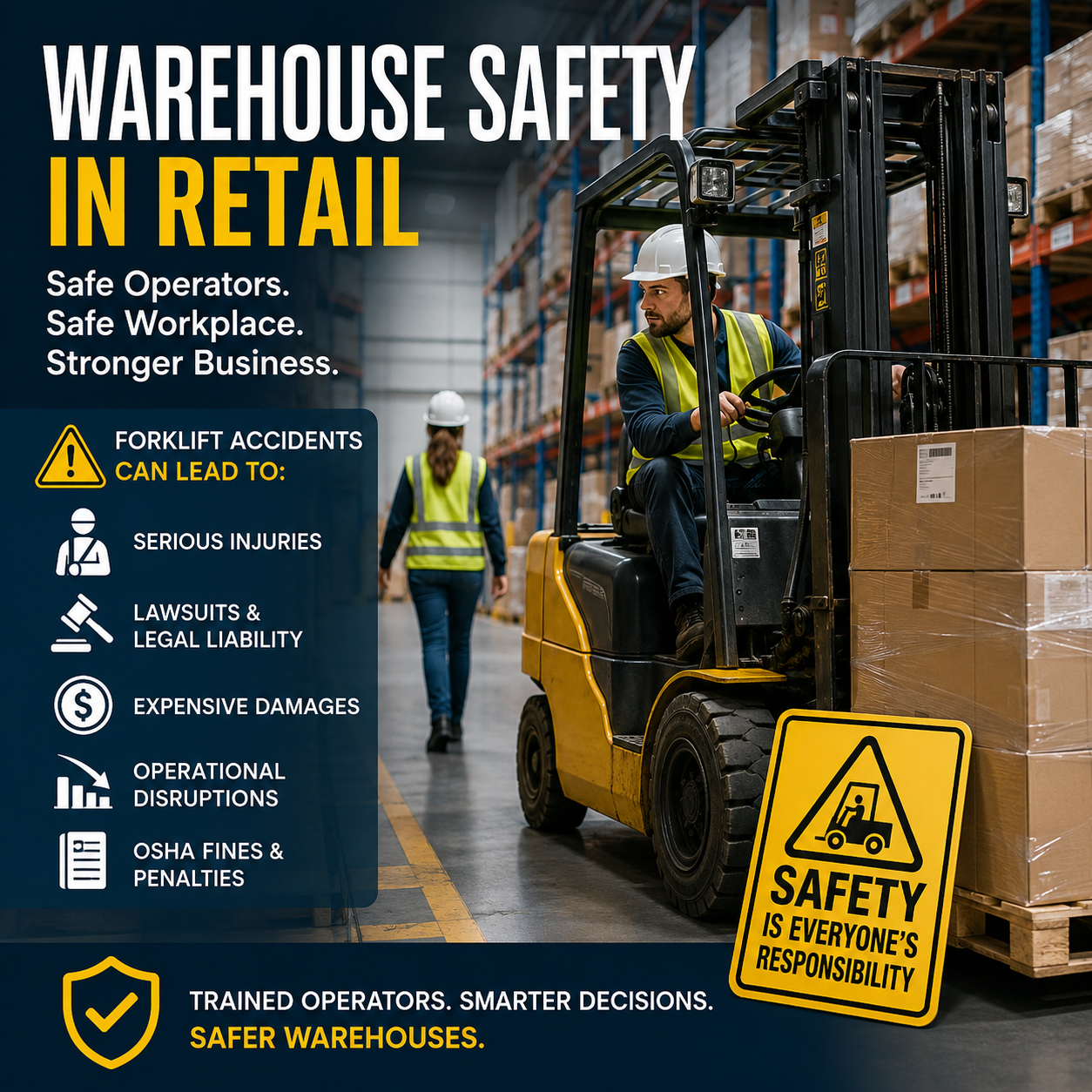
Retail warehouses move fast. Pallets are constantly being loaded, unloaded, stacked, and transported to keep shelves stocked and online orders moving. In these high-pressure environments, forklifts are essential equipment. They also represent one of the most significant safety risks in warehouse operations when employees are not properly trained or safety procedures are ignored.
Forklift accidents in retail warehouses can result in severe injuries, damaged inventory, OSHA penalties, lawsuits, operational delays, and long-term liability for employers. As distribution centers and backroom operations continue to expand across the United States, companies must take a proactive approach to forklift safety training and accountability.
The Forklift Operator Safety Course from TAP Series helps retail organizations build safer warehouse environments while reinforcing OSHA compliance and responsible equipment operation.
Why Forklift Accidents Continue to Impact Retail Warehouses
Retail warehouses often operate under strict deadlines and heavy workloads. Employees may rush to meet shipping demands, work around congested aisles, or handle equipment in tight loading zones. These conditions create serious risks when forklift safety procedures are not consistently followed.
Common causes of forklift accidents in retail facilities include:
- Inadequate operator training
- Speeding in warehouse aisles
- Poor visibility around corners and racks
- Improper loading and unloading
- Pedestrian collisions
- Unsafe dock and ramp navigation
- Failure to inspect forklifts before use
- Distracted or inexperienced operators
Even one forklift incident can disrupt operations and expose companies to costly legal and financial consequences.
The Legal and Financial Liability of Forklift Incidents
Forklift accidents can quickly become major liability issues for retail employers. OSHA requires employers to ensure forklift operators are properly trained and evaluated before operating powered industrial trucks. Failure to comply can lead to citations, fines, and increased scrutiny after workplace incidents.
Beyond regulatory penalties, retail companies may also face:
- Workers’ compensation claims
- Personal injury lawsuits
- Property damage expenses
- Product loss and inventory damage
- Increased insurance premiums
- Productivity interruptions
- Reputational damage
Warehouses that rely on temporary staff or seasonal employees may face even greater exposure if training standards are inconsistent.
High-Risk Areas Inside Retail Warehouses
Certain warehouse environments create elevated forklift risks due to traffic volume and operational complexity.
Loading Docks
Loading docks remain one of the most dangerous areas for forklift operators. Uneven surfaces, trailer movement, and limited space increase the chance of tip-overs and falls.
Shared Pedestrian Zones
Retail warehouses frequently have employees walking near forklift traffic. Without clear communication and safety protocols, pedestrian accidents can occur quickly.
Narrow Storage Aisles
Tight warehouse layouts can reduce visibility and increase collision risks with shelving, products, or other equipment.
Ramps and Inclines
Improper forklift operation on ramps can lead to instability, dropped loads, and overturn incidents.
Building a Strong Forklift Safety Culture in Retail Operations
Preventing forklift accidents requires more than basic certification. Retail employers must create a workplace culture where safety is reinforced daily through training, supervision, and accountability.
Effective warehouse safety programs should include:
- Consistent forklift operator training
- Daily equipment inspections
- Clearly marked pedestrian pathways
- Speed control policies
- Hazard reporting procedures
- Refresher safety education
- Incident response protocols
- Supervisor oversight and evaluations
Employees should understand that forklift safety protects not only operators but everyone working in the warehouse environment.
How Forklift Operator Safety Training Helps Reduce Risk
The Forklift Operator Safety Course from TAP Series provides retail companies with practical, accessible training designed to improve workplace safety and reduce liability exposure.
The course covers critical topics including:
- Safe forklift operation techniques
- OSHA safety regulations and compliance
- Hazard recognition and prevention
- Proper loading and unloading procedures
- Dock, ramp, and tight-space navigation
- Daily inspections and maintenance checks
- Emergency response procedures
- Pedestrian safety awareness
- Forklift shutdown and storage practices
This training helps operators build confidence while reinforcing safe habits that reduce accidents and operational disruptions.
Why Retail Employers Should Prioritize Forklift Safety Training
Retail supply chains depend on speed and efficiency, but productivity should never come at the expense of safety. Forklift incidents can have long-lasting consequences for employees, management teams, and company operations.
Organizations that invest in forklift safety training demonstrate a commitment to:
- OSHA compliance
- Employee protection
- Operational consistency
- Reduced injury risks
- Lower liability exposure
- Safer warehouse environments
Proactive training can help companies prevent avoidable incidents before they result in serious injuries or legal action.
Support Safer Retail Warehouses With TAP Series
Forklift safety remains one of the most important components of warehouse risk management in the retail industry. Companies that prioritize training and accountability are better positioned to reduce accidents, protect employees, and maintain efficient operations.
The Forklift Operator Safety Course from TAP Series helps retail employers strengthen warehouse safety programs while equipping operators with the knowledge and confidence needed to work safely every day.