TAP Series Food Safety Courses
Grocery Inspections Focus on More Than Cleanliness and Appearance
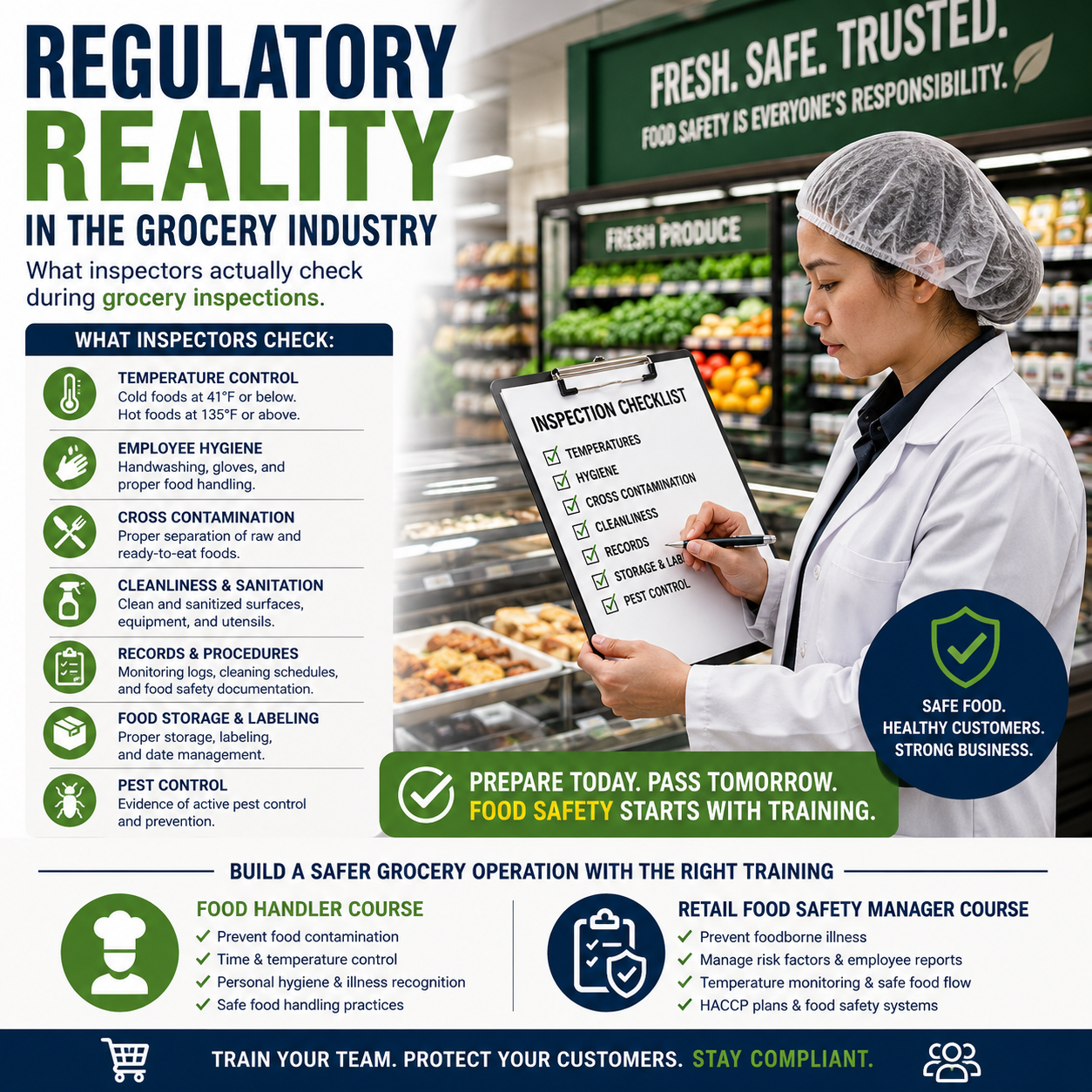
Grocery stores operate under constant pressure to maintain food safety, regulatory compliance, and customer trust. While clean floors and organized shelves matter, health inspectors look far beyond surface-level presentation during inspections. Their focus is on whether food is being handled, stored, prepared, and managed safely throughout the operation.
For grocery businesses across the United States, inspection failures can lead to fines, product loss, damaged reputation, operational disruptions, and increased liability. Understanding what inspectors actually evaluate can help stores strengthen food safety practices before violations occur.
The Food Handler Course and Retail Food Safety Manager Course from TAP Series help grocery employers and employees build stronger food safety awareness and maintain compliance with industry regulations.
What Grocery Inspectors Typically Check During Inspections
Health inspectors assess multiple areas of grocery operations to identify risks that could contribute to foodborne illness or unsafe conditions. Their inspections are designed to evaluate whether stores consistently follow food safety regulations and operational procedures.
Some of the most commonly reviewed areas include:
- Employee hygiene practices
- Temperature monitoring procedures
- Food storage methods
- Cross contamination prevention
- Cleaning and sanitizing practices
- Employee illness reporting
- Food preparation areas
- Product labeling and expiration management
- Pest control measures
- Documentation and food safety procedures
Even minor violations can signal larger operational problems if safety standards are not consistently enforced.
Temperature Control Remains a Major Inspection Priority
Improper temperature control continues to be one of the leading causes of foodborne illness violations in grocery environments. Inspectors often check refrigeration units, hot holding stations, freezers, deli counters, and prepared food sections to ensure foods remain within safe temperature ranges.
Common temperature-related violations include:
- Cold foods stored above safe temperatures
- Improper cooling procedures
- Inaccurate thermometer readings
- Hot foods held below required temperatures
- Failure to monitor and document temperatures consistently
Employees must understand how time and temperature directly affect food safety and customer health.
Employee Hygiene and Illness Reporting Are Closely Reviewed
Inspectors frequently observe employee behavior during inspections. Handwashing compliance, glove usage, and illness reporting procedures are key indicators of a store’s food safety culture.
Inspectors may evaluate whether employees:
- Wash hands properly and consistently
- Use gloves appropriately
- Avoid cross contamination
- Report symptoms or illnesses
- Follow hygiene protocols during food preparation
Failing to address employee illness risks can significantly increase the chance of contamination and outbreaks.
Cross Contamination Risks Receive Significant Attention
Cross contamination remains one of the most common causes of inspection violations in grocery operations. Shared surfaces, improper storage practices, and unsafe food handling procedures can quickly create contamination risks.
Inspectors often review:
- Raw and ready-to-eat food separation
- Sanitizing procedures
- Cutting board usage
- Utensil storage
- Surface cleanliness
- Food packaging practices
Stores that lack consistent training and oversight may struggle to maintain safe handling procedures during busy operations.
Why Food Safety Management Matters in Grocery Operations
Food safety compliance requires more than reacting during inspections. Grocery stores need structured systems, trained employees, and management accountability to maintain safe operations every day.
Strong food safety management programs help organizations:
- Reduce foodborne illness risks
- Improve inspection outcomes
- Protect customer trust
- Maintain regulatory compliance
- Minimize operational disruptions
- Reduce liability exposure
Managers play a critical role in reinforcing food safety expectations and correcting unsafe practices before they become violations.
How Food Handler Training Supports Grocery Employees
The Food Handler Course from TAP Series provides grocery employees with practical food safety knowledge that supports safer workplace habits and stronger compliance awareness.
Key training topics include:
- Identifying food-related health risks
- Preventing food contamination
- Recognizing illness symptoms
- Proper communication procedures
- Time and temperature control
- Hygiene during food preparation and service
This training helps employees better understand how their daily actions directly impact food safety and customer protection.
Why Retail Food Safety Manager Training Is Essential
The Retail Food Safety Manager Course helps supervisors and management teams strengthen operational oversight and improve inspection readiness.
The course covers critical topics such as:
- Preventing foodborne illness
- FDA common risk factors
- Managerial responsibilities
- Employee illness reporting
- Cross contamination awareness
- Safe food flow procedures
- Temperature monitoring
- HACCP planning and implementation
Managers who understand regulatory expectations are better equipped to identify risks early and maintain consistent food safety standards throughout the operation.
Inspection Readiness Starts With Daily Accountability
Successful grocery inspections are usually the result of consistent daily practices rather than last-minute preparation. Employees and managers must work together to maintain food safety standards across all departments and shifts.
Grocery businesses can improve inspection readiness by:
- Conducting regular food safety training
- Reinforcing sanitation procedures daily
- Monitoring temperatures consistently
- Maintaining clear food safety documentation
- Encouraging employee accountability
- Addressing hazards immediately
- Supporting active managerial oversight
When food safety becomes part of everyday operations, stores are better prepared for inspections and better protected against preventable risks.
Strengthen Grocery Food Safety Compliance With TAP Series
Health inspections are designed to identify weaknesses before they result in serious public health issues. Grocery businesses that invest in food safety education and accountability are better positioned to protect customers, employees, and their reputation.
The Food Handler Course and Retail Food Safety Manager Course from TAP Series help grocery organizations improve inspection readiness, reinforce compliance standards, and create safer food handling environments across every level of operation.