Forklift Workplace Safety Programs
Warehouse Safety in Retail: Reducing Forklift Accidents and Liability Risks
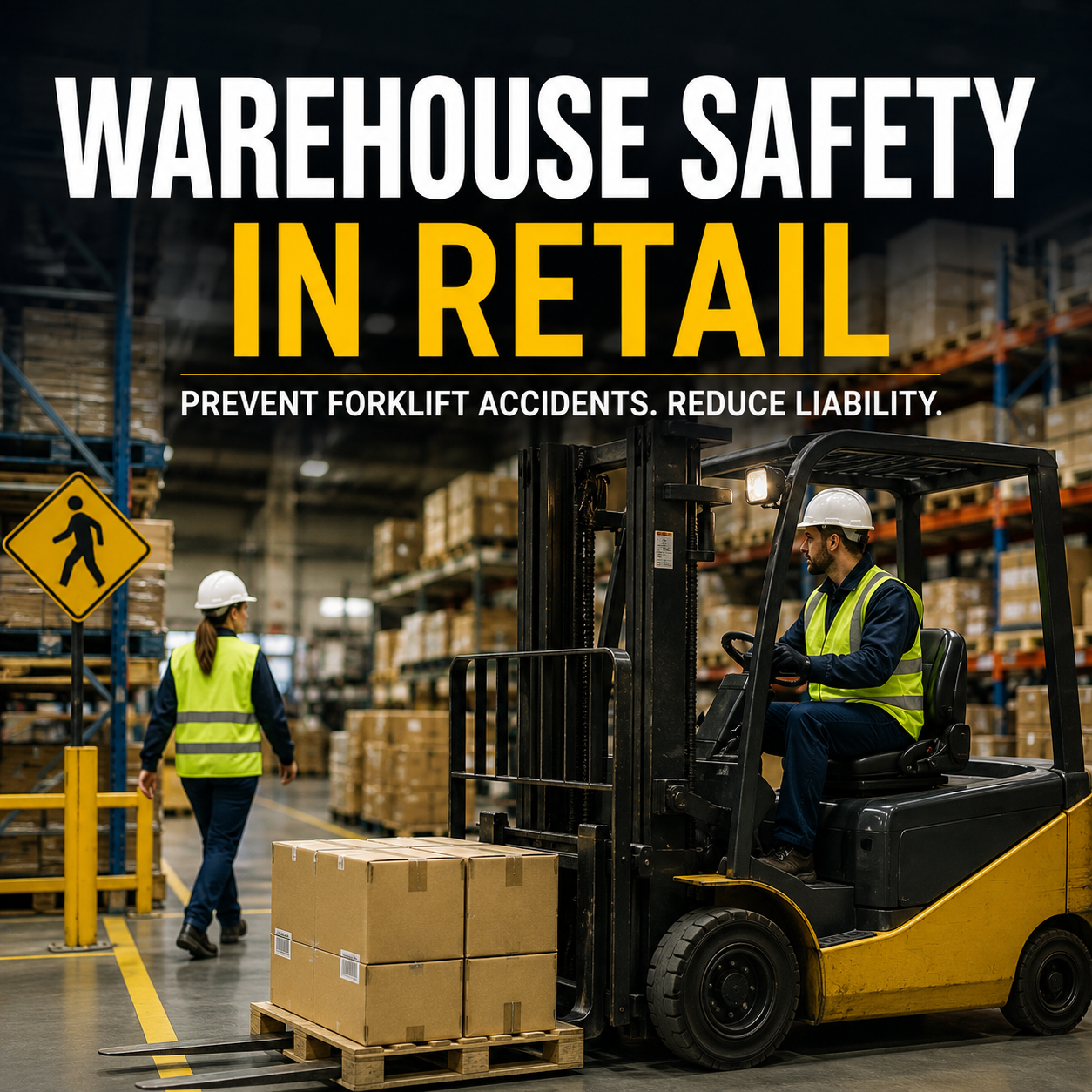
Retail warehouses are the backbone of modern supply chains. From receiving shipments to managing inventory and fulfilling customer orders, warehouse operations keep retail businesses moving. However, one workplace hazard continues to cause serious injuries, property damage, and costly legal claims across the industry: forklift accidents.
For retail companies throughout the United States, preventing forklift incidents is not only a safety priority. It is also a critical step in reducing liability exposure and protecting business operations.
Why Forklift Safety Matters in Retail Warehouses
Forklifts are essential tools in retail distribution centers, stockrooms, and warehouse facilities. They allow employees to move heavy loads efficiently and maintain productivity throughout daily operations.
However, when forklifts are operated improperly, the consequences can be severe.
Common forklift-related incidents include:
- Collisions with pedestrians
- Tip-over accidents
- Falling loads
- Dock and ramp incidents
- Property damage
- Injuries caused by poor visibility
- Improper loading and unloading practices
Even a single accident can result in employee injuries, workers' compensation claims, equipment damage, regulatory scrutiny, and operational disruptions.
The True Cost of Forklift Accidents
Many organizations focus on the immediate costs associated with an accident, but the long-term impact can be much greater.
Forklift incidents can lead to:
- Medical expenses
- Lost productivity
- Overtime costs
- Equipment repairs
- Product loss and inventory damage
- Increased insurance premiums
- Legal settlements
- Reputational damage
For retail companies operating multiple warehouse locations, repeated safety incidents can significantly increase overall business risk.
Understanding Employer Liability
When a forklift accident occurs, investigators often examine whether proper safety procedures, operator training, and supervision were in place.
Employers may face liability concerns if:
- Operators were not properly trained
- Safety procedures were not enforced
- Equipment inspections were neglected
- Hazardous warehouse conditions existed
- Management failed to address known risks
- Refresher training was not provided
Demonstrating a commitment to forklift safety training helps organizations create a safer workplace while supporting compliance and risk management efforts.
Common Causes of Forklift Accidents
Most forklift incidents are preventable when operators understand proper procedures and employers prioritize safety education.
Common causes include:
- Excessive speed
- Distracted operation
- Overloading forklifts
- Improper turning techniques
- Failure to inspect equipment
- Poor visibility
- Unsafe pedestrian interactions
- Inadequate training
Identifying these risks before an accident occurs can help retail organizations strengthen workplace safety programs.
Building a Strong Forklift Safety Culture
Warehouse safety is not solely the responsibility of forklift operators. It requires support from supervisors, managers, and company leadership.
Organizations can strengthen safety performance by:
- Providing comprehensive operator training
- Conducting routine equipment inspections
- Establishing designated traffic routes
- Separating pedestrian and forklift traffic where possible
- Encouraging hazard reporting
- Reinforcing safety expectations through ongoing education
A proactive safety culture helps employees recognize hazards before incidents occur and promotes accountability across the workplace.
Forklift Operator Safety Training for Retail Warehouses
TAP Series offers practical training solutions designed to help retail organizations improve warehouse safety and reduce operational risks.
The Forklift Operator Safety Training course helps employees understand safe forklift operation principles and workplace safety responsibilities.
Key learning areas include:
- Forklift safety fundamentals
- Hazard recognition
- Safe operating practices
- Equipment inspection awareness
- Load handling procedures
- Accident prevention strategies
The course provides accessible training that supports safer warehouse operations while helping employers reinforce workplace safety expectations.
Preventing Accidents Before They Happen
The most effective way to reduce forklift accidents is through prevention. Organizations that invest in employee training and safety awareness are better positioned to avoid costly incidents and maintain operational efficiency.
By educating forklift operators and reinforcing safe workplace behaviors, retail companies can reduce injuries, improve productivity, and strengthen risk management efforts.
Warehouse Safety Protects People and Business Performance
Forklift accidents can have lasting consequences for employees, customers, and organizations. Investing in safety training demonstrates a commitment to protecting workers while reducing liability risks that can impact long-term business success.
For retail warehouses across the United States, proactive Forklift Operator Safety Training is a practical step toward creating safer facilities, minimizing accidents, and supporting a stronger workplace safety culture.
Conclusion
Retail warehouse operations depend on safe equipment use, skilled employees, and consistent safety practices. By prioritizing forklift safety education and hazard prevention, organizations can reduce workplace injuries, limit liability exposure, and create safer, more productive warehouse environments.