Restaurant Health Department Enforcement
Health Department Enforcement in Restaurants: Top Violations Cited by Inspectors
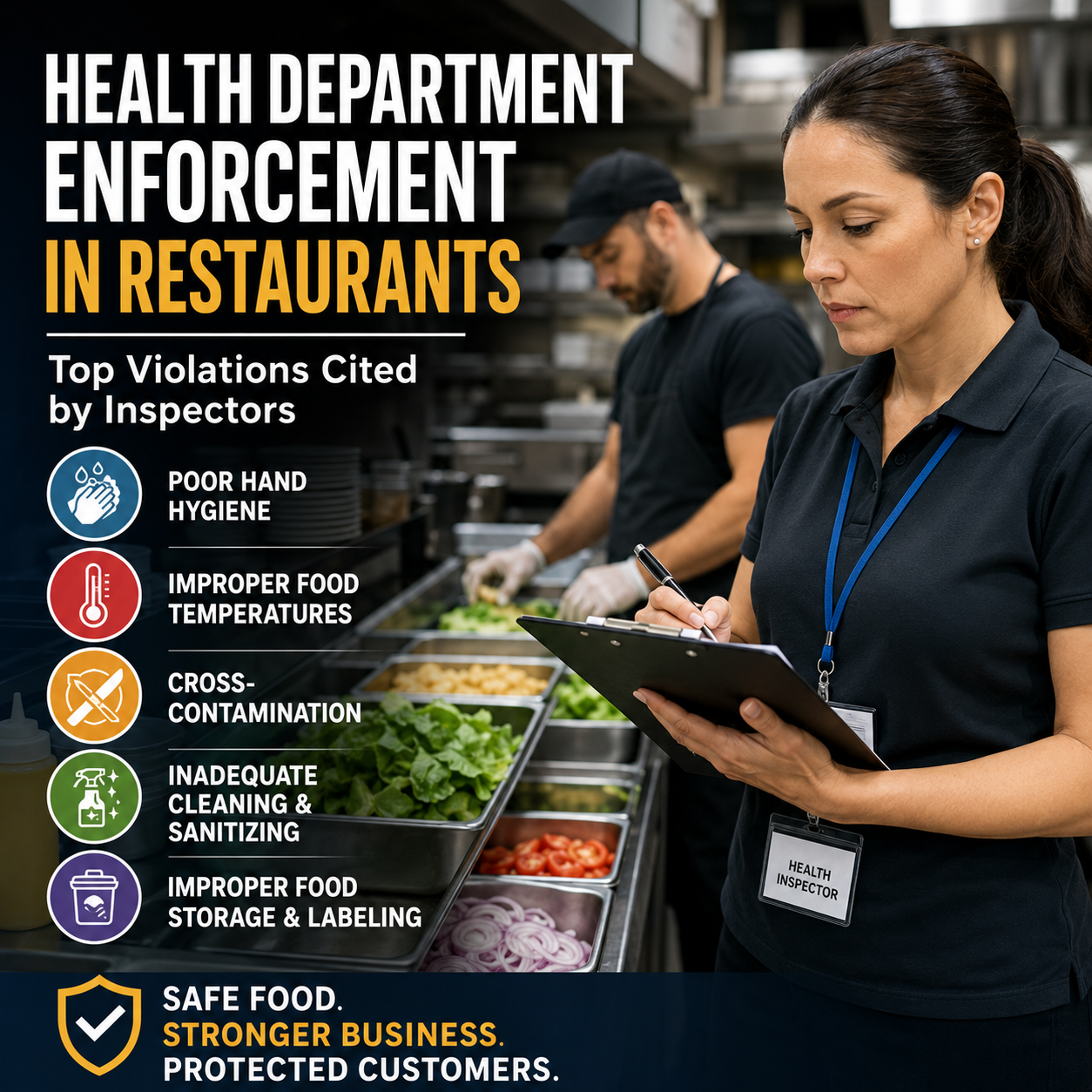
Restaurant operators understand that health inspections are a routine part of doing business. Yet many establishments continue to receive the same violations year after year. While some issues may seem minor, health departments view them as indicators of broader food safety risks that can affect customers, employees, and business operations.
For restaurants across the United States, understanding the violations inspectors most frequently cite is essential for maintaining compliance, protecting public health, and preserving customer trust. The most successful restaurants focus on prevention through training, accountability, and consistent food safety practices.
Why Health Department Enforcement Matters
Health department inspections are designed to identify conditions that may contribute to foodborne illness or unsafe food handling practices. Inspectors evaluate how food is received, stored, prepared, served, and monitored throughout daily operations.
Strong compliance helps restaurants:
- Reduce foodborne illness risks
- Protect customers and employees
- Avoid fines and enforcement actions
- Improve inspection scores
- Maintain positive public perception
- Support long-term business success
Rather than focusing solely on passing inspections, restaurants should aim to create a culture where food safety becomes part of everyday operations.
The Most Common Restaurant Violations Cited by Inspectors
Many health department reports reveal recurring violations that can often be prevented through proper training and oversight.
1. Poor Employee Handwashing Practices
Handwashing remains one of the most frequently cited violations in restaurants.
Inspectors commonly observe:
- Employees failing to wash hands when required
- Inadequate handwashing procedures
- Lack of handwashing after handling raw foods
- Improper use of handwashing sinks
- Missing soap or paper towels
Because employees handle food throughout the day, poor hand hygiene can quickly increase contamination risks.
2. Improper Food Holding Temperatures
Temperature control violations are among the most serious findings during inspections.
Inspectors often check:
- Cold food storage temperatures
- Hot holding temperatures
- Cooling procedures
- Reheating practices
- Thermometer availability and accuracy
When foods remain in the temperature danger zone for extended periods, harmful bacteria can multiply rapidly.
3. Cross-Contamination Risks
Cross-contamination continues to be a leading cause of food safety concerns.
Common violations include:
- Raw foods stored above ready-to-eat foods
- Shared equipment without proper cleaning
- Improper glove use
- Contaminated food preparation surfaces
- Unsafe food handling practices
Inspectors carefully evaluate whether restaurants have procedures in place to prevent contamination throughout food preparation and service.
4. Inadequate Cleaning and Sanitizing
Clean facilities do not always mean food-contact surfaces are properly sanitized.
Inspectors frequently cite:
- Dirty food preparation equipment
- Improper sanitizer concentrations
- Unclean cutting boards and utensils
- Food debris on equipment
- Failure to follow cleaning schedules
Effective sanitizing procedures are critical for reducing foodborne illness risks.
5. Employee Health Policy Violations
Health departments expect restaurants to actively manage employee illness reporting.
Violations may include:
- Employees working while experiencing symptoms
- Lack of illness reporting procedures
- Missing employee health documentation
- Failure to restrict or exclude sick employees
Proper employee health management helps prevent the spread of foodborne pathogens.
6. Improper Food Storage and Labeling
Food storage violations are commonly identified during inspections.
Inspectors may find:
- Missing date labels
- Expired food products
- Improper food rotation
- Food stored directly on the floor
- Uncovered food items
Correct storage practices help maintain food quality and safety while supporting regulatory compliance.
7. Pest Control and Facility Maintenance Issues
Pest-related violations often indicate larger sanitation or maintenance concerns.
Inspectors commonly look for:
- Evidence of rodents or insects
- Gaps around doors and walls
- Standing water
- Improper waste management
- Structural deficiencies
Maintaining the physical facility is an important part of any food safety program.
Why These Violations Keep Happening
Many recurring violations are not caused by a lack of effort. Instead, they often stem from:
- Insufficient employee training
- High staff turnover
- Inconsistent management oversight
- Poor documentation practices
- Lack of accountability
- Failure to reinforce food safety procedures
Without ongoing education and supervision, even experienced teams can develop habits that lead to violations.
How Restaurants Can Reduce Inspection Risks
Restaurants that consistently perform well during inspections often follow a proactive approach.
Key strategies include:
- Conduct regular food safety training
- Monitor critical food safety procedures daily
- Perform internal inspections
- Document corrective actions
- Reinforce accountability across all shifts
- Maintain accurate food safety records
When food safety becomes part of the restaurant's culture, compliance improves naturally.
Training as a First Line of Defense
Effective training helps employees understand not only what procedures to follow but also why they matter.
Food Handler Training | TAP Series® provides frontline restaurant employees with essential knowledge about personal hygiene, safe food handling, contamination prevention, temperature control, and food safety best practices.
Foodservice Food Safety Manager Certification Training | TAP Series® helps managers develop the leadership and regulatory knowledge need ed to oversee food safety programs, maintain compliance, and prepare teams for health department inspections.
Together, these training programs help restaurants strengthen compliance efforts while reducing the risk of costly violations.
Preparing for the Next Inspection
Health department enforcement is not intended to catch restaurants off guard. It is designed to verify that food safety systems are working consistently every day. Understanding the most commonly cited violations allows restaurant operators to focus their efforts where inspectors focus theirs.
Restaurants that invest in employee education, strong management practices, and ongoing food safety training are better positioned to achieve compliance, protect customers, and maintain operational excellence in an increasingly regulated environment.