Food Allergy Awareness For Restaurant Staff
How Allergen Mistakes Turn Into Lawsuits
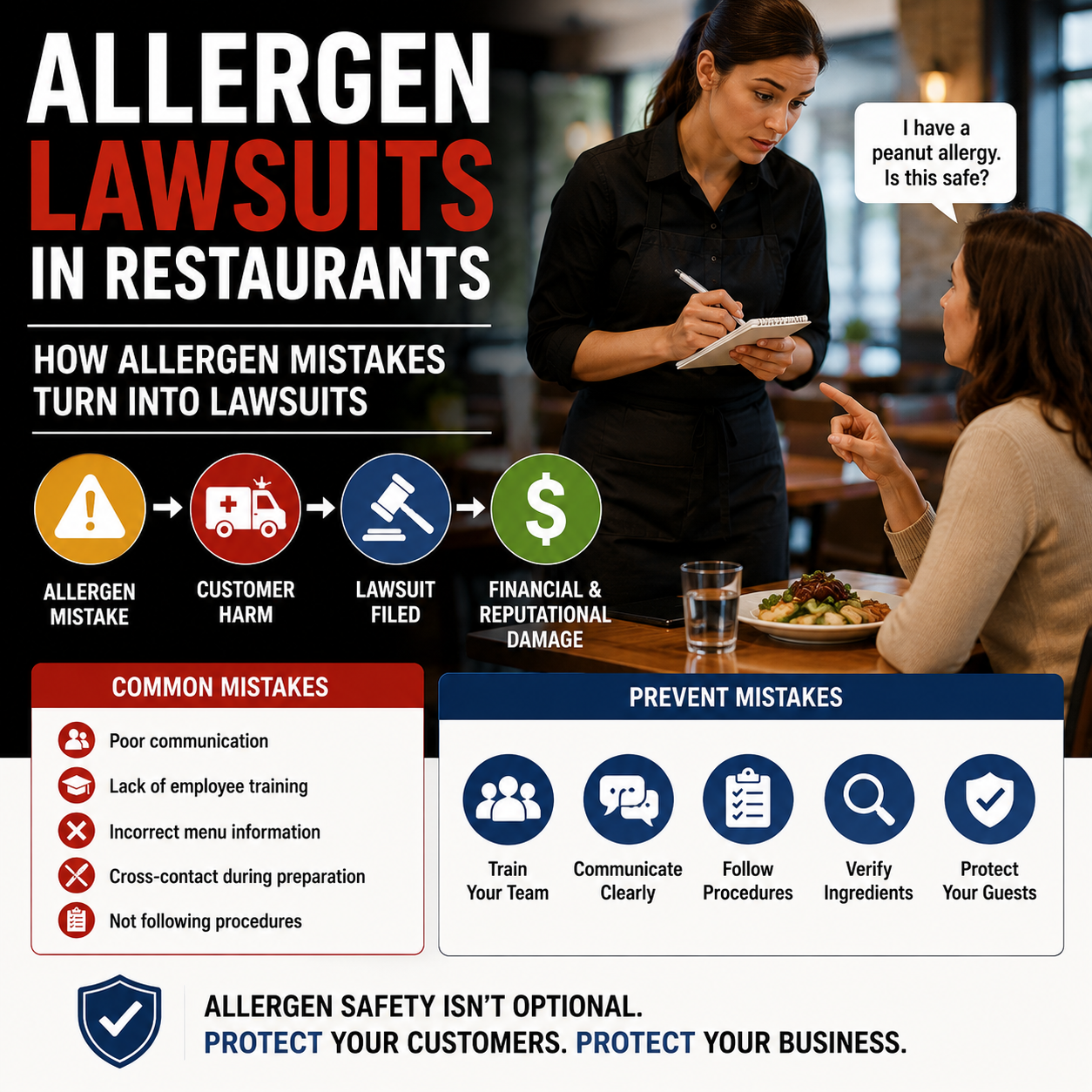
For millions of Americans living with food allergies, dining out requires a significant amount of trust. Customers depend on restaurants to provide accurate information about ingredients, prepare meals safely, and prevent allergen cross-contact. When that trust is broken, the consequences can be severe.
An allergen mistake is not always viewed as a simple customer service issue. In many cases, it can lead to serious medical emergencies, reputational damage, regulatory scrutiny, and costly legal action. As food allergies continue to affect a growing number of consumers, restaurants must recognize how small mistakes can quickly escalate into lawsuits.
Why Food Allergens Are a Major Risk for Restaurants
Food allergies can trigger reactions ranging from mild symptoms to life-threatening anaphylaxis. Even trace amounts of an allergen can cause severe reactions in sensitive individuals.
The most common food allergens include:
- Milk
- Eggs
- Fish
- Crustacean shellfish
- Tree nuts
- Peanuts
- Wheat
- Soy
- Sesame
Customers with allergies often rely on restaurant staff to answer questions accurately and communicate allergen concerns throughout the food preparation process.
How Allergen Incidents Typically Begin
Many allergen-related incidents start with what appears to be a minor oversight.
Examples include:
- Incorrect ingredient information provided to a customer
- Failure to communicate an allergy to kitchen staff
- Cross-contact during food preparation
- Shared utensils or cooking surfaces
- Menu labeling errors
- Employee misunderstandings about allergens
What may seem like a small mistake can have significant consequences if a customer experiences an allergic reaction.
When an Allergen Mistake Becomes a Lawsuit
Restaurants can face legal claims when customers suffer harm due to allergen-related errors.
Common allegations may include:
- Negligence
- Failure to warn
- Misrepresentation of ingredients
- Inadequate employee training
- Failure to follow established procedures
- Unsafe food handling practices
Legal action often focuses on whether the restaurant took reasonable steps to protect customers and prevent foreseeable risks.
The Financial Impact of Allergen Claims
An allergen lawsuit can be expensive even before a case reaches trial.
Potential costs may include:
- Medical expenses
- Legal defense fees
- Settlements
- Insurance claims
- Increased insurance premiums
- Lost business revenue
- Public relations costs
Beyond direct financial losses, allergen incidents can significantly damage a restaurant's reputation and customer trust.
Common Failures That Lead to Liability
Many allergen lawsuits involve preventable breakdowns in communication or procedures.
1. Poor Staff Communication
When allergy information is not communicated clearly between servers, managers, and kitchen staff, mistakes become more likely.
2. Lack of Employee Training
Employees who do not understand allergens, cross-contact risks, or restaurant procedures may unintentionally create dangerous situations.
3. Inaccurate Menu Information
Outdated recipes, ingredient substitutions, or incorrect menu descriptions can expose customers to allergens they are actively trying to avoid.
4. Cross-Contact During Food Preparation
Shared cooking surfaces, utensils, fryers, or storage areas can transfer allergens even when ingredients appear safe.
5. Failure to Follow Established Procedures
Many incidents occur because employees bypass established safety protocols during busy periods or staffing shortages.
Why Documentation Matters
When allergen incidents occur, documentation often becomes an important factor during investigations and legal proceedings.
Restaurants should maintain records related to:
- Employee training
- Allergen procedures
- Menu updates
- Corrective actions
- Incident reports
Proper documentation demonstrates an organization's commitment to food safety and allergen management.
Building a Strong Allergen Safety Program
Restaurants can significantly reduce risk by implementing comprehensive allergen management practices.
Important steps include:
- Establish clear allergen procedures.
- Train employees regularly.
- Improve communication between front-of-house and kitchen staff.
- Review ingredients and recipes consistently.
- Prevent cross-contact through proper food handling practices.
- Respond quickly and accurately to customer allergy inquiries.
A proactive approach helps protect both customers and the business.
The Role of Training in Preventing Allergen Incidents
Many allergen-related mistakes can be prevented when employees understand their responsibilities and follow proper procedures.
Allergen Awareness Training | TAP Series® helps restaurant employees recognize foo d allergens, understand cross-contact risks, communicate effectively with customers, and follow safe food handling practices that support allergen safety.
The course provides practical knowledge that helps organizations reduce risk while creating safer dining experiences for customers with food allergies.
Protecting Customers and Protecting the Business
Allergen lawsuits rarely result from intentional wrongdoing. More often, they stem from communication failures, inadequate training, or inconsistent procedures. Unfortunately, even a single mistake can have life-changing consequences for a customer and significant legal consequences for a restaurant.
Restaurants that prioritize allergen awareness, employee education, and clear safety procedures are better positioned to protect their customers, reduce liability exposure, and maintain the trust that is essential for long-term success.