Cafeteria Food Handling Procedures
Food Safety in Schools: Cafeteria Compliance and Allergen Safety
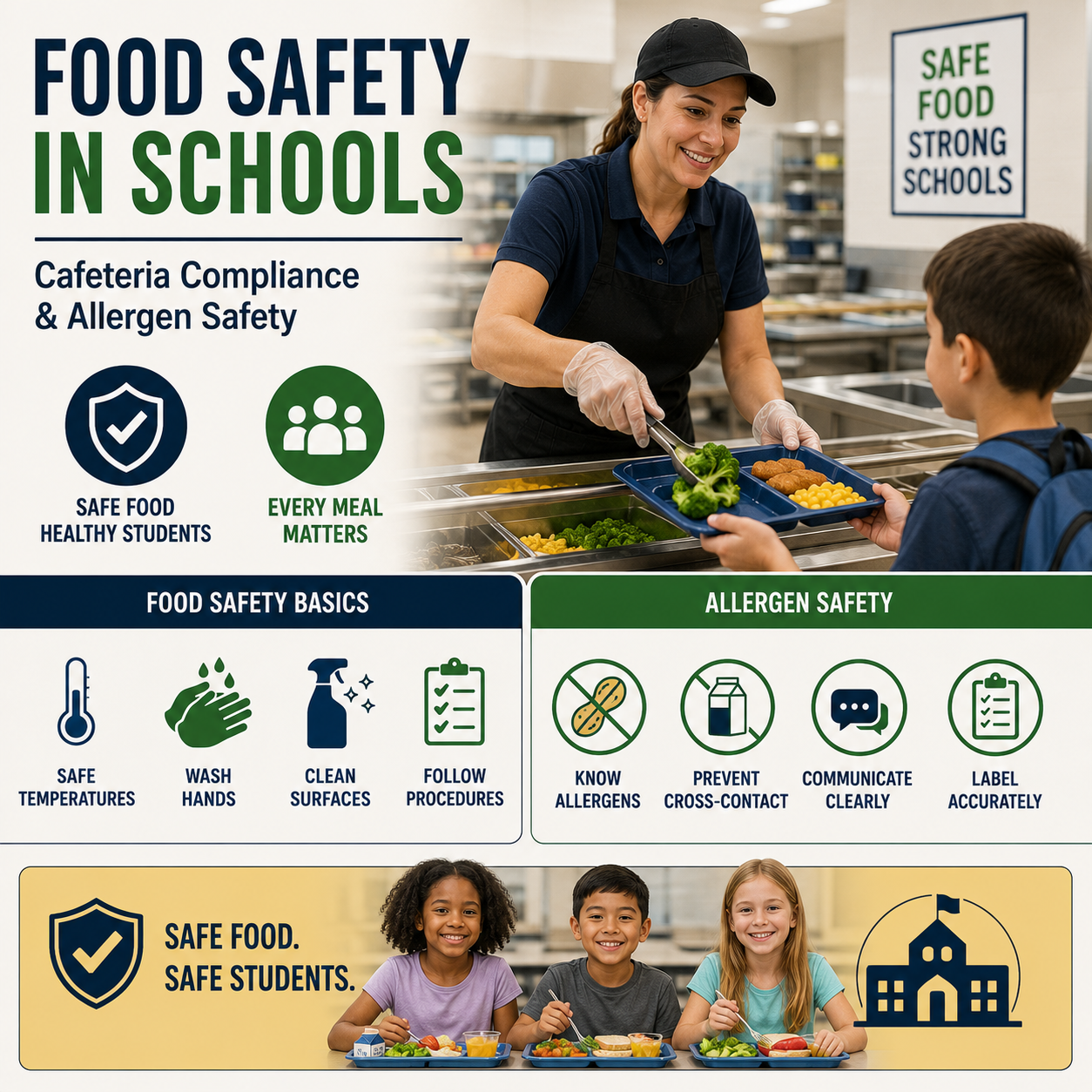
School cafeterias play an important role in supporting student health, well-being, and academic success. Every day, millions of meals are prepared and served to students across the United States, making food safety a critical responsibility for school districts, educational institutions, and foodservice teams.
While maintaining compliance with food safety regulations is essential, schools face an additional challenge: protecting students with food allergies. A single food handling mistake or allergen-related error can have serious consequences for student health and expose schools to significant liability and reputational risk.
Creating a safe cafeteria environment requires a combination of strong food safety practices, allergen awareness, employee training, and consistent compliance efforts.
Why Food Safety Matters in School Cafeterias
Students rely on school meal programs to provide safe, nutritious food every day. Unlike many foodservice environments, schools often serve large volumes of meals within limited timeframes while accommodating diverse dietary needs.
Strong food safety programs help schools:
- Protect student health
- Reduce the risk of foodborne illness
- Maintain regulatory compliance
- Support parent confidence
- Prevent operational disruptions
- Promote a safe learning environment
Food safety is not only a regulatory requirement. It is a vital part of student care and protection.
Common Food Safety Risks in School Cafeterias
School foodservice teams face many of the same food safety challenges found in restaurants and other food operations.
Common risks include:
- Improper food temperatures
- Inadequate handwashing
- Cross-contamination
- Improper cleaning and sanitizing
- Unsafe food storage
- Poor personal hygiene practices
- Inaccurate food labeling
Without proper controls, these issues can increase the likelihood of foodborne illness outbreaks.
The Growing Importance of Allergen Safety
Food allergies affect millions of children in the United States, making allergen management a major concern for schools.
Common food allergens include:
- Milk
- Eggs
- Peanuts
- Tree nuts
- Wheat
- Soy
- Fish
- Shellfish
- Sesame
For some students, exposure to even a small amount of an allergen can trigger a severe allergic reaction.
Common Allergen Risks in School Cafeterias
Allergen incidents often result from preventable mistakes.
Examples include:
- Incorrect meal identification
- Cross-contact during food preparation
- Shared utensils or equipment
- Inaccurate ingredient information
- Failure to communicate dietary restrictions
- Improper food labeling
Schools must ensure that allergen safety procedures are consistently followed throughout meal preparation and service.
Understanding Cafeteria Compliance Requirements
Compliance involves more than simply passing inspections. It requires maintaining food safety standards every day.
Key areas of focus include:
1. Employee Hygiene
Foodservice employees should follow proper handwashing and personal hygiene procedures to reduce contamination risks.
2. Temperature Monitoring
Schools should regularly verify that foods are stored, cooked, and held at safe temperatures.
3. Cleaning and Sanitization
Food-contact surfaces, equipment, and preparation areas must be cleaned and sanitized properly.
4. Documentation
Accurate records help demonstrate compliance and support food safety programs.
Examples include:
- Temperature logs
- Cleaning schedules
- Employee training records
- Corrective action reports
5. Allergen Controls
Schools should establish clear procedures for managing allergen-related requests and preventing cross-contact.
Building a Strong Food Safety Culture in Schools
Food safety is most effective when it becomes part of the school's daily culture.
Educational institutions can strengthen cafeteria safety by:
- Providing regular employee training
- Conducting routine food safety reviews
- Reinforcing allergen awareness
- Encouraging accountability
- Updating procedures when regulations change
- Promoting open communication among staff
When employees understand their responsibilities, compliance becomes more consistent and sustainable.
How Training Supports Compliance and Student Safety
Many food safety incidents can be prevented through proper education and awareness.
Food Handler Training | TAP Series® provides school cafeteria employee s with essential knowledge on food handling, contamination prevention, personal hygiene, temperature control, and food safety best practices.
Allergen Awareness Training | TAP Series® helps employees understand food allergen s, prevent cross-contact, communicate effectively about dietary restrictions, and support safer meal service for students with food allergies.
Together, these training programs help schools strengthen compliance efforts while creating safer dining environments for students.
Protecting Students Through Food Safety and Allergen Awareness
School cafeterias serve as an important extension of the educational environment. Every meal served represents an opportunity to support student health and well-being. By prioritizing food safety compliance and allergen management, schools can reduce risk, improve operational performance, and provide families with greater confidence in their meal programs.
Through strong procedures, ongoing training, and a commitment to safety, educational institutions can help ensure that every student has access to meals that are both nutritious and safe.