Financial Planning
Property as an Investment: Is Real Estate Still Worth It?
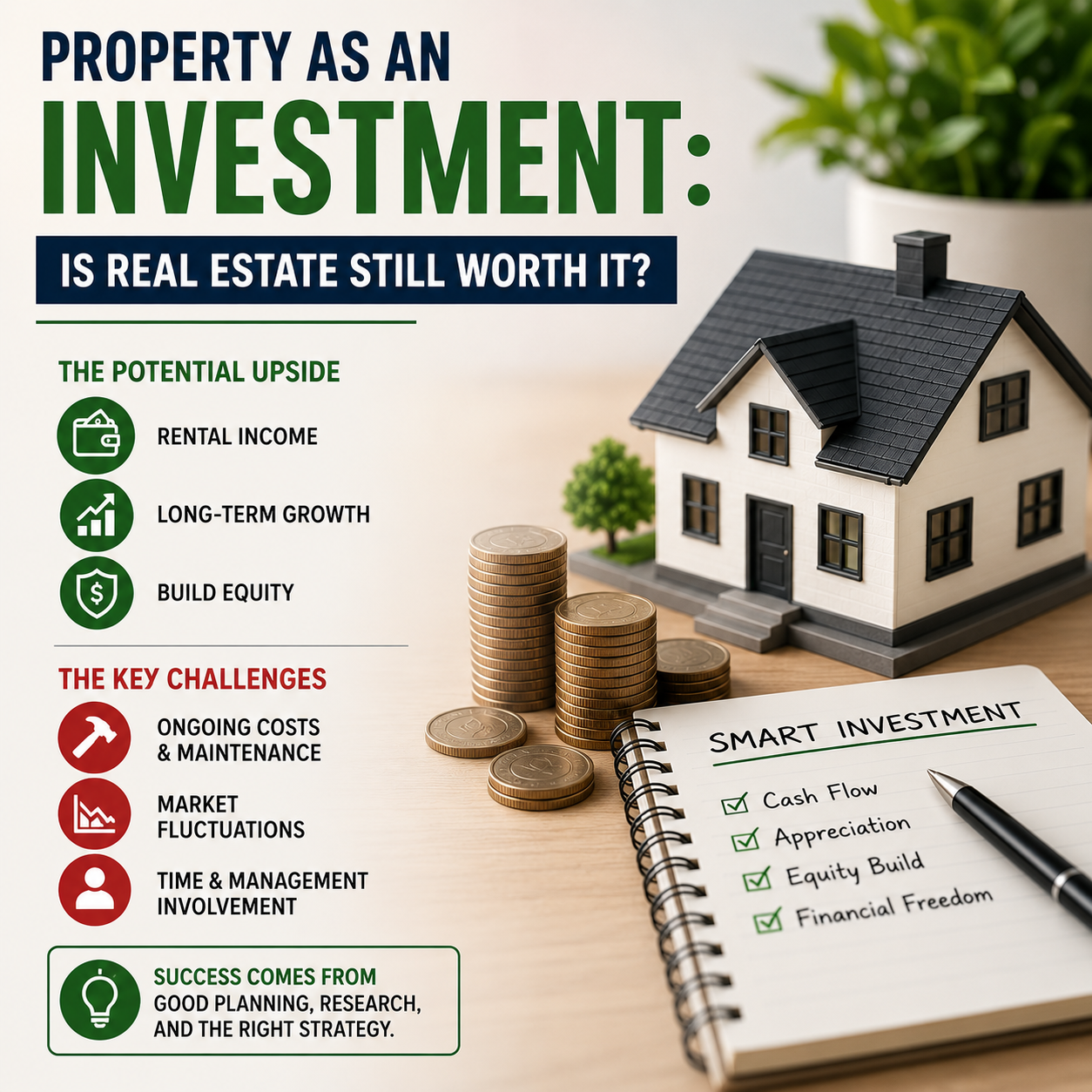
For decades, real estate has been viewed as one of the most popular ways to build wealth. From rental homes and apartment units to commercial spaces and vacation properties, investing in property has long been associated with financial growth, passive income opportunities, and long-term stability.
However, today's economic environment has caused many prospective investors to reconsider their options. Rising property prices, higher borrowing costs, inflation concerns, and changing market conditions have sparked an important question: Is real estate still worth it as an investment?
The answer depends on individual goals, financial circumstances, risk tolerance, and investment timelines. While property continues to offer several potential advantages, it is not without challenges. Understanding both the opportunities and limitations can help investors make more informed decisions.
Why Real Estate Has Historically Been Popular
Unlike many financial assets, real estate is a tangible investment. Investors purchase a physical property that can serve a practical purpose while potentially generating financial value over time.
Historically, many people have been attracted to property investing because it offers multiple potential ways to build wealth.
These may include:
- Rental income
- Property appreciation
- Equity growth
- Portfolio diversification
- Potential inflation protection
Rather than relying on a single source of return, real estate can generate value through several mechanisms simultaneously.
This flexibility has helped make property a common component of many long-term wealth-building strategies.
The Appeal of Passive Income
One of the primary reasons investors consider real estate is the potential to generate passive income through rental properties.
When tenants pay rent, property owners may receive ongoing income that can help offset ownership costs such as mortgage payments, taxes, insurance, and maintenance.
In some cases, rental income may exceed operating expenses, creating positive cash flow. However, this outcome depends on numerous factors, including:
- Property location
- Rental demand
- Vacancy rates
- Financing costs
- Property management expenses
- Maintenance requirements
It is important to understand that rental income is rarely entirely passive. Property ownership often involves ongoing responsibilities, including tenant management, repairs, maintenance, and administrative tasks.
Some investors choose professional property management services, but these services also add to operating costs.
Understanding Property Appreciation
Property appreciation refers to an increase in a property's value over time.
Many investors view appreciation as one of the most attractive aspects of real estate ownership. As neighborhoods develop, populations grow, and demand increases, property values may rise.
Several factors can influence appreciation potential:
Location
Properties in areas with strong economic activity, growing populations, and infrastructure improvements may experience greater demand over time.
Housing Supply and Demand
Limited housing inventory combined with strong demand can contribute to rising property values.
Community Development
New transportation systems, schools, commercial developments, and public investments may enhance an area's appeal and influence future property values.
While appreciation can contribute significantly to long-term wealth building, it is important to recognize that property values do not increase uniformly. Market conditions vary by region, and periods of slower growth or declining values can occur.
Real Estate and Inflation Protection
Inflation reduces the purchasing power of money over time. As the cost of goods and services rises, investors often seek assets that may help preserve value.
Real estate is frequently discussed as a potential hedge against inflation because both property values and rental rates may increase during inflationary periods.
For example:
- Replacement and construction costs may rise.
- Housing demand may remain strong.
- Rental income may increase in some markets.
These factors can help property owners maintain purchasing power under certain conditions.
However, inflation can also create challenges. Higher interest rates, increased maintenance expenses, insurance costs, and property taxes may affect overall returns.
As with any investment, inflation protection is not guaranteed and depends heavily on market conditions and property-specific factors.
Building Long-Term Wealth Through Equity
Another advantage often associated with real estate investing is equity accumulation.
Equity represents the portion of a property that an owner truly owns after accounting for any outstanding mortgage balance.
As mortgage payments are made and loan balances decline, equity generally increases. If the property's value also rises over time, equity growth may accelerate further.
Many long-term investors view equity as an important component of wealth building because it can contribute to overall net worth.
Unlike short-term market fluctuations that may affect some financial assets, equity growth often occurs gradually over many years.
The Risks and Challenges of Property Investing
While real estate offers potential benefits, it is important to understand the risks involved.
Common challenges include:
High Initial Costs
Purchasing property often requires substantial upfront capital, including down payments, closing costs, and reserves for future expenses.
Ongoing Maintenance
Properties require continuous upkeep. Unexpected repairs and maintenance costs can affect profitability and cash flow.
Market Fluctuations
Property values can rise or fall based on economic conditions, interest rates, employment trends, and local market factors.
Limited Liquidity
Unlike stocks or other financial assets that can often be sold quickly, real estate transactions may take weeks or months to complete.
Vacancy Risk
Rental properties may experience periods without tenants, reducing income while ownership expenses continue.
Understanding these risks is essential for setting realistic expectations and developing a sustainable investment strategy.
Is Real Estate Still Worth It in Today's Market?
Whether real estate is worth pursuing as an investment depends largely on an individual's objectives and financial situation.
For some investors, property may offer:
- Potential rental income
- Long-term appreciation opportunities
- Portfolio diversification
- Equity growth
- A tangible asset with practical value
For others, the higher costs, management responsibilities, and market uncertainties may make alternative investment options more suitable.
Rather than asking whether real estate is universally worth it, a more useful question may be whether a specific property aligns with your financial goals, risk tolerance, and investment timeline.
What Prospective Investors Should Consider
Before purchasing investment property, individuals may benefit from evaluating:
- Their available capital
- Emergency savings
- Financing costs
- Local market conditions
- Long-term investment objectives
- Property management responsibilities
- Potential risks and expenses
Careful research and financial preparation can help investors better understand whether a particular opportunity supports their broader financial plans.
Final Thoughts
Real estate remains a popular investment choice because of its potential to generate rental income, support long-term wealth building, provide equity growth, and offer some protection against inflation. However, these benefits come alongside responsibilities, expenses, and market risks that should not be overlooked.
As with any investment, success depends less on market trends alone and more on thoughtful planning, financial readiness, and a clear understanding of both opportunities and challenges.
For prospective investors, the key is not simply determining whether real estate is worth it, but understanding how property fits within a broader financial strategy and long-term wealth-building plan.