Restaurant Liability Protection
Alcohol Liability in Restaurants: Understanding Legal Exposure from Alcohol Service
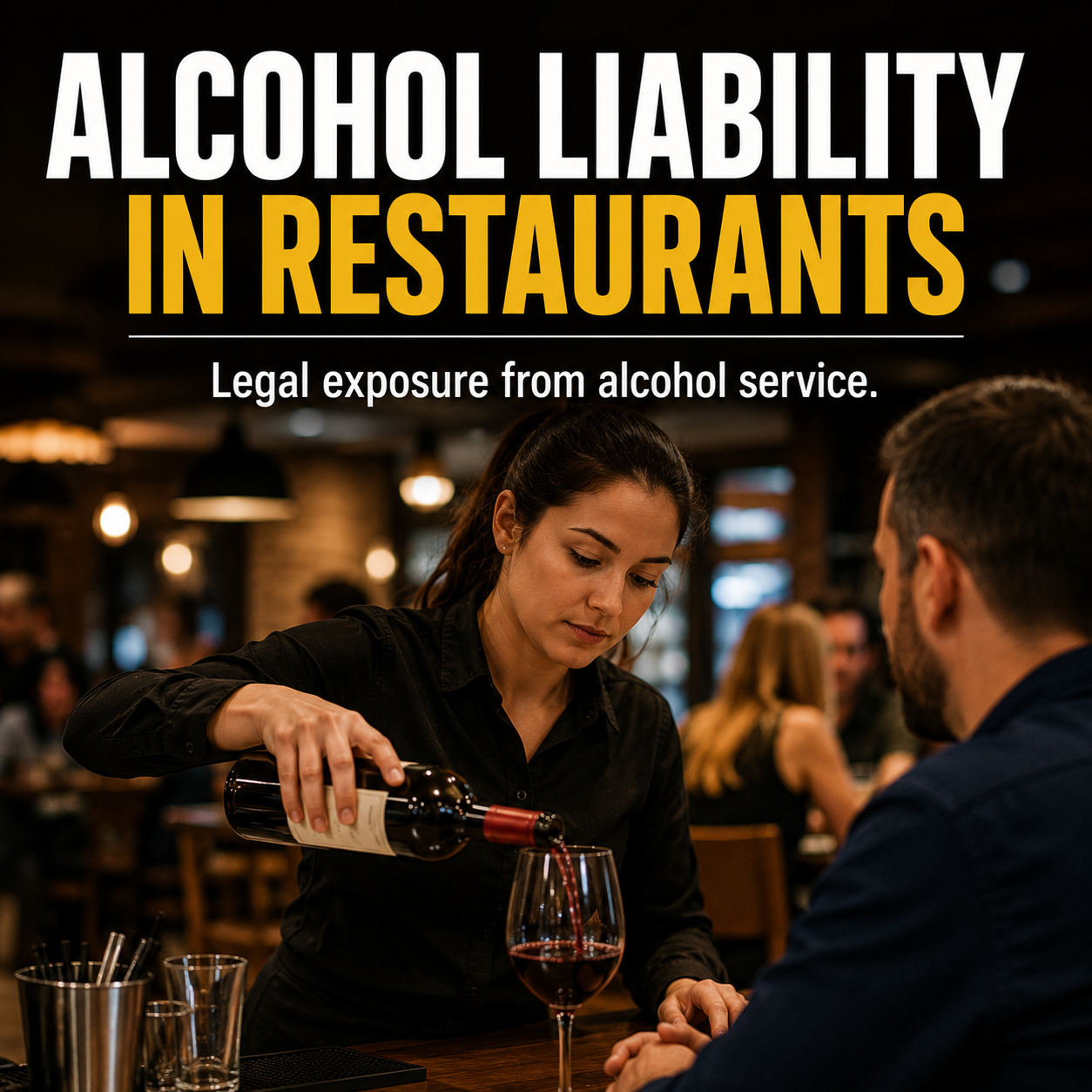
Alcohol service can be a valuable part of a restaurant's business model, helping increase revenue and enhance the guest experience. However, serving alcohol also carries significant legal responsibilities. When alcohol is served improperly, restaurants may face lawsuits, regulatory penalties, license suspensions, and reputational damage that can impact long-term operations.
Many restaurant operators focus on food safety and customer service, but alcohol liability is an equally important risk management issue. Understanding how legal exposure develops from alcohol service can help businesses protect their employees, customers, and organization.
Why Alcohol Service Creates Liability Risks
Restaurants that serve alcohol have a duty to follow applicable laws and responsible service practices. Employees are often the first line of defense in identifying potentially risky situations before they escalate.
Alcohol-related incidents may involve:
- Intoxicated patrons
- Underage drinking attempts
- Fraudulent identification
- Customer injuries
- Property damage
- Vehicle accidents
- Altercations involving guests
When alcohol service contributes to these situations, restaurants may face legal scrutiny regarding whether reasonable steps were taken to prevent foreseeable harm.
Understanding Dram Shop Liability
Many states have laws that may hold alcohol-serving establishments responsible under certain circumstances when alcohol is served negligently.
Potential situations include:
- Serving alcohol to visibly intoxicated individuals
- Serving alcohol to underage customers
- Failing to verify identification properly
- Ignoring warning signs of impairment
While laws vary by state, the financial and legal consequences can be substantial.
Common Alcohol Service Mistakes That Increase Risk
Many liability claims originate from routine mistakes made during daily operations.
1. Failing to Recognize Signs of Intoxication
Employees may overlook indicators such as:
- Slurred speech
- Impaired coordination
- Aggressive behavior
- Delayed reactions
- Difficulty concentrating
- Excessive consumption within a short period
Recognizing these warning signs is critical for responsible alcohol service.
2. Inadequate ID Verification
Accepting invalid identification can expose restaurants to significant legal and regulatory penalties.
Common mistakes include:
- Rushing ID checks
- Failing to examine expiration dates
- Ignoring signs of altered identification
- Accepting questionable documents
Consistent verification procedures help reduce underage sales risks.
3. Overserving Customers
Pressure to maximize sales can sometimes lead employees to continue serving guests who should no longer receive alcohol.
Overservice can increase the likelihood of:
- Accidents
- Injuries
- Fights
- Property damage
- Liability claims
Responsible service practices prioritize safety over short-term sales opportunities.
4. Poor Staff Communication
Alcohol-related concerns should be communicated clearly among team members.
Breakdowns can occur when:
- Shift changes are not documented
- Managers are not informed about concerns
- Servers fail to communicate customer behavior
- Security personnel are not notified when necessary
Strong communication supports safer decision-making.
The Financial Impact of Alcohol Liability
Alcohol-related incidents can create substantial costs for restaurants.
Potential consequences include:
- Civil lawsuits
- Legal defense expenses
- Insurance claims
- Increased insurance premiums
- Regulatory penalties
- Liquor license suspension or revocation
- Loss of customer trust
Even a single incident can have lasting operational and financial consequences.
Creating a Culture of Responsible Alcohol Service
Restaurants that successfully manage alcohol-related risks typically establish clear expectations and procedures.
Best practices include:
- Verify identification consistently.
- Train employees to recognize intoxication.
- Encourage employees to refuse service when necessary.
- Maintain management oversight.
- Document incidents appropriately.
- Reinforce responsible service policies regularly.
A proactive approach helps reduce liability while supporting customer safety.
Why Training Is Essential
Many alcohol-related incidents are preventable when employees understand both legal requirements and responsible service practices.
Proper training helps employees:
- Recognize signs of intoxication
- Verify identification correctly
- Understand alcohol service laws
- Respond appropriately to difficult situations
- Reduce liability risks
- Protect customers and the business
Knowledge and confidence are critical when employees must make decisions that may affect safety and compliance.
Strengthening Compliance Through Education
Alcohol Server/Seller Training | TAP Series® provides employees with practical guidance on responsible alcohol service, age verification procedures, recognizing intoxication, understanding legal responsibilities, and preventing alcohol-related incidents.
The course helps restaurants build stronger compliance programs while supporting safer customer experiences and reducing potential legal exposure.
Protecting Your Restaurant from Alcohol-Related Risks
Alcohol service offers opportunities for restaurants, but it also introduces responsibilities that cannot be overlooked. Legal exposure often develops from small decisions made during routine customer interactions. When employees are properly trained and supported, they are better equipped to make responsible choices that protect both guests and the business.
By investing in alcohol service education, reinforcing compliance expectations, and promoting responsible service practices, restaurants can reduce liability risks while creating a safer environment for everyone involved.