Retail Safety Best Practices
OSHA Risk in Retail: Understanding OSHA Violations in Retail Operations
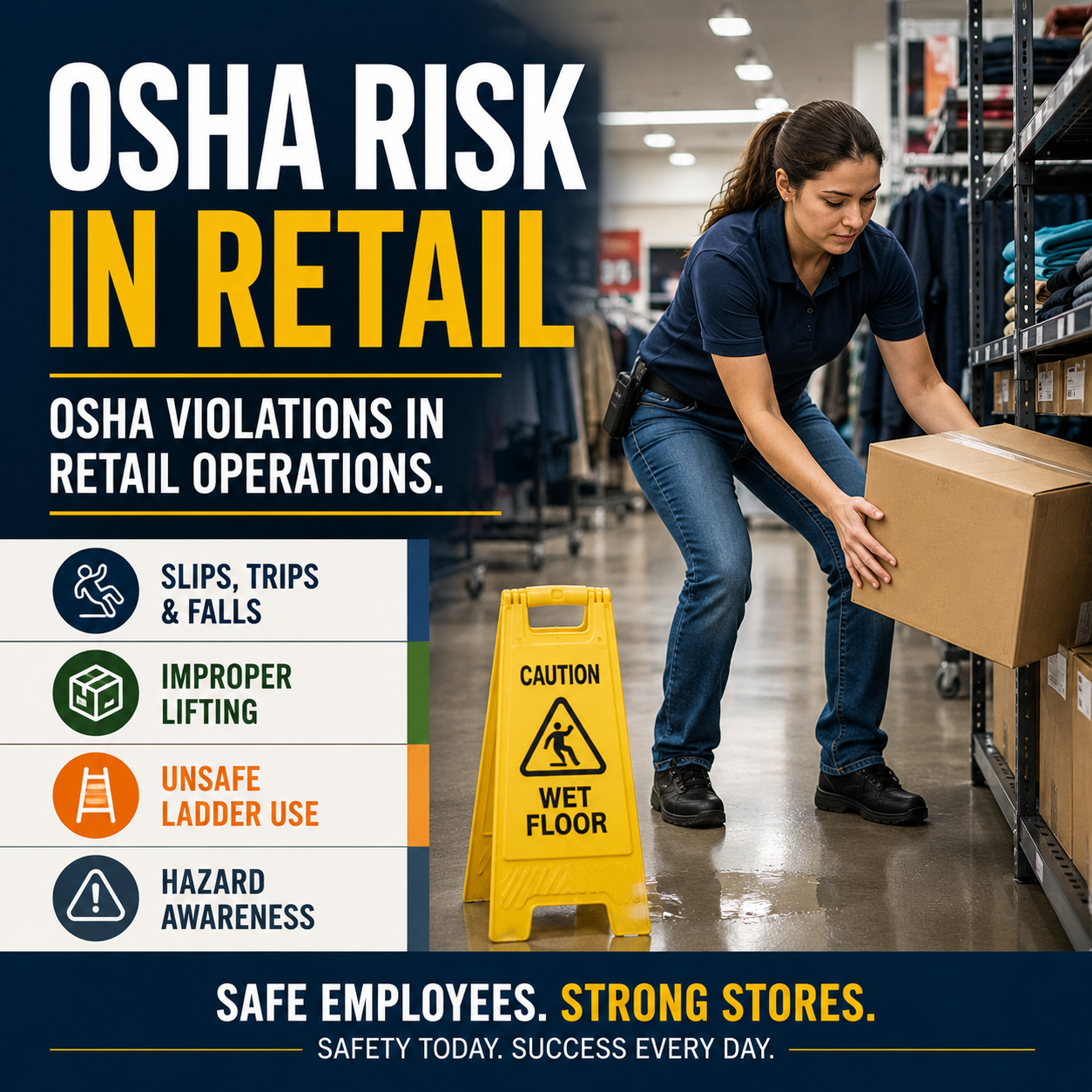
Retail environments are often perceived as relatively low-risk workplaces compared to manufacturing plants, warehouses, or construction sites. However, retail employees face a wide range of workplace hazards every day, from slips and falls to material handling injuries and workplace violence incidents. As a result, Occupational Safety and Health Administration (OSHA) compliance remains a critical responsibility for retail employers across the United States.
Many OSHA violations in retail operations stem from preventable issues that develop gradually over time. Understanding these risks and addressing them proactively can help organizations improve workplace safety, reduce injuries, and avoid costly penalties.
Why OSHA Compliance Matters in Retail
OSHA regulations are designed to protect employees from workplace hazards and ensure employers maintain safe working environments.
Strong OSHA compliance helps retailers:
- Reduce workplace injuries
- Improve employee well-being
- Minimize lost work time
- Lower workers' compensation costs
- Avoid regulatory penalties
- Strengthen organizational safety culture
Safety compliance is not simply a regulatory obligation. It is an important investment in employees and business operations.
Common OSHA Violations in Retail Operations
Retail businesses can encounter numerous safety risks throughout daily operations.
1. Slips, Trips, and Falls
One of the most common sources of workplace injuries involves slips, trips, and falls.
Potential causes include:
- Wet floors
- Spilled merchandise
- Uneven walking surfaces
- Cluttered aisles
- Poor housekeeping practices
- Inadequate warning signs
Even minor hazards can result in significant employee injuries.
2. Improper Material Handling
Retail employees frequently move inventory, stock shelves, and unload deliveries.
Common risks include:
- Lifting heavy items incorrectly
- Repetitive motion injuries
- Overexertion
- Improper carrying techniques
- Lack of lifting assistance
Material handling injuries often develop when employees are not trained on safe procedures.
3. Blocked Exits and Emergency Access Routes
Emergency exits must remain accessible at all times.
Violations may occur when:
- Inventory blocks exit doors
- Merchandise obstructs walkways
- Emergency equipment is inaccessible
- Storage areas exceed capacity
These conditions can create serious safety concerns during emergencies.
4. Unsafe Ladder Use
Retail employees often use ladders to stock products and retrieve merchandise.
Common violations include:
- Standing on top steps
- Using damaged ladders
- Improper ladder placement
- Carrying items while climbing
- Failing to inspect equipment
Falls from ladders remain a significant workplace injury risk.
5. Inadequate Hazard Communication
Employees must understand workplace hazards and how to protect themselves.
Potential issues include:
- Missing safety labels
- Improper chemical storage
- Lack of employee training
- Missing Safety Data Sheets
- Failure to communicate hazards effectively
Hazard communication programs play an important role in OSHA compliance.
6. Poor Housekeeping Practices
Housekeeping issues can contribute to multiple workplace hazards.
Examples include:
- Excess packaging materials
- Cluttered stockrooms
- Obstructed walkways
- Unsecured merchandise
- Improper storage practices
Maintaining organized work areas helps reduce accidents and improve efficiency.
The Hidden Costs of OSHA Violations
OSHA violations often create costs beyond regulatory fines.
Potential consequences include:
- Employee injuries
- Workers' compensation claims
- Increased insurance costs
- Lost productivity
- Employee turnover
- Reputational damage
A single safety incident can affect both operations and employee morale.
Why Retail Safety Risks Are Often Overlooked
Many workplace hazards develop gradually and become part of everyday routines.
Common reasons violations occur include:
- Inadequate employee training
- Staffing shortages
- Time pressures
- Lack of safety awareness
- Inconsistent supervision
- Failure to conduct safety inspections
Without regular attention, small hazards can become larger compliance concerns.
Building a Safer Retail Workplace
Organizations that prioritize safety often experience fewer incidents and stronger compliance outcomes.
Key strategies include:
- Conduct routine safety inspections.
- Address hazards promptly.
- Train employees regularly.
- Encourage hazard reporting.
- Reinforce safe work practices.
- Review safety procedures frequently.
A proactive approach helps prevent accidents before they occur.
The Role of Safety Training
Employee education is one of the most effective ways to reduce OSHA-related risks.
Training helps employees:
- Recognize workplace hazards
- Follow safe work practices
- Understand emergency procedures
- Prevent injuries
- Support regulatory compliance
- Contribute to a stronger safety culture
Well-trained employees are better prepared to identify and address risks before incidents occur.
Strengthening OSHA Compliance Through Education
OSHA Safety Awareness Training | TAP Series® provides employees with practical knowledge about workplace hazards, safety responsibilities, injury prevention, hazard recognition, and OSHA compliance principles.
The course helps retail organizations build safer workplaces while supporting employee awareness and reducing operational risk.
Creating a Culture of Safety in Retail
OSHA compliance is not achieved through inspections alone. It requires ongoing commitment, employee engagement, and continuous improvement. Many retail violations originate from small safety issues that are ignored or misunderstood until an incident occurs.
By investing in safety awareness training, encouraging proactive hazard identification, and reinforcing safe workplace practices, retailers can reduce injuries, strengthen compliance efforts, and create safer environments for employees and customers alike.