Campus Safety Planning
Violence Preparedness in Education: Why Preparedness Planning Matters for Schools
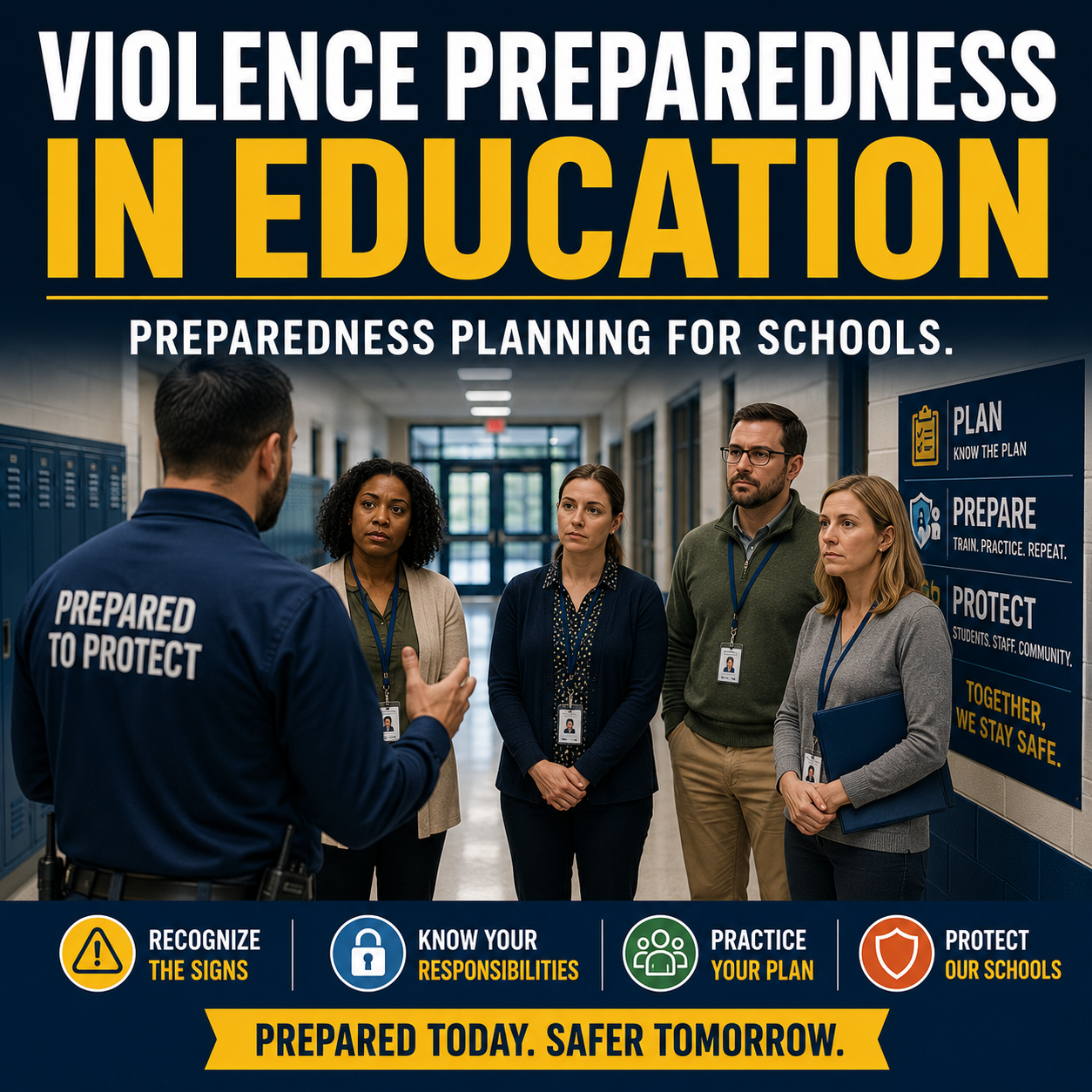
Schools are designed to be safe environments where students can learn, grow, and thrive. However, educational institutions must also prepare for a wide range of safety threats that could impact students, staff, visitors, and the broader community. While serious acts of violence are rare, preparedness planning remains an essential responsibility for school leaders and educators.
Violence preparedness is not about creating fear. It is about ensuring that schools have the procedures, training, and resources necessary to respond effectively during emergencies. Strong planning can improve response times, reduce confusion, and help protect lives when every second matters.
Why Violence Preparedness Is Essential
Educational institutions face a variety of potential safety concerns that require organized response planning.
Examples include:
- Active shooter incidents
- Violent intruders
- Physical assaults
- Threats of violence
- Domestic disputes entering school property
- Weapons-related incidents
- Emergency lockdown situations
Preparation helps schools respond quickly and consistently while supporting the safety of everyone on campus.
The Importance of a School Preparedness Plan
A preparedness plan provides a structured framework for responding to emergencies.
Effective plans help schools:
- Define response procedures
- Establish communication protocols
- Clarify staff responsibilities
- Improve coordination with emergency responders
- Reduce confusion during critical incidents
- Support student and staff safety
Without a clear plan, employees may struggle to make decisions under pressure.
Key Elements of Violence Preparedness Planning
Preparedness involves more than having written policies. Schools must ensure that plans are understood, practiced, and regularly reviewed.
1. Emergency Response Procedures
Schools should establish clear procedures for various emergency situations.
Examples include:
- Lockdown procedures
- Shelter-in-place procedures
- Evacuation procedures
- Communication protocols
- Reunification plans
Employees should understand when and how each procedure should be implemented.
2. Staff Training and Awareness
Training ensures that employees understand their responsibilities during emergencies.
Areas of focus may include:
- Threat recognition
- Emergency communications
- Situational awareness
- Decision-making under stress
- Response procedures
Prepared employees are more likely to respond effectively when emergencies occur.
3. Communication Planning
Effective communication is critical during any crisis.
Schools should establish methods for communicating with:
- Staff
- Students
- Parents
- Emergency responders
- Community stakeholders
Clear communication can help reduce panic and support coordinated responses.
4. Coordination With First Responders
Collaboration with local law enforcement, fire departments, and emergency management agencies strengthens preparedness efforts.
Partnerships may include:
- Joint planning
- Site assessments
- Emergency drills
- Information sharing
- Response coordination
Strong relationships improve readiness before an emergency occurs.
5. Regular Drills and Exercises
Preparedness plans should be tested regularly.
Drills help:
- Identify procedural gaps
- Reinforce employee responsibilities
- Improve response times
- Build confidence
- Strengthen coordination
Practice helps transform written procedures into effective actions.
Common Preparedness Challenges
Many schools encounter obstacles when implementing preparedness programs.
Examples include:
- Limited training opportunities
- Inconsistent plan reviews
- Staff turnover
- Communication gaps
- Unclear responsibilities
- Lack of emergency awareness
Addressing these challenges requires ongoing commitment and organizational support.
Building a Culture of Safety and Awareness
Preparedness is most effective when safety becomes part of the school's culture.
Educational organizations can strengthen readiness by:
- Providing ongoing training.
- Reviewing plans regularly.
- Encouraging safety awareness.
- Promoting communication among staff.
- Conducting routine exercises.
- Evaluating and improving procedures continuously.
Preparedness should be viewed as an ongoing process rather than a one-time activity.
The Role of Active Shooter Awareness Training
One of the most important components of violence preparedness is ensuring employees understand how to recognize threats and respond appropriately during critical incidents.
Active Shooter Awareness Training | TAP Series® provides employees with practical guidance on situational awareness, threat recognition, emergency response principles, and preparedness strategies that support workplace and school safety.
The course helps educational institutions strengthen emergency preparedness efforts while improving employee confidence and awareness.
Preparing Today for Tomorrow's Challenges
Violence preparedness planning is an essential part of responsible school leadership. While schools hope they never face a serious emergency, preparation helps ensure that staff members are equipped to respond effectively if one occurs.
By investing in training, reviewing emergency procedures, conducting regular drills, and promoting a culture of safety, educational institutions can strengthen their readiness and better protect students, employees, and their communities.