Sexual Harassment Awareness Training
Workplace Culture in Restaurants: Harassment Claims and Turnover Risks
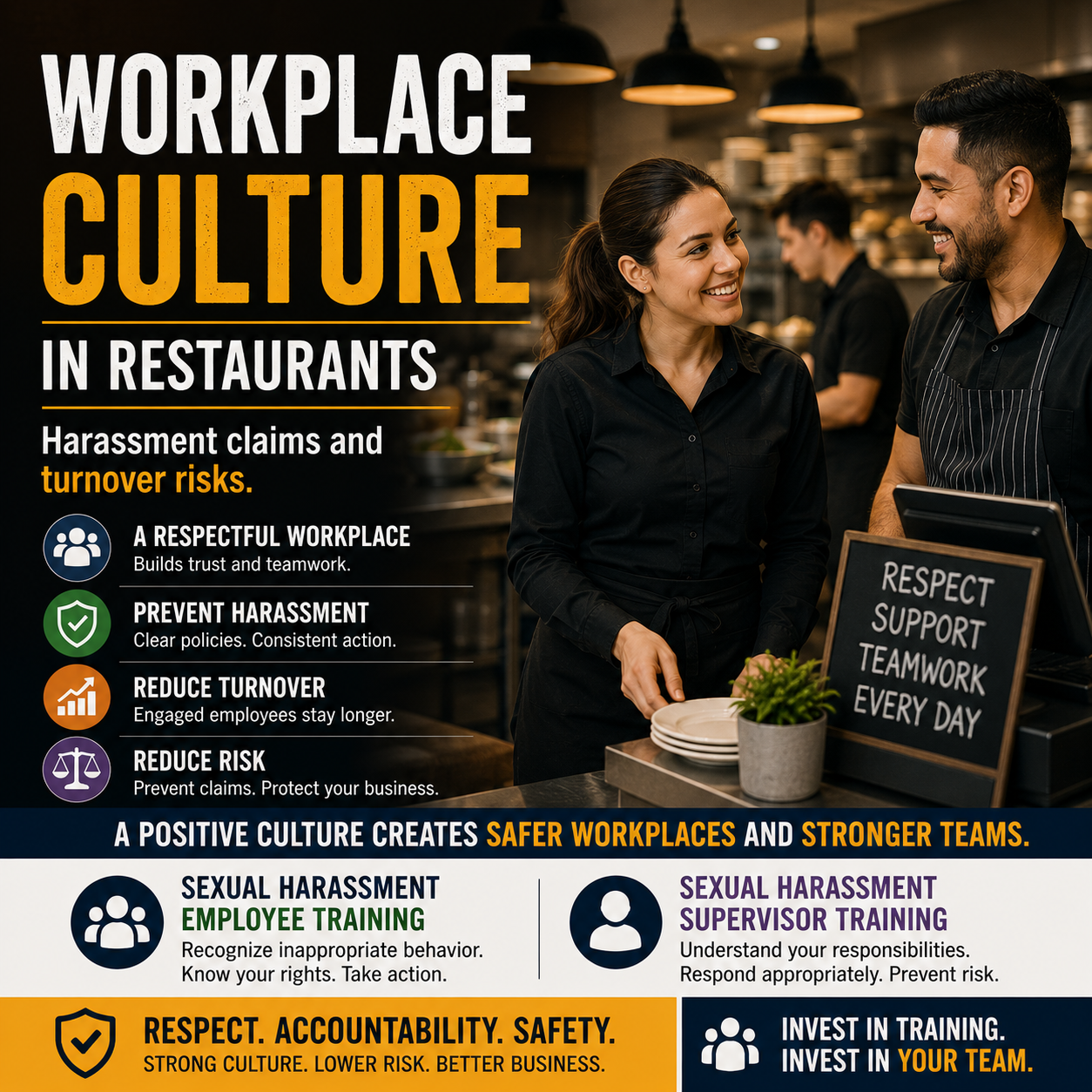
The restaurant industry depends on teamwork, communication, and employee engagement to deliver exceptional customer experiences. However, maintaining a positive workplace culture can be challenging in fast-paced environments where employees work under pressure, interact closely with coworkers, and often manage demanding customer situations.
When workplace harassment occurs, the consequences extend far beyond employee dissatisfaction. Harassment claims can create significant legal exposure, damage morale, increase turnover, and negatively impact a restaurant's reputation. For restaurant operators across the United States, fostering a respectful workplace culture is both a business necessity and a compliance responsibility.
Why Workplace Culture Matters
A healthy workplace culture helps employees feel respected, valued, and supported.
Strong workplace cultures often lead to:
- Higher employee engagement
- Improved retention
- Better teamwork
- Increased productivity
- Stronger customer service
- Reduced workplace conflicts
Conversely, workplaces that tolerate inappropriate behavior may experience ongoing staffing challenges and elevated organizational risk.
Understanding Workplace Harassment
Workplace harassment can take many forms and may involve employees, supervisors, managers, vendors, or even customers.
Examples may include:
- Offensive comments
- Unwelcome jokes
- Inappropriate physical conduct
- Intimidation
- Bullying behavior
- Unwanted advances
- Retaliation after reporting concerns
Harassment can affect employees at every level of an organization and can undermine workplace trust if left unaddressed.
The Connection Between Harassment and Employee Turnover
Employees who experience or witness harassment are more likely to become disengaged from their workplace.
Potential outcomes include:
- Increased absenteeism
- Reduced morale
- Lower productivity
- Workplace conflict
- Stress and anxiety
- Voluntary resignations
In an industry already facing workforce challenges, preventable turnover can significantly impact operations and profitability.
The Cost of Harassment Claims
Harassment claims can create substantial financial and operational consequences.
Potential costs may include:
- Legal expenses
- Settlements
- Regulatory investigations
- Increased insurance costs
- Reputational damage
- Recruitment and training expenses
- Lost productivity
Even allegations that do not result in litigation can disrupt workplace operations and damage employee trust.
Common Factors That Contribute to Workplace Culture Problems
Many harassment issues develop when organizations fail to establish clear expectations and accountability.
Common contributing factors include:
- Lack of employee training
- Inconsistent policy enforcement
- Poor supervisory oversight
- Failure to address complaints
- Unclear reporting procedures
- Tolerance of inappropriate behavior
Addressing these issues early can help prevent larger workplace problems from developing.
The Role of Supervisors and Managers
Supervisors play a critical role in shaping workplace culture.
Their responsibilities often include:
- Modeling professional behavior
- Addressing inappropriate conduct
- Responding to complaints promptly
- Reinforcing organizational policies
- Supporting employees who raise concerns
- Promoting respectful communication
Employees are more likely to trust workplace processes when leadership demonstrates a commitment to accountability.
Creating a Respectful Restaurant Workplace
Restaurants can strengthen workplace culture through proactive efforts focused on prevention and awareness.
Key strategies include:
- Establish clear anti-harassment policies.
- Communicate expectations regularly.
- Encourage employees to report concerns.
- Investigate complaints promptly.
- Hold individuals accountable for misconduct.
- Provide ongoing employee and supervisor training.
Creating a respectful environment requires consistent attention from every level of the organization.
Why Training Is Essential
Training helps employees understand workplace expectations, recognize inappropriate behavior, and respond appropriately when concerns arise.
Effective education can help organizations:
- Reduce workplace risks
- Improve reporting confidence
- Strengthen compliance efforts
- Promote respectful interactions
- Support a positive workplace culture
- Reduce turnover related to workplace issues
Training reinforces the standards that employees and leaders are expected to follow.
Strengthening Workplace Culture Through Education
Sexual Harassment Employee Training | TAP Series® helps employees recognize harassment, understand workplace expectations, and contribute to a respectful and professional work environment.
This course also equips managers and supervisors with the knowledge needed to identify concerns, respond appropriately to complaints, fulfill leadership responsibilities, and support organizational compliance efforts.
Together, this program helps restaurants reduce risk while creating workplaces where employees feel respected, supported, and valued.
Building a Culture That Retains Employees
A strong workplace culture is one of the most effective tools restaurants have for reducing turnover and protecting their organization from unnecessary risk. Employees who feel safe and respected are more likely to remain engaged, contribute positively to the team, and deliver better customer experiences.
By investing in harassment prevention training, strengthening leadership accountability, and promoting respectful workplace practices, restaurant operators can build cultures that support both employee well-being and long-term business success.