Understanding Mortgage Interest Rates
How Inflation Impacts Real Estate Prices and Mortgage Rates
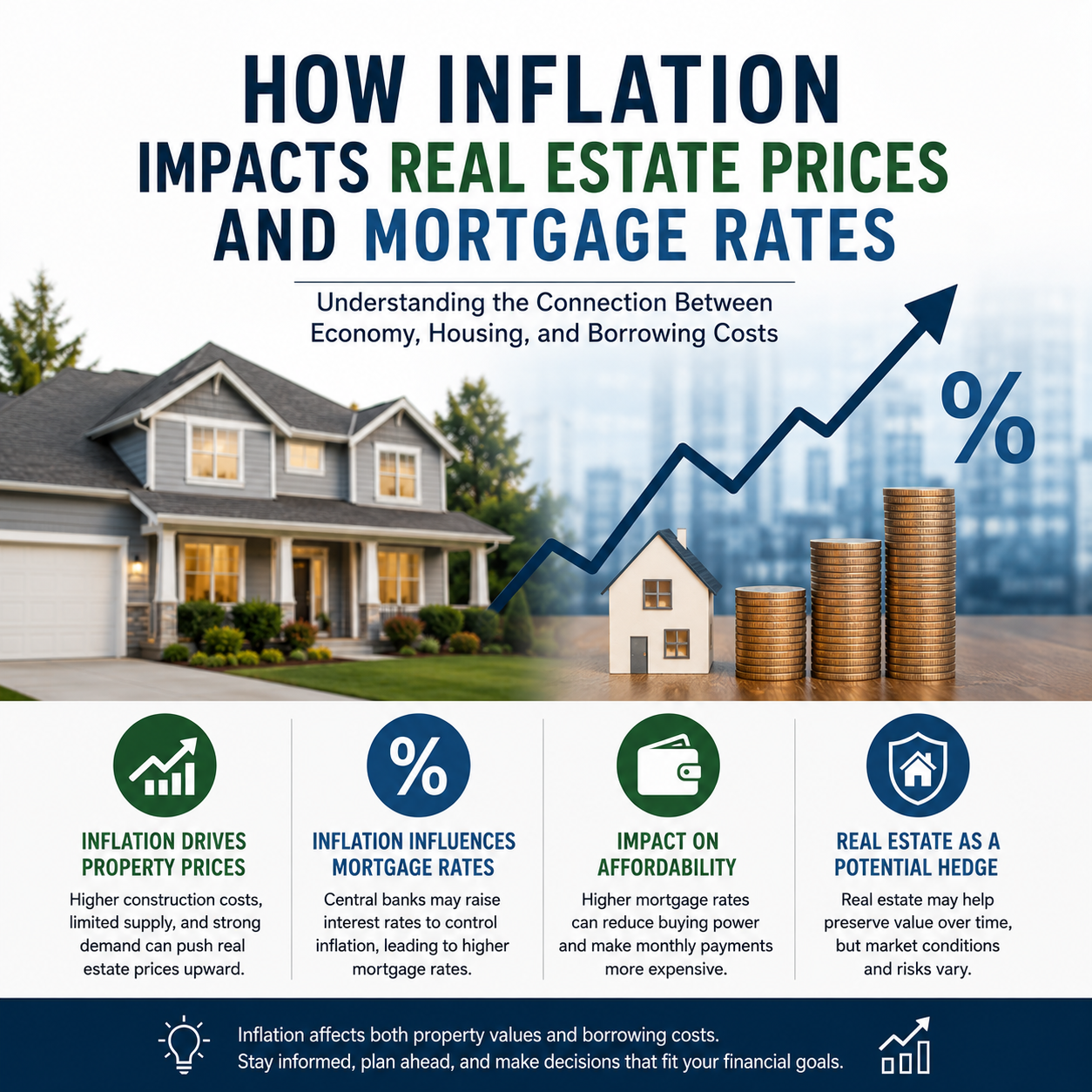
Inflation affects nearly every part of the economy, from groceries and fuel to wages and housing costs. For prospective homebuyers, homeowners, and real estate investors, understanding the relationship between inflation, property prices, and mortgage rates is essential for making informed decisions.
While inflation can influence real estate values and borrowing costs, its effects are often complex and can vary depending on economic conditions, local housing markets, and government policies. By understanding how inflation works, buyers can better evaluate market trends and prepare for potential changes in housing affordability.
Understanding Inflation and the Housing Market
Inflation refers to the general increase in the prices of goods and services over time, resulting in a decline in purchasing power.
When inflation rises:
- Construction materials often become more expensive
- Labor costs may increase
- Land development expenses can grow
- Consumer purchasing power may change
- Interest rates may rise in response
These factors can directly and indirectly affect both property values and mortgage costs.
How Inflation Can Influence Real Estate Prices
Real estate is often considered a tangible asset that may retain value during periods of inflation.
Higher Construction Costs
One of the most immediate effects of inflation is increased construction expenses.
Builders may face higher costs for:
- Lumber and building materials
- Steel and concrete
- Transportation and logistics
- Skilled labor
As development costs increase, newly built homes may become more expensive, which can place upward pressure on housing prices.
Increased Demand for Real Assets
During periods of higher inflation, some individuals view real estate as a potential store of value.
This can increase demand for:
- Residential properties
- Rental properties
- Land holdings
Higher demand may contribute to rising property prices in certain markets.
Limited Housing Supply
If inflation slows construction activity due to rising costs, the supply of available homes may not keep pace with demand.
When supply remains limited and demand remains strong, property prices can continue to increase.
The Relationship Between Inflation and Mortgage Rates
While inflation may support higher property values, it can also increase borrowing costs.
Why Mortgage Rates Often Rise
Central banks frequently respond to persistent inflation by increasing benchmark interest rates to help slow economic activity and control price growth.
As interest rates rise:
- Mortgage lenders often increase borrowing rates
- Monthly mortgage payments may become higher
- Purchasing power for buyers may decline
This can affect overall housing affordability.
Example of Mortgage Cost Changes
Consider a buyer purchasing the same property under different interest rate environments.
A lower mortgage rate may result in:
- Lower monthly payments
- Reduced total borrowing costs
A higher mortgage rate may result in:
- Larger monthly payments
- Increased lifetime interest expenses
Even small interest rate changes can significantly affect affordability over a long mortgage term.
How Rising Mortgage Rates Affect Homebuyers
Mortgage rates play a major role in determining how much buyers can comfortably afford.
Reduced Buying Power
When rates increase, buyers may qualify for smaller loan amounts while maintaining the same monthly budget.
For example:
- A buyer with a fixed monthly housing budget may need to consider less expensive properties.
- Some buyers may postpone purchases until affordability improves.
Changes in Market Activity
Higher borrowing costs can sometimes reduce buyer demand.
This may lead to:
- Longer listing times
- Slower price growth
- Increased negotiation opportunities in some markets
However, local market conditions can vary significantly.
Inflation's Impact on Existing Homeowners
Current homeowners may experience both advantages and challenges during inflationary periods.
Potential Benefits
Homeowners with fixed-rate mortgages may benefit from:
- Stable mortgage payments
- Potential property value appreciation
- Growing home equity if values increase
As general prices rise, fixed mortgage payments become a smaller portion of future income for some households.
Potential Challenges
Homeowners may also face higher costs related to:
- Property maintenance
- Home insurance
- Renovations
- Property taxes in some areas
These expenses can affect overall housing costs even when mortgage payments remain unchanged.
Real Estate as a Potential Inflation Hedge
Real estate is often discussed as a potential hedge against inflation because property values and rental income may increase over time.
Why Some Investors Consider Real Estate During Inflation
Potential reasons include:
- Property values may rise alongside inflation
- Rental income may adjust with market conditions
- Physical assets can retain value during periods of currency depreciation
However, real estate performance is not guaranteed and depends on numerous factors, including location, market demand, and economic conditions.
Important Considerations
Not all properties respond equally to inflation.
Factors such as:
- Local employment growth
- Population trends
- Housing supply
- Neighborhood desirability
can significantly influence outcomes.
Strategies Buyers May Consider During Inflationary Periods
Prospective buyers can take several practical steps when evaluating housing decisions during inflation.
Focus on Affordability
Consider:
- Monthly payment comfort levels
- Emergency savings
- Future maintenance costs
- Potential interest rate changes
Compare Fixed and Variable Mortgage Options
Different loan structures may respond differently to changing interest rate environments.
Buyers should carefully evaluate the risks and benefits of each option based on their circumstances.
Evaluate Long-Term Ownership Plans
Longer ownership periods may help offset short-term market fluctuations and transaction costs.
However, individual financial goals and personal circumstances should always guide decision-making.
Conclusion
Inflation can have a significant impact on both real estate prices and mortgage rates. Rising construction costs, increased demand for tangible assets, and limited housing supply may contribute to higher property values. At the same time, efforts to control inflation often lead to higher interest rates, which can increase borrowing costs and affect affordability.
Understanding these relationships can help buyers, homeowners, and investors navigate changing market conditions with greater confidence. While inflation creates both opportunities and challenges, evaluating housing decisions through a long-term perspective can support more informed and balanced real estate planning.