Workplace Safety In Warehouses
Warehouse Safety in Retail: Forklift Accidents and Liability
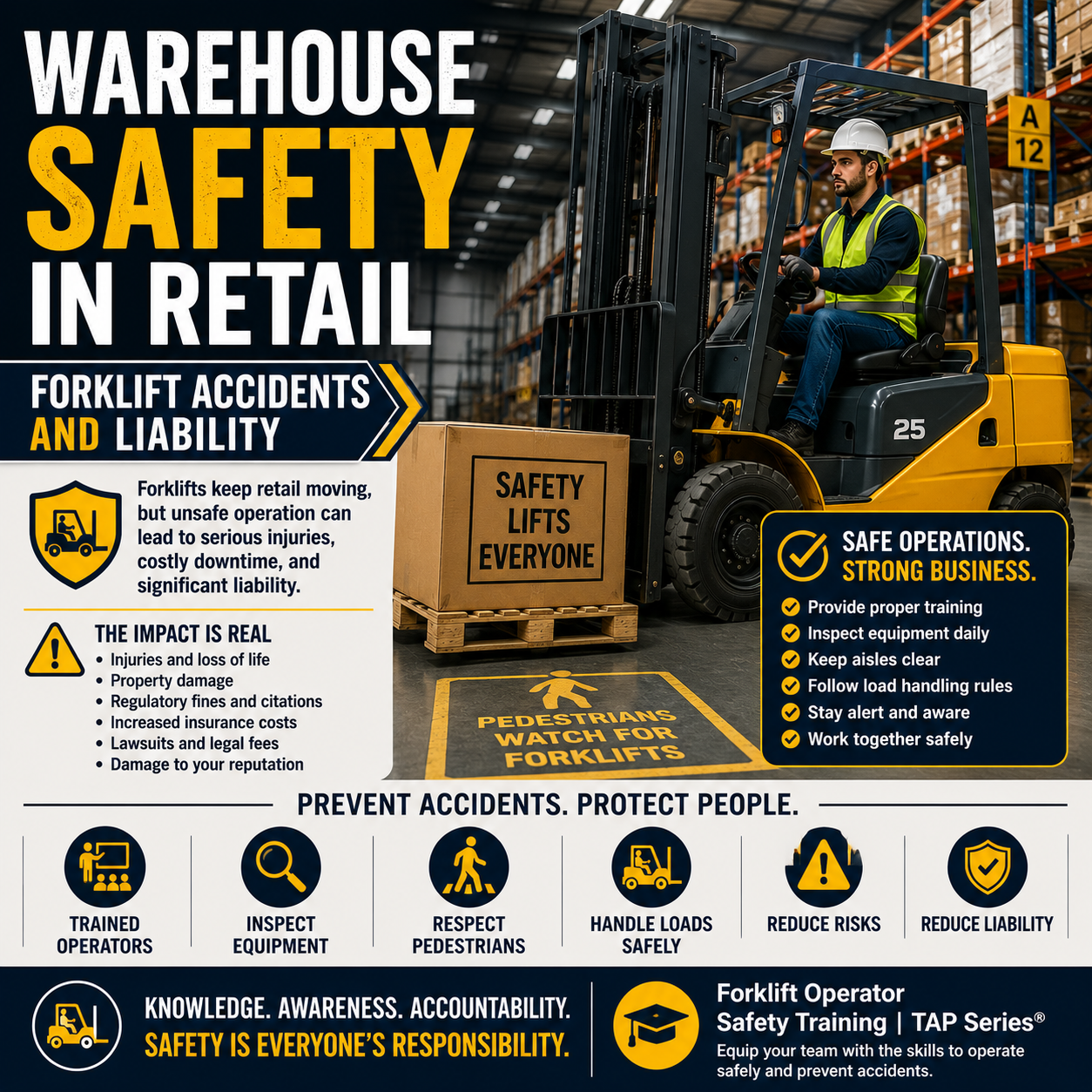
Retail warehouses play a critical role in keeping products moving from distribution centers to store shelves. From unloading deliveries to managing inventory and fulfilling orders, warehouse operations depend heavily on forklifts and other powered industrial equipment to maintain efficiency.
However, forklifts also represent one of the most significant workplace hazards in retail warehouse environments. Accidents involving forklifts can lead to serious injuries, property damage, regulatory penalties, and substantial liability for employers. Understanding these risks is essential for retail organizations seeking to protect employees and maintain safe operations.
Why Forklift Safety Matters
Forklifts are powerful machines designed to move heavy loads quickly and efficiently. While they are indispensable in warehouse operations, improper operation can result in severe consequences.
Forklift-related incidents may involve:
- Collisions with pedestrians
- Tip-over accidents
- Falling loads
- Property damage
- Loading dock incidents
- Equipment malfunctions
- Operator errors
Even a single accident can disrupt operations and expose employers to significant financial and legal risks.
Common Causes of Forklift Accidents
Many forklift incidents are preventable and often result from unsafe behaviors or inadequate safety procedures.
1. Insufficient Operator Training
One of the leading contributors to forklift accidents is inadequate training.
Untrained or improperly trained operators may:
- Misjudge load capacity
- Operate equipment unsafely
- Fail to recognize workplace hazards
- Ignore safety procedures
- Respond improperly during emergencies
Proper training helps operators understand both equipment limitations and safe operating practices.
2. Excessive Speed
Warehouses are busy environments where employees, equipment, and inventory constantly move through shared spaces.
Speeding can lead to:
- Reduced reaction time
- Collisions with pedestrians
- Loss of control
- Increased stopping distances
Operators should always maintain safe speeds appropriate for workplace conditions.
3. Improper Load Handling
Forklifts are designed to transport loads safely when used correctly.
Common mistakes include:
- Overloading equipment
- Carrying unstable loads
- Raising loads while moving
- Improper pallet placement
- Obstructed visibility
Unsafe load handling significantly increases accident risk.
4. Poor Workplace Conditions
Warehouse environments can contribute to accidents when hazards are not addressed.
Examples include:
- Congested aisles
- Poor lighting
- Uneven surfaces
- Inadequate signage
- Obstructed pathways
Maintaining safe work areas is an important component of forklift safety.
5. Lack of Equipment Inspections
Forklifts should be inspected regularly to identify potential mechanical issues.
Common concerns include:
- Damaged tires
- Faulty brakes
- Hydraulic leaks
- Steering problems
- Malfunctioning warning devices
Routine inspections help prevent equipment-related incidents before they occur.
Understanding Employer Liability
When forklift accidents occur, employers may face liability if proper safety measures were not implemented.
Potential areas of concern include:
- Failure to provide training
- Inadequate supervision
- Unsafe workplace conditions
- Lack of equipment maintenance
- Failure to enforce safety procedures
Regulatory agencies may investigate whether employers took reasonable steps to protect workers and maintain compliance.
The Financial Impact of Forklift Incidents
Accidents often create costs that extend beyond immediate repairs or medical treatment.
Potential consequences include:
- Workers' compensation claims
- OSHA citations
- Regulatory penalties
- Property damage expenses
- Lost productivity
- Increased insurance premiums
- Legal claims and settlements
These costs can quickly accumulate and affect overall business performance.
Creating a Safer Warehouse Environment
Retail organizations can significantly reduce risk through proactive safety management.
Best practices include:
- Provide comprehensive forklift training.
- Conduct routine equipment inspections.
- Establish designated pedestrian pathways.
- Enforce workplace safety procedures.
- Monitor operator performance regularly.
- Address hazards immediately.
Consistent safety efforts help create a safer workplace for everyone.
Building a Culture of Accountability
Forklift safety is not solely the responsibility of operators. Managers, supervisors, and employees all play important roles in maintaining safe warehouse operations.
Organizations can strengthen safety culture by:
- Encouraging hazard reporting
- Reinforcing safety expectations
- Recognizing safe behaviors
- Investigating incidents thoroughly
- Providing ongoing education
A strong safety culture helps reduce accidents and improve operational performance.
The Role of Forklift Safety Training
Training is one of the most effective ways to prevent forklift-related injuries and reduce liability risks.
Forklift Operator Safety Training | TAP Series® provides operators with essential knowledge ab out safe forklift operation, hazard recognition, equipment inspections, load handling procedures, and workplace safety responsibilities.
The course helps retail organizations improve operator awareness, strengthen compliance efforts, and reduce the likelihood of costly accidents.
Protecting Employees and Reducing Liability
Forklifts are essential tools within retail warehouse operations, but they require proper training, oversight, and safety management. Many accidents stem from preventable mistakes that can be addressed through education and strong workplace procedures.
By investing in forklift safety training, enforcing operational standards, and promoting accountability throughout the workplace, retailers can reduce liability risks, improve employee safety, and support more efficient warehouse operations.