Retail Staff De-escalation
Customer Conflict in Retail: De-Escalation for Retail Staff Safety
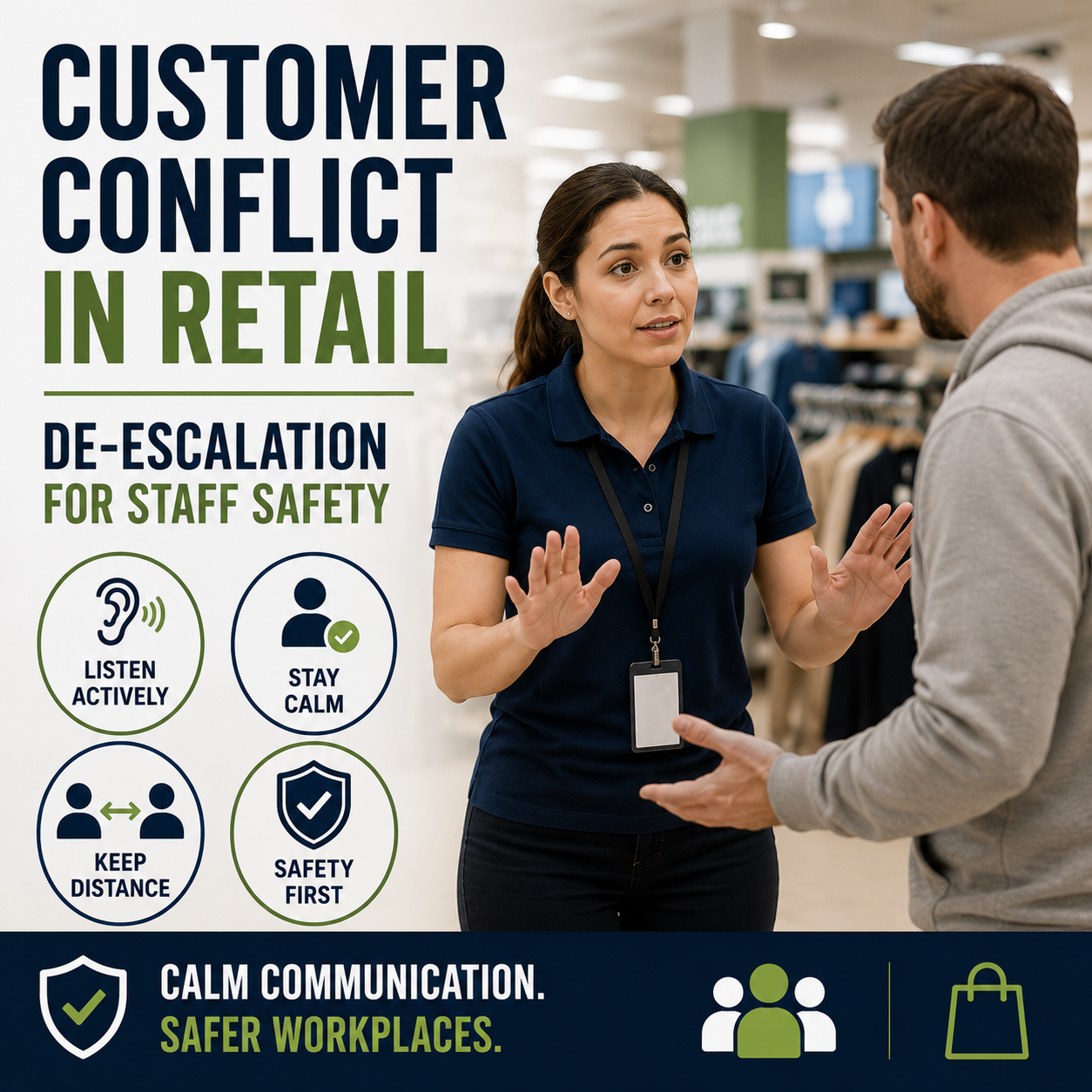
Retail employees interact with hundreds of customers every day, creating positive shopping experiences while resolving questions, complaints, and service issues. Most customer interactions are routine, but occasionally emotions run high. Frustrated customers, misunderstandings, long wait times, or policy disputes can quickly turn into confrontational situations.
When conflict escalates, employee safety becomes the top priority. Retail organizations that equip staff with effective de-escalation skills are better prepared to reduce risk, prevent workplace violence, and create safer environments for both employees and customers.
Why Customer Conflict Happens
Conflict can arise for many reasons during normal retail operations.
Common triggers include:
- Product availability issues
- Refund and return disputes
- Pricing disagreements
- Long checkout lines
- Service delays
- Miscommunication
- Store policy enforcement
While many situations can be resolved calmly, employees need the skills to recognize when tensions are increasing.
Recognizing Early Warning Signs
Many confrontations escalate gradually rather than suddenly.
Employees should be aware of behaviors such as:
- Raised voices
- Aggressive body language
- Verbal insults
- Refusal to listen
- Threatening language
- Invading personal space
- Pacing or clenched fists
Recognizing these warning signs early gives employees an opportunity to respond before the situation becomes more serious.
Why De-Escalation Matters
De-escalation focuses on reducing tension while protecting everyone involved.
Effective de-escalation can help:
- Prevent physical confrontations
- Improve employee confidence
- Protect customers
- Reduce workplace stress
- Support positive customer experiences
- Minimize business disruptions
The goal is not to win an argument, but to safely manage the interaction.
Common Mistakes That Increase Conflict
Even well-intentioned employees may unintentionally make situations worse.
Examples include:
- Arguing with customers
- Raising their own voice
- Interrupting repeatedly
- Taking comments personally
- Making threats
- Crowding the customer
- Ignoring warning signs
Avoiding these behaviors helps employees maintain better control of difficult interactions.
Practical De-Escalation Techniques
Retail employees can use several strategies to help reduce tension during customer conflicts.
1. Stay Calm
Speaking in a calm, respectful manner often helps lower the emotional intensity of the conversation.
2. Listen Actively
Allow customers to explain their concerns without unnecessary interruption.
Listening demonstrates respect and may reduce frustration.
3. Maintain Professional Body Language
Employees should:
- Keep a relaxed posture
- Maintain appropriate distance
- Avoid aggressive gestures
- Use a calm facial expression
Nonverbal communication can significantly influence customer behavior.
4. Focus on Solutions
Rather than arguing about the problem, employees should focus on available options and next steps whenever possible.
5. Know When to Seek Assistance
Some situations require additional support.
Employees should involve supervisors or security personnel if:
- Threats are made
- Aggression increases
- Safety becomes a concern
- Customers refuse to de-escalate
Personal safety should always take priority.
Building a Safer Retail Workplace
Organizations can strengthen employee safety by creating a culture that supports respectful conflict management.
Key strategies include:
- Establish clear customer interaction policies.
- Provide ongoing de-escalation training.
- Encourage employees to report incidents.
- Support staff after difficult interactions.
- Review incidents to identify improvement opportunities.
- Reinforce safety as a leadership priority.
Consistent training and support help employees respond with greater confidence.
The Role of De-Escalation Training
Managing difficult customer interactions requires more than good customer service skills. Employees need practical techniques to recognize escalating behaviors, communicate effectively, and protect themselves during high-stress situations.
Retail De-Escalation Awareness Training | TAP Series® provides employees with practical guidance on recogn izing warning signs, applying de-escalation strategies, maintaining professionalism, and responding appropriately when customer interactions become challenging.
The course helps retail organizations strengthen workplace safety while giving employees the confidence to manage conflict more effectively.
Safer Employees Create Better Customer Experiences
Customer conflict cannot always be avoided, but it can often be managed safely with the right preparation. By investing in de-escalation training, reinforcing clear procedures, and supporting employees during difficult interactions, retailers can reduce workplace risks while maintaining a positive shopping environment.
A proactive approach to conflict management protects employees, supports customers, and strengthens the overall workplace culture.