Green Home Buying Guide
Sustainable Homes and Green Real Estate Trends Buyers Should Know
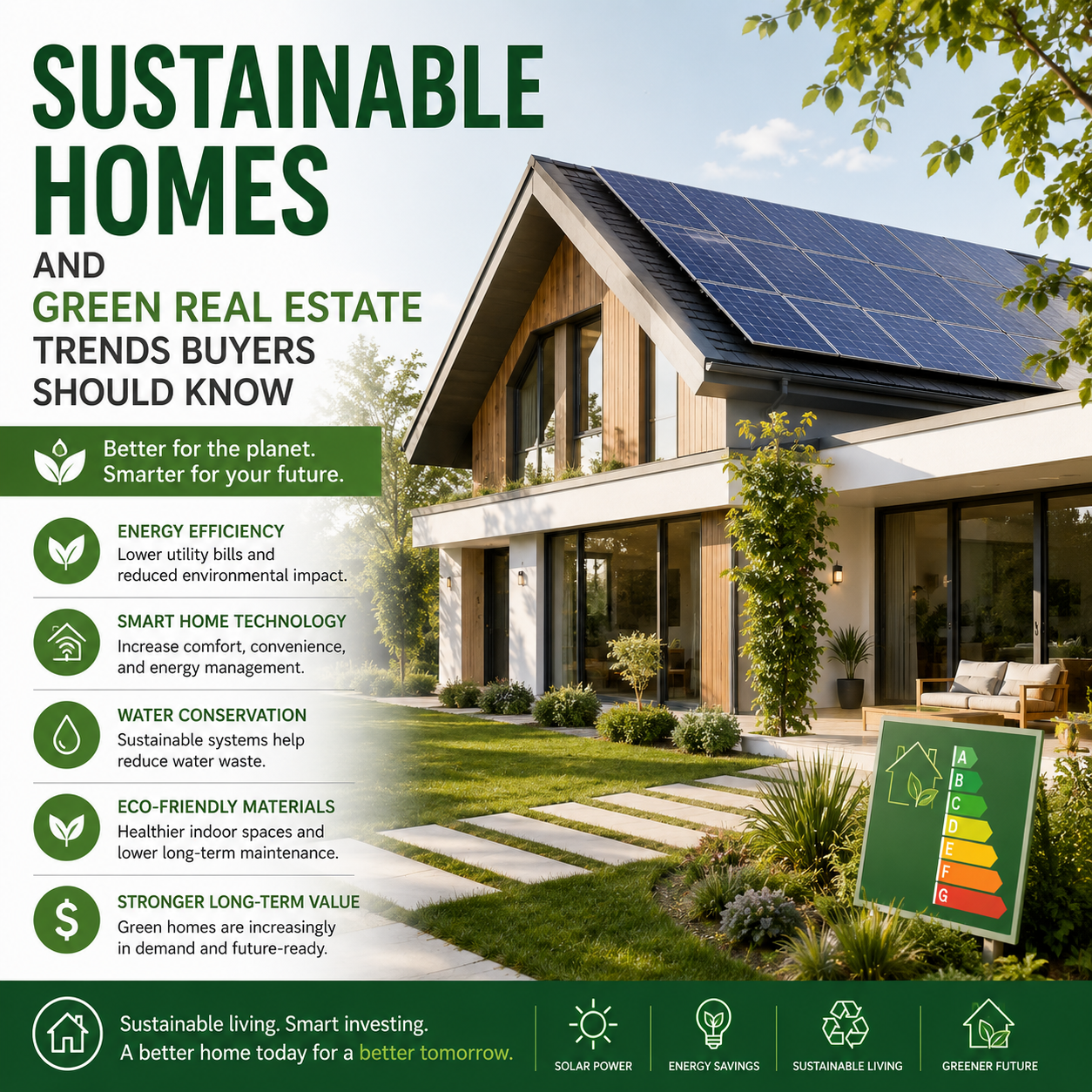
As environmental awareness continues to influence consumer choices, sustainable homes are becoming an increasingly important consideration for property buyers. Modern buyers are looking beyond square footage and curb appeal, paying closer attention to energy efficiency, eco-friendly building materials, and smart home technology that can improve comfort while reducing environmental impact.
Whether you are purchasing your first home or planning your next move, understanding today's green real estate trends can help you evaluate properties from both a practical and long-term perspective. While sustainable features may not be the right choice for every buyer, knowing what to look for can support more informed decision-making.
What Is a Sustainable Home?
A sustainable home is designed or upgraded to reduce its environmental impact while promoting efficient use of resources. These homes often focus on conserving energy and water, improving indoor air quality, and using environmentally responsible materials.
Sustainability does not necessarily mean a home must include expensive technology. Simple features such as quality insulation, energy-efficient windows, or water-saving fixtures can also contribute to a property's overall environmental performance.
Why Green Real Estate Is Growing
Interest in sustainable housing has grown as homeowners become more conscious of energy consumption, utility costs, and environmental responsibility.
Several factors have contributed to this trend, including:
- Rising awareness of climate and environmental issues
- Increased availability of energy-efficient appliances
- Advancements in smart home technology
- Government incentives in some regions for energy-efficient improvements
- Growing consumer interest in healthier indoor living environments
For many buyers, sustainability is becoming one of several factors considered alongside location, budget, and property size.
Popular Sustainable Home Features
Not every green home looks the same. Some properties include extensive eco-friendly systems, while others focus on practical improvements that reduce energy or water consumption.
Solar Panels
Solar panels generate electricity from sunlight and may reduce reliance on traditional power sources. Their value depends on factors such as local climate, energy usage, installation quality, and available incentives.
Energy-Efficient Windows
Modern double or triple-glazed windows can improve insulation by helping keep indoor temperatures more stable throughout the year.
High-Performance Insulation
Proper insulation reduces heat loss during colder months and helps keep homes cooler during warmer seasons. This can improve comfort while reducing the need for excessive heating or cooling.
Water-Saving Fixtures
Low-flow faucets, showerheads, and dual-flush toilets help reduce household water consumption without significantly affecting everyday use.
Sustainable Building Materials
Some homes incorporate renewable or recycled materials such as bamboo flooring, reclaimed wood, recycled steel, or low-emission paints that support healthier indoor air quality.
Smart Home Technology and Energy Efficiency
Smart technology has become closely connected with sustainable living. Many modern homes now include devices that help homeowners monitor and manage energy use more efficiently.
Examples include:
- Smart thermostats
- Smart lighting systems
- Energy monitoring devices
- Automated irrigation systems
- Smart blinds and window coverings
- Smart appliances
For example, a programmable thermostat can automatically adjust heating or cooling based on occupancy schedules, potentially reducing unnecessary energy consumption.
While these technologies offer convenience, buyers should also consider installation costs, software compatibility, ongoing maintenance, and data privacy considerations.
Benefits and Considerations for Buyers
Sustainable homes offer several potential advantages, but they may also involve trade-offs depending on individual circumstances.
Potential Benefits
- Improved energy efficiency
- Lower utility consumption
- Enhanced indoor comfort
- Reduced environmental impact
- Access to newer building technologies
- Increased awareness of household energy use
Important Considerations
- Higher upfront purchase prices for some properties
- Maintenance requirements for specialized systems
- Replacement costs for equipment such as solar inverters or batteries
- Local climate affecting system performance
- Availability of qualified service providers
Rather than focusing solely on potential savings, buyers should evaluate whether sustainable features align with their lifestyle, budget, and long-term homeownership plans.
Questions to Ask When Viewing a Sustainable Property
When evaluating an eco-friendly home, consider asking questions that help you better understand the property's features and maintenance requirements.
Examples include:
- What energy-efficient upgrades have been completed?
- How old are the major systems and appliances?
- Are solar panels owned or leased?
- What type of insulation has been installed?
- Have energy performance assessments been completed?
- Are maintenance records available for renewable energy systems?
- What warranties remain on installed equipment?
These questions can help buyers understand both the benefits and responsibilities associated with sustainable features.
Green Certifications to Be Aware Of
Some homes may carry certifications that indicate they meet certain environmental or energy performance standards.
Examples include:
- LEED (Leadership in Energy and Environmental Design)
- ENERGY STAR® certified homes
- Passive House certification
- Green building certifications offered by local organizations
Certification does not automatically mean one home is better than another, but it may provide additional information about construction standards and energy performance.
Final Thoughts
Sustainable homes and green real estate trends continue to shape today's property market. From energy-efficient construction and smart home technology to environmentally responsible building materials, buyers now have more opportunities to consider sustainability as part of their purchasing decisions.
The right home depends on individual priorities, financial circumstances, and long-term goals. By understanding the features, benefits, and potential responsibilities associated with sustainable homes, buyers can make more informed decisions that reflect both their lifestyle and future plans.
This article is intended for educational purposes only and should not be considered financial, legal, tax, investment, or environmental advice.