Sustainable Housing Trends
Sustainable Homes and Green Real Estate Trends Buyers Should Know
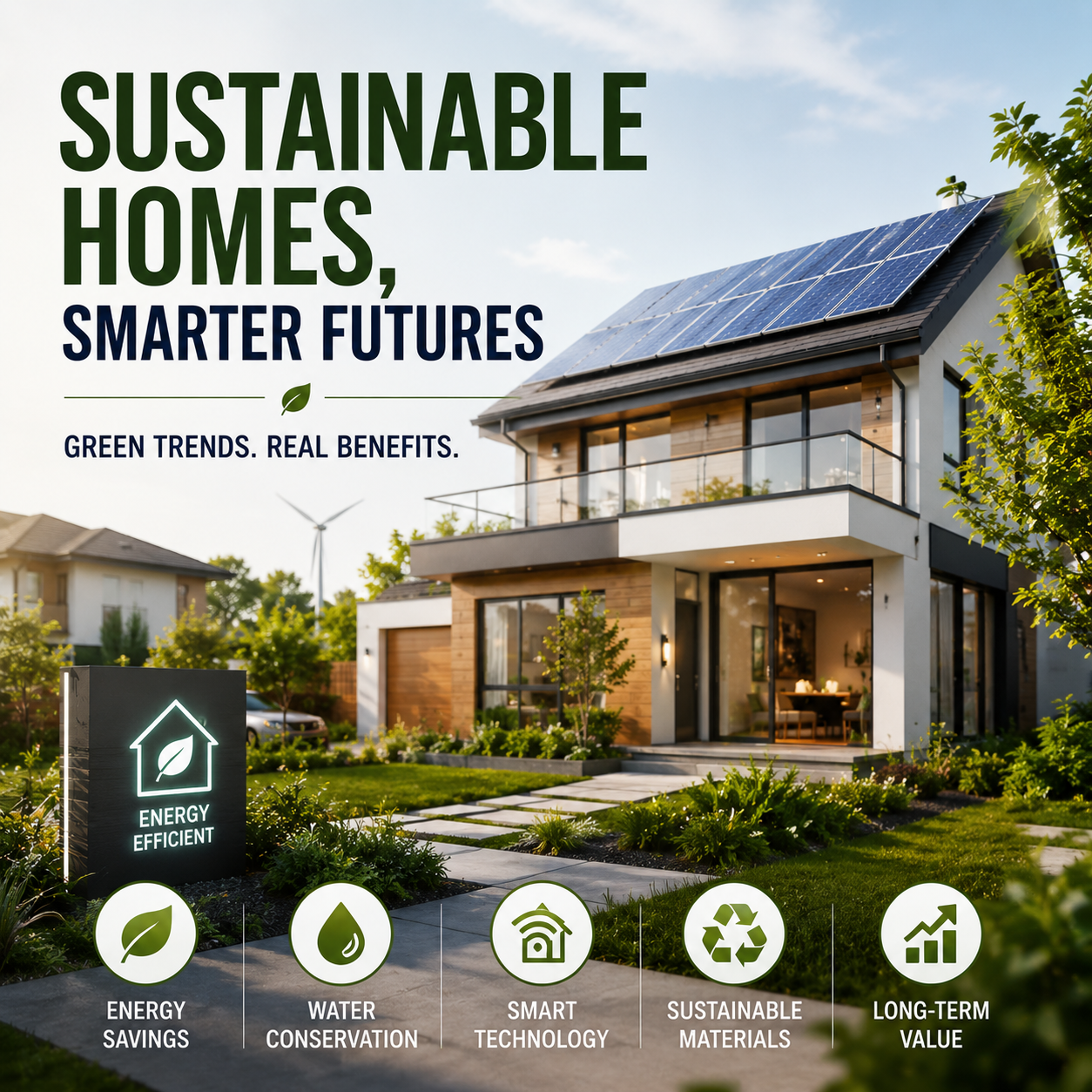
Sustainable homes have become an increasingly important part of today's real estate market. As buyers place greater emphasis on energy efficiency, lower operating costs, and environmentally responsible living, developers and homeowners are incorporating more eco-friendly features into residential properties.
Green homes are no longer limited to solar panels or energy-efficient appliances. Advances in smart home technology, sustainable building materials, and water conservation systems are changing how homes are designed, built, and maintained. Understanding these trends can help prospective buyers evaluate properties that support both their lifestyle and long-term financial goals.
What Is a Sustainable Home?
A sustainable home is designed to reduce its environmental impact while improving efficiency, comfort, and resource conservation.
These homes often include features that help reduce energy consumption, conserve water, improve indoor air quality, and minimize waste throughout the property's lifespan.
Common sustainable features include:
- Energy-efficient appliances
- High-performance insulation
- LED lighting
- Solar energy systems
- Smart thermostats
- Water-saving plumbing fixtures
- Sustainable construction materials
Not every green home includes all of these features. Sustainability exists on a spectrum, with some homes incorporating only a few energy-efficient improvements while others are designed to meet comprehensive green building standards.
Why Sustainable Homes Are Becoming More Popular
Several factors are driving interest in environmentally friendly housing.
Growing awareness of climate change, increasing utility costs, and advances in home technology have encouraged buyers to consider properties that use resources more efficiently.
Many homeowners are also looking for homes that offer:
- Lower monthly utility expenses
- Improved indoor comfort
- Reduced environmental impact
- Modern technology
- Long-term durability
As a result, sustainability has become an important consideration for many buyers alongside location, size, and price.
Energy Efficiency Remains a Top Priority
Energy efficiency is one of the most valuable features of a sustainable home.
Modern homes often include technologies designed to reduce electricity and heating consumption without sacrificing comfort.
Examples include:
- High-efficiency heating and cooling systems
- Double- or triple-pane windows
- Enhanced insulation
- Energy-efficient lighting
- Smart ventilation systems
These improvements may contribute to lower utility usage while maintaining comfortable indoor temperatures throughout the year.
When comparing properties, buyers should consider both the age and efficiency of major home systems.
Smart Home Technology Supports Sustainability
Smart technology has become closely connected with green real estate.
Many smart devices help homeowners monitor and manage resource consumption more effectively.
Popular smart home features include:
- Programmable thermostats
- Smart lighting systems
- Energy monitoring devices
- Smart irrigation systems
- Automated window coverings
- Leak detection sensors
These technologies can improve convenience while helping homeowners better understand how their property uses energy and water.
Water Conservation Is Gaining Importance
Water-efficient homes are becoming increasingly desirable in many regions.
Builders and homeowners are incorporating features that reduce water usage without affecting daily comfort.
Examples include:
- Low-flow toilets
- Water-efficient showerheads
- Drip irrigation systems
- Rainwater collection systems
- Drought-tolerant landscaping
These improvements can help reduce water consumption while supporting responsible resource management.
Sustainable Building Materials
The materials used during construction also contribute to a home's overall sustainability.
Builders may choose products that have lower environmental impacts or longer service lives.
Examples include:
- Recycled construction materials
- Responsibly sourced wood products
- Low-VOC paints and finishes
- Recycled steel
- Durable roofing materials
- Engineered wood products
These materials may improve durability while supporting environmentally conscious construction practices.
Green Certifications Can Provide Additional Information
Some homes receive certifications that recognize environmentally responsible construction and energy performance.
Depending on the country or region, buyers may encounter certifications that evaluate factors such as:
- Energy efficiency
- Water conservation
- Indoor environmental quality
- Sustainable building practices
- Material selection
While certifications can provide useful information, buyers should still evaluate each property's individual features and condition.
Long-Term Value Considerations
Many buyers consider sustainability as part of their long-term property evaluation.
Energy-efficient homes may appeal to future buyers who prioritize lower operating costs and environmentally friendly features.
However, resale value depends on many factors, including:
- Location
- Market demand
- Property condition
- Local economic conditions
- Neighborhood characteristics
Green features should be viewed as one component of a property's overall value rather than the sole reason for purchasing.
Questions Buyers Should Ask
Before purchasing a sustainable home, consider asking:
- How old are the heating and cooling systems?
- Are energy-efficient appliances included?
- What insulation improvements have been completed?
- Does the property include smart home technology?
- Have renewable energy systems been installed?
- What maintenance is required for sustainable features?
Understanding these details can help buyers compare properties more effectively.
Finding the Right Balance
Not every buyer needs the newest green technologies or the highest level of sustainability.
Some may prioritize affordable energy-efficient upgrades, while others may seek homes with advanced renewable energy systems and smart automation.
The right choice depends on individual priorities, budget, climate, and long-term ownership plans.
Evaluating sustainability alongside location, affordability, and overall property condition can support a more balanced purchasing decision.
Conclusion
Sustainable homes continue to shape modern real estate by combining environmental responsibility with practical homeownership benefits. Energy-efficient systems, smart technology, water conservation, and sustainable building materials are becoming increasingly common as buyers seek homes that align with changing lifestyles and long-term planning.
While no single feature determines a property's value, understanding current green real estate trends can help buyers make more informed decisions. By considering sustainability alongside traditional factors such as location, condition, and affordability, prospective homeowners can choose properties that better support both their present needs and future goals.