Restaurant Allergen Education
Allergen Lawsuits in Restaurants: How Allergen Mistakes Turn Into Lawsuits
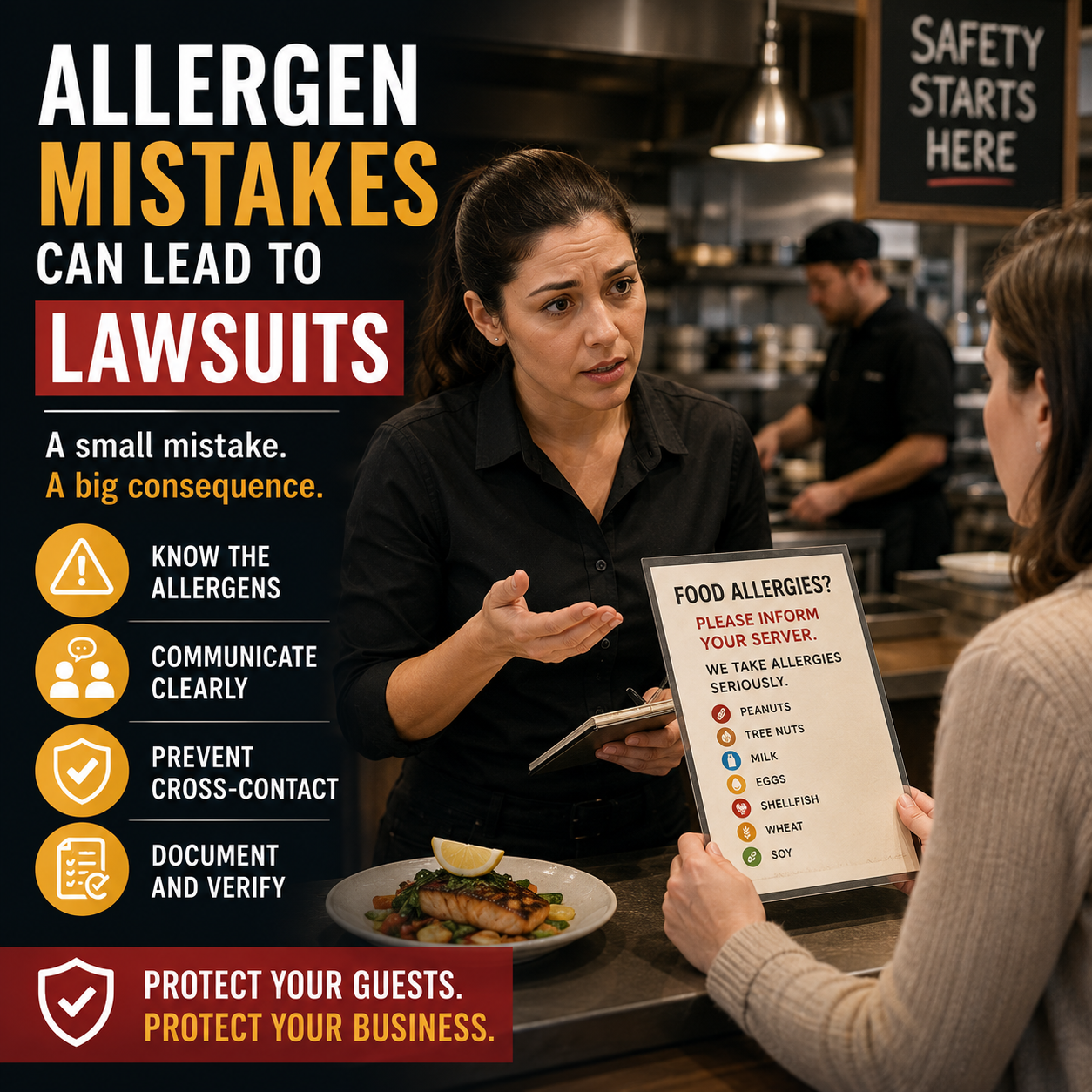
Food allergies affect millions of people across the United States, making allergen management one of the most important responsibilities in the restaurant industry. For customers with food allergies, even a small mistake can lead to a severe allergic reaction requiring emergency medical care.
While many restaurants work hard to accommodate dietary needs, breakdowns in communication or food handling can expose businesses to significant legal and financial consequences. Understanding how allergen mistakes happen is the first step toward preventing incidents that could result in lawsuits.
Why Allergen Management Is Critical
Unlike food preferences, food allergies can be life threatening. Customers trust restaurants to prepare meals safely and provide accurate information about ingredients.
Effective allergen management helps:
- Protect customer health
- Reduce food safety risks
- Improve customer confidence
- Support regulatory compliance
- Reduce legal exposure
- Strengthen a restaurant's reputation
Proper allergen controls benefit both customers and the business.
How Allergen Mistakes Occur
Many allergen incidents result from routine operational errors rather than intentional misconduct.
Common causes include:
- Miscommunication between employees
- Incorrect menu information
- Cross-contact during food preparation
- Failure to verify customer requests
- Ingredient substitutions
- Inadequate employee training
Small mistakes can have serious consequences when allergens are involved.
Common Restaurant Errors That Increase Liability
1. Incorrect Ingredient Information
Employees should never guess when answering questions about allergens.
Problems may occur when:
- Recipes change
- Ingredients are substituted
- Staff provide inaccurate information
- Menu descriptions are outdated
Providing accurate information is essential for customer safety.
2. Cross-Contact During Food Preparation
Cross-contact happens when an allergen is unintentionally transferred from one food or surface to another.
Examples include:
- Shared cutting boards
- Shared utensils
- Contaminated cooking equipment
- Frying different foods in the same oil
- Improper cleaning between food preparation tasks
Preventing cross-contact requires consistent food handling procedures.
3. Failure to Communicate Special Orders
A customer's allergy request must be communicated clearly throughout the food preparation process.
Breakdowns can occur when:
- Orders are entered incorrectly
- Kitchen staff are not notified
- Allergy requests are overlooked
- Servers fail to verify information
Clear communication helps reduce preventable mistakes.
4. Inadequate Employee Training
Employees cannot safely manage allergen risks without proper education.
Training gaps may lead to:
- Misunderstanding allergen procedures
- Failure to recognize cross-contact risks
- Incorrect responses to customer questions
- Unsafe food preparation practices
Ongoing education helps employees make informed decisions.
The Legal Consequences of Allergen Mistakes
When customers experience allergic reactions because of preventable errors, restaurants may face significant legal challenges.
Potential consequences include:
- Personal injury lawsuits
- Medical expense claims
- Legal defense costs
- Insurance claims
- Reputational damage
- Loss of customer trust
The financial impact of a single incident can extend well beyond the immediate event.
Building an Effective Allergen Management Program
Restaurants can reduce risk by establishing clear allergen procedures.
Best practices include:
- Train all foodservice employees on allergen awareness.
- Maintain accurate ingredient information.
- Communicate allergy requests clearly.
- Prevent cross-contact during food preparation.
- Verify special orders before serving.
- Review allergen procedures regularly.
Consistency is one of the most effective ways to improve customer safety.
The Importance of Management Oversight
Managers play a key role in ensuring allergen procedures are followed consistently.
Responsibilities often include:
- Reviewing recipes and ingredients
- Monitoring food preparation practices
- Reinforcing employee training
- Addressing operational risks
- Supporting accurate customer communication
- Promoting accountability
Leadership helps establish a culture where allergen safety is taken seriously.
Why Allergen Awareness Training Matters
Preventing allergen incidents requires every employee to understand how their actions affect customer safety.
Allergen Awareness Training | TAP Series® provides practical guidance on identifyi ng major food allergens, preventing cross-contact, communicating effectively with customers, and following safe food handling practices that reduce allergen-related risks.
The course helps restaurants strengthen food safety programs while supporting compliance and customer confidence.
Protecting Customers Starts With Awareness
Most allergen lawsuits begin with small, preventable mistakes that occur during everyday restaurant operations. By improving communication, strengthening food handling procedures, and investing in employee education, restaurants can significantly reduce the risk of allergen incidents.
A strong commitment to allergen awareness not only protects customers but also helps restaurants reduce liability, preserve their reputation, and build lasting trust with every guest they serve.