Employee Violence Prevention Training
Theft and Escalation in Retail: When Theft Turns Violent
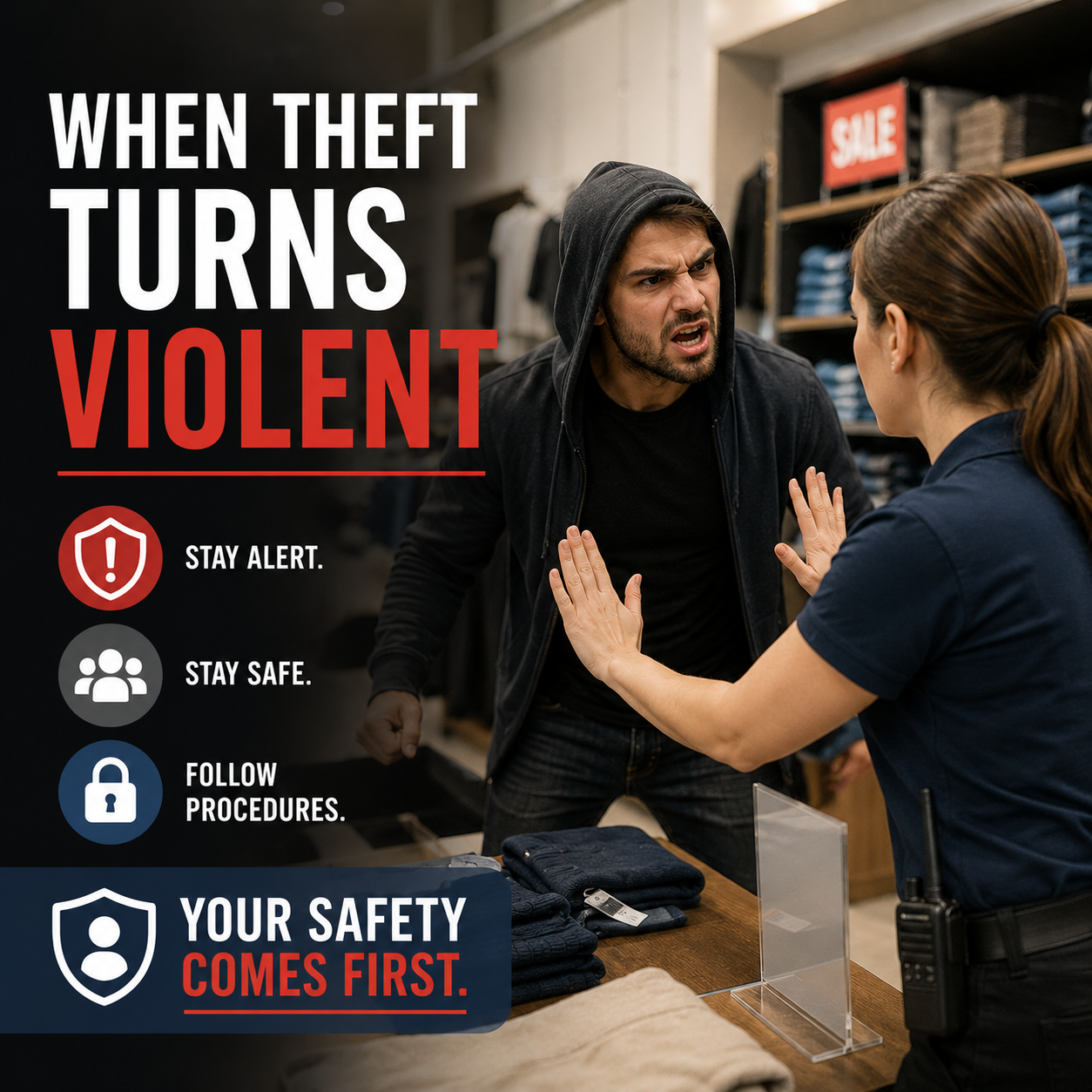
Retail theft has become an ongoing concern for businesses across the United States. While many incidents involve shoplifting without confrontation, some situations escalate unexpectedly into threats, assaults, or acts of workplace violence. What begins as an attempt to steal merchandise can quickly place employees, customers, and bystanders in danger.
Retail organizations must prepare employees to recognize escalating situations and respond in ways that prioritize personal safety. Understanding how theft incidents can become violent is an important part of protecting both people and the business.
Why Retail Theft Can Escalate
Most theft incidents do not involve violence. However, when a suspected shoplifter feels cornered or attempts to avoid apprehension, emotions can escalate rapidly.
Factors that may increase the risk of violence include:
- Confrontations with employees
- Attempts to recover stolen merchandise
- Multiple individuals acting together
- Drug or alcohol impairment
- Emotional distress
- Weapons
Employees should never assume a theft suspect will react predictably.
Warning Signs That a Situation Is Escalating
Recognizing early warning signs allows employees to respond before a confrontation becomes more dangerous.
Examples include:
- Raised voices
- Aggressive language
- Threats toward employees
- Rapid movements
- Refusal to comply
- Invading personal space
- Visible signs of anger or panic
These behaviors may indicate that the situation is becoming unsafe.
Common Mistakes During Theft Incidents
Employees often want to protect company property, but certain actions can increase personal risk.
Examples include:
- Physically confronting a suspect
- Blocking exits
- Chasing individuals outside the store
- Attempting to retrieve stolen merchandise
- Arguing with aggressive individuals
- Ignoring established company procedures
Safety should always take priority over recovering merchandise.
Responding Safely During an Escalating Incident
Retail employees should focus on reducing risk rather than escalating conflict.
Recommended practices include:
- Remain calm and avoid confrontation.
- Keep a safe distance.
- Observe and remember important details.
- Notify supervisors or security personnel immediately.
- Contact emergency services if violence or threats occur.
- Follow established workplace procedures.
A measured response helps protect employees and customers.
The Impact of Workplace Violence
Violent incidents affect far more than the employees directly involved.
Potential consequences include:
- Physical injuries
- Emotional trauma
- Lost productivity
- Employee turnover
- Property damage
- Legal liability
- Reputational harm
Even a single incident can have long-term effects on workplace morale and business operations.
Creating a Safer Retail Environment
Retailers can reduce workplace violence risks by establishing clear prevention strategies.
Important steps include:
- Developing written workplace violence procedures
- Encouraging employees to report concerns
- Reviewing high-risk situations regularly
- Improving communication among staff
- Conducting routine safety training
- Supporting employees after incidents
Preparation helps employees respond confidently when unexpected situations occur.
The Role of Managers
Managers play an important role in promoting workplace safety.
Their responsibilities may include:
- Reinforcing company safety policies
- Responding quickly to incidents
- Supporting employees during emergencies
- Investigating workplace concerns
- Reviewing security procedures
- Promoting a culture focused on safety
Leadership commitment helps strengthen violence prevention efforts throughout the organization.
Why Workplace Violence Prevention Training Matters
Employees should understand that personal safety is always more important than recovering merchandise or stopping a suspect.
Workplace Violence Prevention Plan | TAP Series® provides practical guidance on recognizing warn ing signs, responding to potentially violent situations, understanding workplace violence risks, and following safe procedures that help protect employees during high-risk incidents.
The course helps retail organizations strengthen workplace safety while reducing the likelihood of injuries and liability.
Putting Employee Safety First
Retail theft can sometimes become unpredictable, especially when emotions run high. Organizations that prepare employees through clear procedures, effective communication, and workplace violence prevention training are better equipped to respond safely when incidents escalate.
By focusing on prevention, awareness, and employee safety, retailers can reduce workplace risks while creating a safer environment for employees, customers, and the communities they serve.