Home Buying Advice
Signs a Property Is Overpriced
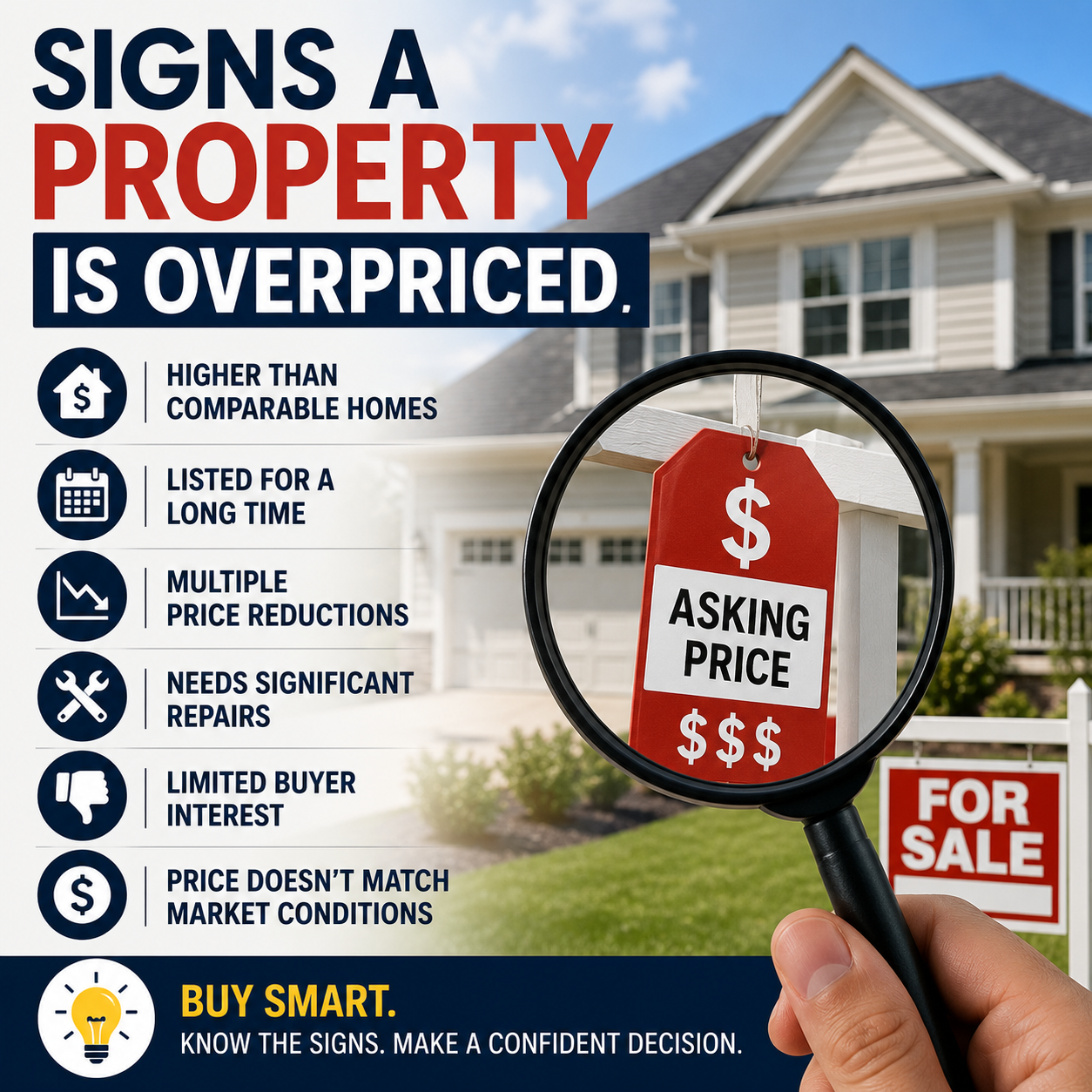
Determining whether a property is fairly priced can be one of the most challenging parts of buying real estate. While sellers naturally want to maximize the value of their property, buyers should carefully evaluate whether the asking price reflects current market conditions, the home's condition, and comparable sales in the area.
Paying more than a property's market value can affect affordability, future resale opportunities, and long-term financial plans. Although no single factor confirms that a property is overpriced, recognizing common warning signs can help buyers make more informed decisions before submitting an offer.
The Asking Price Is Higher Than Comparable Properties
One of the clearest indicators of an overpriced property is when similar homes in the same neighborhood have recently sold for significantly less.
When comparing properties, consider:
- Square footage
- Number of bedrooms and bathrooms
- Lot size
- Age of the home
- Property condition
- Renovations and upgrades
Comparable sales, often called "comps," provide valuable insight into current market value.
A higher asking price may be reasonable if the property offers features that nearby homes do not. Otherwise, buyers should investigate the reason for the pricing difference.
The Property Has Been on the Market for an Extended Period
In an active housing market, competitively priced homes often receive strong interest within a relatively short time.
If a property remains listed much longer than similar homes nearby, it may indicate that buyers believe the asking price is too high.
A longer listing period does not always mean the home is overpriced, but it can signal that the market is not responding to the current price.
There Have Been Multiple Price Reductions
Price reductions are common in real estate, but repeated decreases may suggest the original asking price was unrealistic.
Several price adjustments can indicate:
- Limited buyer interest
- Overly optimistic pricing
- Changing market conditions
Buyers should evaluate whether the revised price is now competitive compared to similar properties in the area.
The Home Needs Significant Repairs
A property requiring substantial repairs should generally be priced differently from one in excellent condition.
Potential concerns include:
- Roof damage
- Foundation issues
- Outdated electrical systems
- Plumbing problems
- Aging heating and cooling systems
- Water damage
If the asking price does not reflect the cost of necessary repairs, the property may be overpriced.
A professional home inspection can help identify issues that may not be immediately visible.
Renovations Do Not Match the Asking Price
Home improvements can increase a property's appeal, but not every renovation adds equal market value.
Luxury upgrades may not justify a significantly higher asking price if:
- The improvements do not match neighborhood standards.
- Buyers in the area are unwilling to pay a premium.
- Cosmetic updates were prioritized over essential repairs.
Evaluating the overall quality and relevance of renovations can help buyers determine whether the asking price is reasonable.
Similar Homes Offer Better Value
Comparing multiple properties is an important step before making an offer.
If nearby homes offer:
- More living space
- Larger lots
- Better locations
- Newer construction
- Additional amenities
at similar or lower prices, the property being considered may not represent the strongest value.
Looking beyond a single listing helps buyers understand the broader market.
The Seller Is Unwilling to Negotiate
Some sellers intentionally list properties above market value with the expectation of negotiating.
However, if a property receives little buyer interest and the seller remains unwilling to discuss pricing despite comparable market evidence, buyers should carefully evaluate whether the asking price reflects current conditions.
Every negotiation is different, but flexibility often increases when pricing aligns more closely with market demand.
The Price Does Not Reflect Local Market Conditions
Real estate markets constantly change.
Factors affecting property values include:
- Interest rates
- Housing supply
- Buyer demand
- Local employment
- Population growth
- Economic conditions
A property priced according to last year's market rather than today's conditions may no longer reflect current value.
Understanding local market trends provides valuable context when evaluating asking prices.
Emotional Pricing Can Influence Sellers
Some sellers develop strong emotional attachments to their homes.
This may lead them to:
- Overestimate renovation value
- Attach sentimental value to the property
- Compare their home to larger or newer properties
- Set prices based on personal expectations rather than market evidence
While these feelings are understandable, buyers should focus on objective market data rather than emotional factors.
Ask Questions Before Making an Offer
Before proceeding with a purchase, buyers may benefit from asking:
- How long has the property been listed?
- Have there been recent price reductions?
- What comparable properties have recently sold nearby?
- What repairs or updates are needed?
- Does the asking price align with current market conditions?
Gathering this information can help buyers make more informed decisions.
Look Beyond the Price Tag
An asking price is only one part of evaluating a property's overall value.
Buyers should also consider:
- Neighborhood quality
- Future development plans
- Property condition
- Maintenance history
- Long-term affordability
- Personal housing needs
A slightly higher purchase price may still represent good value if the property offers features that support long-term ownership goals.
Conclusion
Recognizing the signs of an overpriced property can help buyers approach the housing market with greater confidence. Comparing recent sales, evaluating property condition, understanding local market trends, and considering long-term ownership costs all contribute to making well-informed decisions.
While every property is unique, relying on objective information rather than emotions can help buyers determine whether an asking price reflects fair market value. Careful research and thoughtful evaluation remain some of the most valuable tools when purchasing real estate.