Forklift Safety Compliance
Reducing Forklift Risks With Safer Warehouse Operations
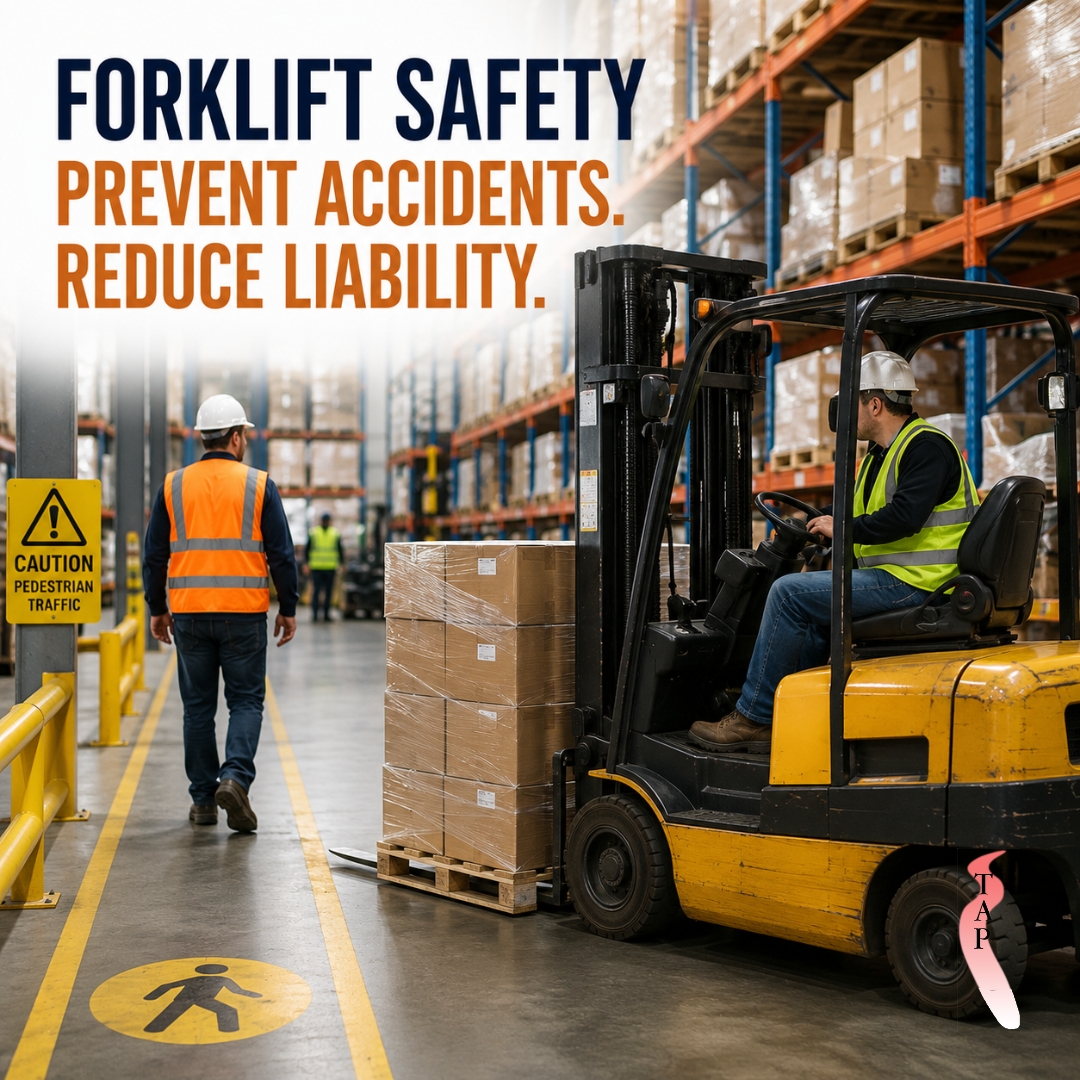
Retail warehouses and distribution centers rely on forklifts to move inventory efficiently, load deliveries, and keep operations running smoothly. While forklifts are essential equipment, they also present serious workplace hazards when operated improperly. A single accident can result in employee injuries, damaged inventory, operational delays, and significant legal liability.
Creating a safe warehouse environment requires more than having the right equipment. It depends on trained operators, consistent safety procedures, and a workplace culture that prioritizes accident prevention every day.
Why Forklift Safety Matters
Forklifts are involved in thousands of workplace incidents each year across various industries. Because warehouses are fast-paced environments with constant movement of people and equipment, even small operating errors can have serious consequences.
Strong forklift safety programs help:
- Protect employees from injury
- Reduce workplace accidents
- Prevent property damage
- Support OSHA compliance
- Minimize business interruptions
- Reduce legal liability
Safety begins before the forklift is even started.
Common Causes of Forklift Accidents
Most forklift incidents are preventable and often result from unsafe work practices.
Common causes include:
- Excessive speed
- Distracted operation
- Improper load handling
- Limited visibility
- Poor communication
- Inadequate operator training
- Failure to inspect equipment
Understanding these risks helps organizations reduce preventable accidents.
1. Improper Load Handling
Incorrectly loaded materials can create dangerous situations.
Examples include:
- Overloaded forks
- Unstable loads
- Loads blocking the operator's view
- Improper stacking
- Uneven weight distribution
Safe load handling improves both stability and visibility.
2. Pedestrian Strikes
Warehouses often have employees working alongside powered industrial trucks.
Risks increase when:
- Pedestrian walkways are unclear
- Blind corners are not monitored
- Operators fail to sound warnings
- Employees enter forklift operating areas unexpectedly
Clear traffic management helps protect everyone in the facility.
3. Equipment Inspection Failures
Daily equipment inspections help identify mechanical issues before operation.
Common concerns include:
- Tire damage
- Brake problems
- Hydraulic leaks
- Steering issues
- Warning device failures
Removing unsafe equipment from service reduces operational risk.
4. Unsafe Driving Practices
Forklift operators should maintain safe operating habits throughout every shift.
Unsafe behaviors include:
- Speeding
- Sharp turns
- Carrying elevated loads while traveling
- Driving without visibility
- Operating distracted
Following established operating procedures helps prevent collisions and tip-overs.
Understanding Liability After an Accident
Forklift accidents can expose retail businesses to significant legal and financial consequences.
Potential outcomes include:
- Employee injury claims
- OSHA citations
- Property damage costs
- Lost productivity
- Insurance increases
- Legal expenses
- Reputational harm
Preventing accidents is often far less costly than responding to them.
Building a Safer Warehouse
Retail organizations can strengthen warehouse safety by establishing clear operating procedures.
Best practices include:
- Train forklift operators thoroughly.
- Perform pre-operation equipment inspections.
- Separate pedestrians from vehicle traffic.
- Enforce safe driving practices.
- Report unsafe conditions immediately.
- Review incidents to identify improvements.
Consistent procedures help reduce workplace hazards.
The Role of Supervisors
Supervisors help ensure forklift safety standards are followed every day.
Key responsibilities include:
- Monitoring operator performance
- Reinforcing safety procedures
- Verifying equipment inspections
- Correcting unsafe behaviors
- Investigating incidents
- Promoting accountability
Leadership plays a critical role in maintaining a safe warehouse environment.
Why Forklift Operator Safety Training Matters
Safe forklift operation requires both technical knowledge and ongoing awareness of workplace hazards.
Forklift Operator Safety Training | TAP Series® provides practical instruction on safe forklif t operation, equipment inspections, hazard recognition, load handling, pedestrian awareness, and accident prevention strategies that help reduce workplace injuries and operational risks.
The course helps retail organizations strengthen safety programs while supporting compliance and protecting employees.
Safe Operations Begin With Proper Training
Forklift accidents rarely happen without warning. They are often the result of unsafe habits, inadequate training, or overlooked hazards. By investing in operator education, reinforcing safe work practices, and promoting accountability throughout the warehouse, retail businesses can reduce accidents while creating a safer workplace for everyone.
Strong warehouse safety programs protect employees, improve operational efficiency, and reduce the liability associated with forklift incidents.