Mortgage Guide
Fixed-Rate vs. Variable-Rate Mortgages: Understanding the Differences
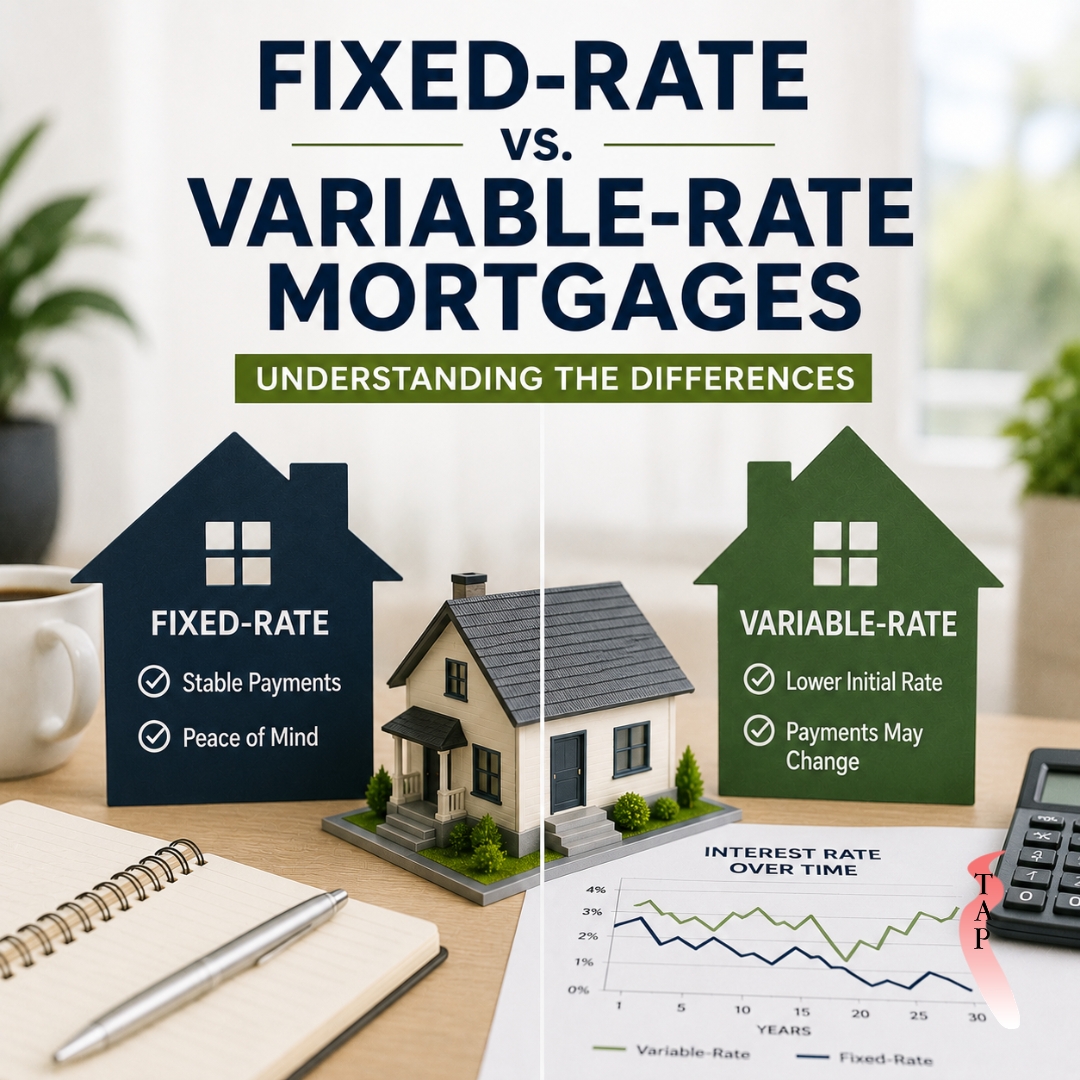
Choosing a mortgage is one of the most important financial decisions involved in buying a home. Among the many options available, fixed-rate and variable-rate mortgages are two of the most common. While both help buyers finance a property, they work differently and may suit different financial situations.
Understanding how each mortgage type operates can help prospective homeowners make informed decisions based on their budget, financial goals, and comfort with changing monthly payments. Rather than focusing on which option is better overall, it is more helpful to understand the characteristics of each and evaluate how they align with your personal circumstances.
What Is a Fixed-Rate Mortgage?
A fixed-rate mortgage has an interest rate that remains the same throughout the agreed loan term.
Because the interest rate does not change, the principal and interest portion of the monthly mortgage payment generally remains consistent.
This predictability makes budgeting easier for many homeowners.
How a Fixed-Rate Mortgage Works
When you sign a fixed-rate mortgage, the interest rate is established at the beginning of the loan.
As long as the loan terms remain unchanged:
- The interest rate stays the same.
- Monthly principal and interest payments remain consistent.
- Future interest rate changes in the broader market do not affect your mortgage payment.
Although property taxes or insurance costs may change over time, the mortgage interest rate itself remains fixed.
Potential Advantages of a Fixed-Rate Mortgage
Some buyers appreciate the stability that fixed-rate mortgages provide.
Potential benefits include:
- Predictable monthly payments
- Easier long-term budgeting
- Protection from rising interest rates
- Greater payment consistency over the life of the loan
These features may appeal to buyers who value financial certainty.
Considerations for Fixed-Rate Mortgages
A fixed-rate mortgage may also involve considerations such as:
- Less flexibility if market interest rates decline.
- Monthly payments that may initially be higher than some variable-rate options.
- Long-term commitment to the same interest rate.
Understanding both the advantages and limitations helps buyers make balanced decisions.
What Is a Variable-Rate Mortgage?
A variable-rate mortgage has an interest rate that can change over time.
The changes are generally linked to a financial benchmark or market interest rate.
As interest rates change, monthly mortgage payments or the amount of interest paid may also change, depending on the loan's structure.
How a Variable-Rate Mortgage Works
Unlike a fixed-rate mortgage, the interest rate is not locked in for the entire loan term.
Depending on market conditions:
- Interest rates may increase.
- Interest rates may decrease.
- Monthly payments may change.
- The amount of interest paid over time may vary.
Because future market conditions cannot be predicted with certainty, payment amounts may fluctuate throughout the loan.
Potential Advantages of a Variable-Rate Mortgage
Some buyers choose variable-rate mortgages because they may offer:
- Lower initial interest rates in certain market conditions.
- The possibility of lower payments if market rates decrease.
- Greater flexibility in some lending products.
The potential benefits depend on future interest rate movements, which cannot be guaranteed.
Considerations for Variable-Rate Mortgages
Variable-rate mortgages also involve additional uncertainty.
Potential considerations include:
- Monthly payments may increase.
- Budgeting may become more challenging if rates rise.
- Long-term borrowing costs are less predictable.
Buyers who choose this type of mortgage should understand that payment amounts may change during the life of the loan.
Simple Example
Imagine two buyers purchase similar homes.
Buyer A selects a fixed-rate mortgage.
- Their mortgage interest rate remains the same.
- Their monthly principal and interest payment stays consistent throughout the loan term.
Buyer B selects a variable-rate mortgage.
- Their interest rate changes based on market conditions.
- Some years, their payments may decrease.
- In other years, their payments may increase.
Neither option is automatically better. The most suitable choice depends on each buyer's financial circumstances and comfort with changing payments.
Questions to Consider Before Choosing
Before selecting a mortgage, consider asking yourself:
- Do I prefer predictable monthly payments?
- Could my budget comfortably handle payment increases?
- How long do I expect to own this property?
- Am I comfortable with changing interest rates?
- How stable is my current income?
These questions can help buyers evaluate which mortgage structure aligns with their financial situation.
Think Beyond the Interest Rate
While the interest rate is important, buyers should also consider the overall cost of homeownership.
Additional expenses include:
- Property taxes
- Homeowners insurance
- Maintenance
- Utilities
- Homeowners association fees, where applicable
Choosing a mortgage that fits comfortably within your overall budget is often more important than focusing solely on the interest rate.
Review Your Long-Term Financial Goals
Every buyer has different financial priorities.
Some may value payment stability for long-term budgeting.
Others may be comfortable with changing payments if they understand the potential risks involved.
Evaluating your income stability, emergency savings, future plans, and financial flexibility can help you determine which mortgage type best supports your long-term goals.
Conclusion
Fixed-rate and variable-rate mortgages each offer unique characteristics that may appeal to different homebuyers. Fixed-rate mortgages provide predictable payments and budgeting stability, while variable-rate mortgages may offer greater flexibility but can result in changing monthly costs as interest rates fluctuate.
Understanding how each option works allows buyers to make more informed decisions based on their financial circumstances rather than short-term market conditions alone. By carefully considering your budget, long-term plans, and comfort with financial uncertainty, you can choose a mortgage structure that supports responsible and sustainable homeownership.