Property Tax Rates
How Property Taxes Affect the True Cost of Homeownership
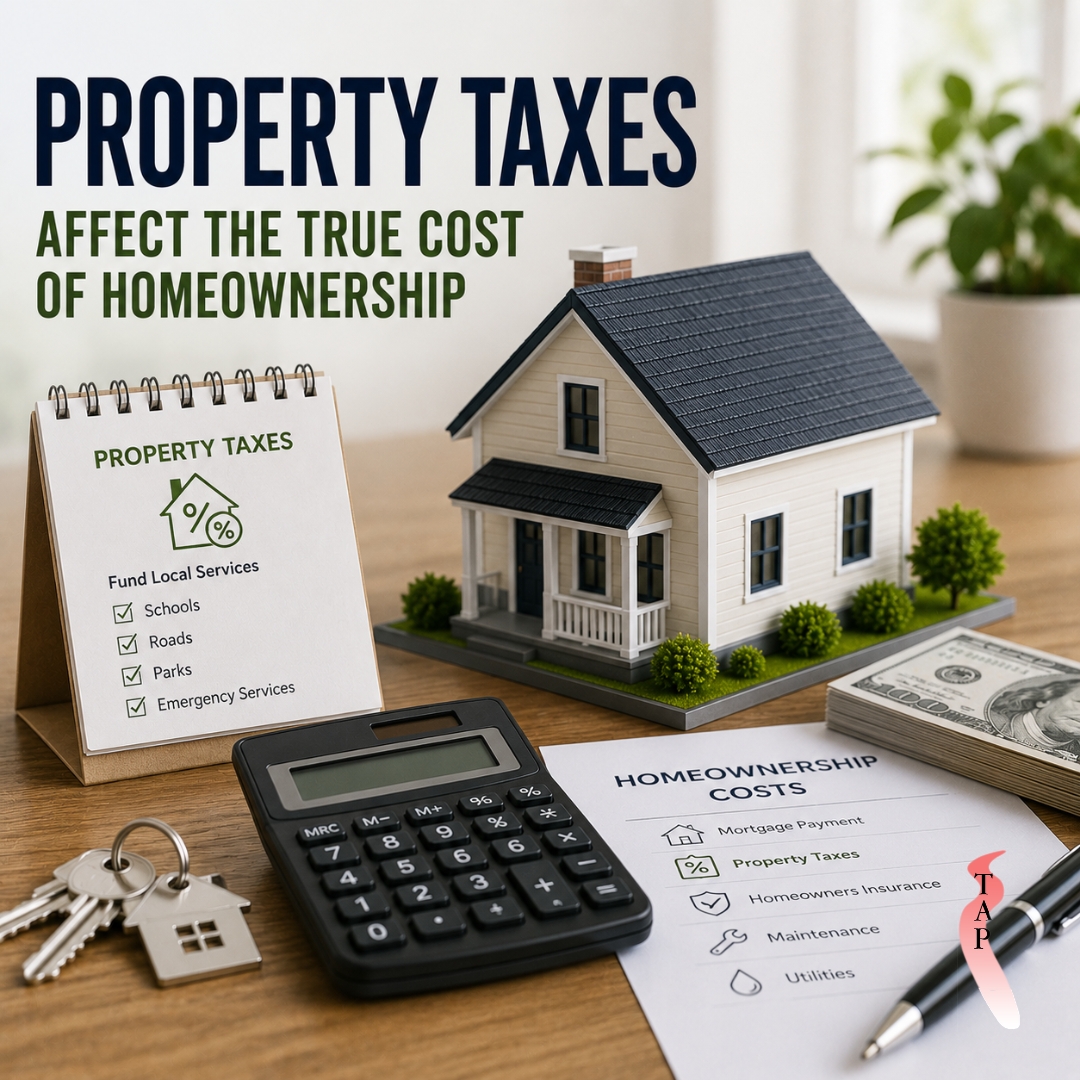
When planning to buy a home, many buyers focus on the purchase price, down payment, and monthly mortgage payment. However, another important expense deserves equal attention: property taxes. These recurring costs are part of homeownership and can significantly influence your long-term housing budget.
Property taxes vary depending on where a home is located, and they may change over time. Understanding how they work and including them in your financial planning can help you develop a more realistic view of the true cost of owning a home.
What Are Property Taxes?
Property taxes are recurring charges that homeowners pay to local governments based on the value of their property.
The revenue collected through property taxes is commonly used to support public services and community infrastructure, such as:
- Public schools
- Road maintenance
- Emergency services
- Parks and recreation
- Libraries
- Local government operations
The exact services funded vary depending on the local jurisdiction.
How Property Taxes Are Determined
Property taxes are generally based on two primary factors:
- The assessed value of the property.
- The local property tax rate.
Local governments determine how property values are assessed and how tax rates are applied, which means the amount homeowners pay can differ significantly from one location to another.
Why Property Taxes Vary by Location
Two homes with similar prices may have very different property tax bills simply because they are located in different cities, counties, or states.
Several factors influence local property taxes, including:
- Local government budgets
- Community services
- School funding
- Infrastructure projects
- Assessment methods
- Regional tax policies
Because of these differences, buyers should research property taxes in the specific area where they plan to purchase.
Property Taxes Are an Ongoing Expense
Unlike many one-time purchasing costs, property taxes continue for as long as you own the property.
They become part of your annual housing expenses alongside:
- Mortgage payments
- Homeowners insurance
- Utilities
- Maintenance
- Homeowners association fees, where applicable
Including property taxes in your long-term budget provides a more complete picture of homeownership costs.
Property Taxes May Change Over Time
Many first-time buyers assume property taxes remain the same every year.
In reality, tax amounts may change due to factors such as:
- Updated property assessments
- Changes in local tax rates
- Community improvements
- New public funding needs
Because future tax amounts cannot be predicted with certainty, homeowners should be prepared for possible changes over time.
Practical Example
Imagine two buyers purchase homes with the same purchase price.
Buyer A purchases a home in an area with relatively lower property taxes.
Buyer B purchases a similar home in a location with higher annual property taxes.
Although their mortgage payments may be similar, Buyer B's total monthly housing costs are likely to be higher because of the additional property tax expense.
This example demonstrates why comparing only home prices may not provide a complete picture of affordability.
Why Property Taxes Matter When Budgeting
Before purchasing a home, buyers should estimate their total monthly housing costs rather than focusing only on the mortgage payment.
A complete housing budget may include:
- Mortgage payment
- Property taxes
- Homeowners insurance
- Utilities
- Maintenance
- Emergency savings
- Homeowners association fees, where applicable
Considering all of these expenses together helps buyers determine whether a home fits comfortably within their financial plan.
Consider the Long-Term Impact
Property taxes continue throughout the entire period of homeownership.
Even if your mortgage balance decreases over time, property taxes may remain an ongoing expense.
Planning for these recurring costs can make long-term budgeting more manageable and reduce financial stress.
Research Before Buying
Before purchasing a property, buyers may wish to review:
- Current annual property taxes.
- Historical tax changes.
- Local assessment practices.
- Community services supported by property taxes.
Gathering this information provides a better understanding of the long-term financial responsibilities associated with owning a particular property.
Think Beyond the Purchase Price
A lower-priced home does not always result in lower overall ownership costs.
When comparing properties, buyers should evaluate:
- Purchase price
- Property taxes
- Insurance costs
- Maintenance requirements
- Utility expenses
- Location-related costs
Looking at the full financial picture helps support more informed purchasing decisions.
Conclusion
Property taxes are an important part of the true cost of homeownership and should be considered alongside the purchase price and mortgage payment when planning to buy a home. Because tax amounts vary by location and may change over time, researching local property taxes can help buyers build a more accurate long-term budget.
By understanding how property taxes work and incorporating them into your overall financial planning, you can make better-informed decisions about affordability and prepare more confidently for the ongoing responsibilities of owning a home.