House Hunting Tips
How to Compare Multiple Properties Without Feeling Overwhelmed
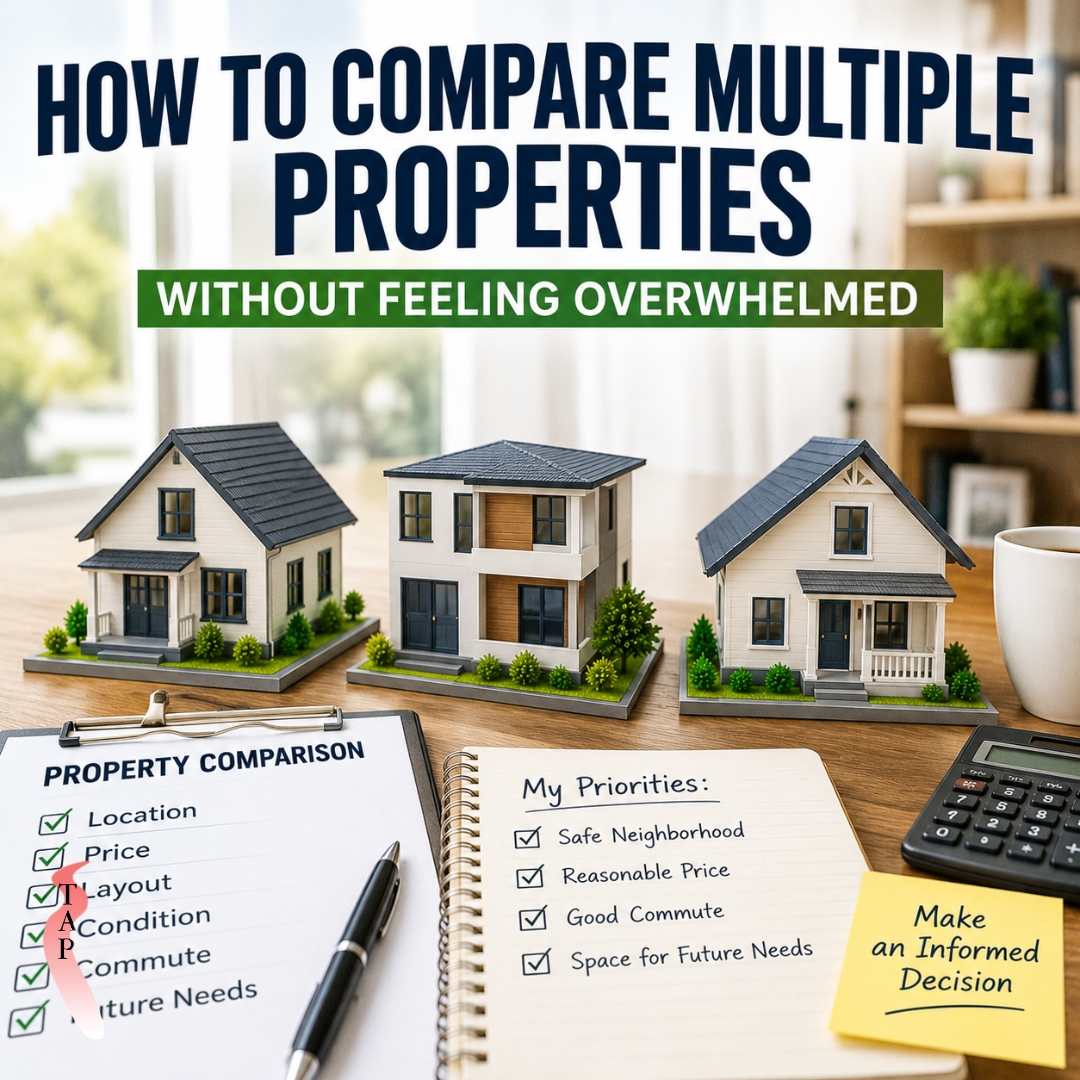
Searching for a home can be exciting, but it can also become overwhelming when you have several properties to choose from. After visiting multiple homes, it's common for details to blur together, making it difficult to remember which property offered the features you liked most.
Rather than relying on first impressions alone, creating a structured comparison process can help you evaluate each property objectively. Using checklists, identifying priorities, comparing costs, and thinking about your future needs can make the decision-making process more organized and less stressful.
Start With Your Must-Have List
Before visiting properties, create a list of features that are essential for your lifestyle.
Examples may include:
- Number of bedrooms
- Number of bathrooms
- Home office space
- Garage or parking
- Outdoor space
- School access
- Public transportation
- Accessibility features
Knowing your non-negotiable requirements makes it easier to eliminate homes that do not meet your basic needs.
Separate Needs From Wants
Not every desirable feature is essential.
Consider dividing your list into two categories.
Essential Needs
- Safe neighborhood
- Suitable home size
- Convenient commute
- Functional layout
- Affordable ownership costs
Preferred Features
- Swimming pool
- Large backyard
- Luxury kitchen
- Walk-in closet
- Smart home technology
This approach helps prevent attractive extras from overshadowing more important practical considerations.
Create a Property Comparison Checklist
Using the same checklist for every home allows you to compare properties more consistently.
Include categories such as:
- Purchase price
- Neighborhood
- Property condition
- Floor plan
- Storage space
- Parking
- Outdoor areas
- Natural lighting
- Noise levels
- Internet availability
- Energy efficiency
- Overall impressions
Completing the checklist immediately after each viewing helps capture details while they are still fresh.
Compare the Total Cost of Ownership
The purchase price is only one part of the financial picture.
Also compare ongoing expenses such as:
- Property taxes
- Homeowners insurance
- Utilities
- Maintenance
- Homeowners association fees, where applicable
A lower-priced property may not always have the lowest long-term ownership costs.
Think About Your Daily Commute
Location affects everyday convenience.
Consider travel time to:
- Work
- Schools
- Grocery stores
- Healthcare facilities
- Parks
- Family and friends
Visiting the neighborhood during different times of the day can also help you better understand traffic conditions.
Consider Future Needs
A home that works well today should also support your future plans.
Ask yourself:
- Will this home still meet my needs in five to ten years?
- Is there enough space if my family grows?
- Could a room become a home office?
- Will the location continue to suit my lifestyle?
Thinking ahead may reduce the need to move sooner than expected.
Take Notes and Photos
After viewing several homes, details can become difficult to remember.
With permission where required, consider:
- Taking photos of each room.
- Recording observations after each visit.
- Writing down what you liked and disliked.
- Rating each property using the same scoring system.
Keeping organized records makes comparisons much easier later.
Avoid Making Decisions Based on Emotion Alone
It is natural to become emotionally attached to a beautiful home.
However, try to balance emotional reactions with practical evaluation.
Ask yourself:
- Does this property fit my budget?
- Does it meet my essential needs?
- What maintenance may be required?
- Is the location suitable long term?
A structured comparison process helps prevent emotions from becoming the primary decision-making factor.
Practical Example
Imagine you are comparing three different homes.
- Property A offers an excellent location but requires significant maintenance.
- Property B has a modern design and lower maintenance costs but a longer commute.
- Property C provides more living space but has higher annual property taxes.
By using the same checklist, comparing ownership costs, evaluating commute times, and considering your future needs, you can compare each property using facts rather than relying only on memory or first impressions.
Give Yourself Time to Decide
Buying a home is a major financial commitment.
Unless circumstances require an immediate decision, allow yourself time to:
- Review your notes.
- Compare your checklists.
- Revisit your priorities.
- Discuss the options with family members or trusted advisers.
Taking a thoughtful approach often leads to greater confidence in your final decision.
Conclusion
Comparing multiple properties does not have to feel overwhelming. By creating a clear list of priorities, using a consistent checklist, evaluating the full cost of ownership, considering commute times, and thinking about future needs, buyers can approach each property with greater clarity and confidence.
Instead of relying solely on emotional reactions, using an organized comparison framework allows you to evaluate homes more objectively. Careful preparation and thoughtful decision-making can help you choose a property that supports both your current lifestyle and your long-term goals.