Grocery Deli Compliance Training
Small Deli Mistakes That Create Big Food Safety Violations
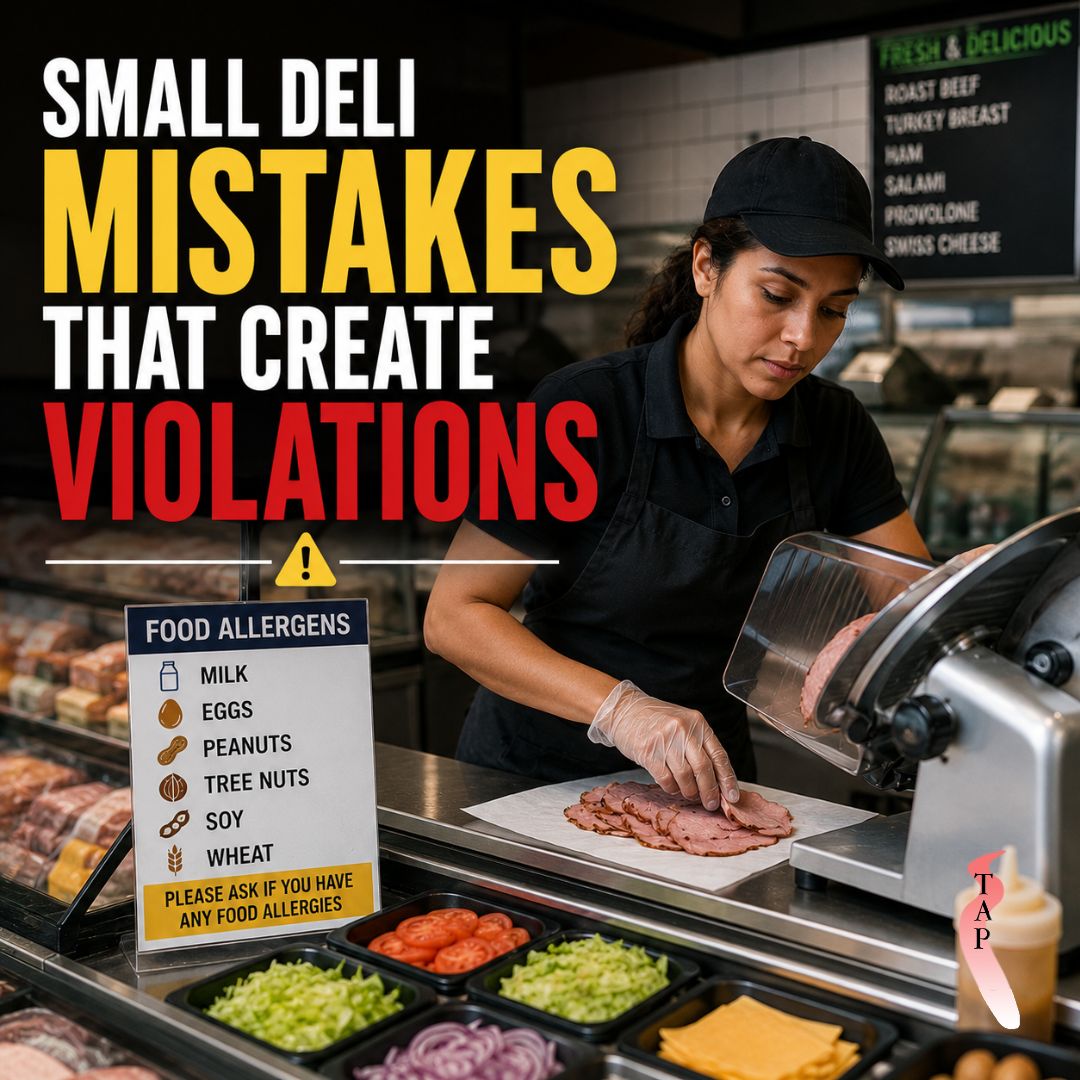
Grocery store deli departments serve a wide variety of prepared foods every day, from sliced meats and cheeses to salads, sandwiches, hot meals, and ready-to-eat products. With so many employees, ingredients, and customers involved, even a small mistake can quickly become a food safety violation.
A forgotten label, an improperly cleaned slicer, or an employee who overlooks an allergen concern may seem minor at the time. However, these mistakes can create serious risks for customers and expose grocery businesses to regulatory action, complaints, and reputational damage.
For grocery retailers, preventing violations starts with making sure employees understand how their everyday decisions affect food safety.
Why Small Deli Mistakes Matter
Deli employees work in a fast-paced environment where accuracy and consistency are essential. During busy periods, employees may be tempted to take shortcuts or overlook routine procedures.
Common mistakes include:
- Failing to wash hands between tasks
- Using improperly cleaned food equipment
- Storing food at unsafe temperatures
- Allowing ready-to-eat foods to become contaminated
- Using the same utensils for different products
- Forgetting required labels or ingredient information
- Failing to follow allergen handling procedures
- Not responding appropriately to customer allergy questions
While each mistake may appear isolated, repeated errors can create patterns that inspectors identify as compliance problems.
Improper Cleaning Can Create Cross Contamination
Deli slicers, cutting boards, knives, counters, and other food contact surfaces require proper cleaning and sanitizing.
When employees rush between orders, equipment may not receive the attention it needs.
Problems can occur when:
- Slicers are not cleaned according to established procedures
- Cutting boards are reused without proper cleaning
- Food residue remains on preparation surfaces
- Cleaning chemicals are used incorrectly
- Employees fail to wash their hands before handling ready-to-eat foods
Proper cleaning and sanitation help reduce the risk of harmful microorganisms transferring between foods.
Allergen Mistakes Can Put Customers at Risk
Deli departments often handle foods containing common allergens. Cheese, prepared salads, sauces, breads, dressings, and other products may contain ingredients that customers with food allergies need to avoid.
A customer may ask whether a particular product contains an allergen, but an employee who is unsure of the ingredients could unintentionally provide incorrect information.
Employees should understand that they should never guess when answering allergen questions.
Important practices include:
- Checking ingredient information
- Communicating allergy concerns clearly
- Using clean equipment when appropriate
- Preventing cross contact between foods
- Following established allergen procedures
- Asking a supervisor when information cannot be verified
Allergen Awareness | TAP Series® helps employees understand food allergen risks and the importance of preventing allergen cross contact during food preparation and service.
Food Labels and Ingredient Information Matter
Prepared deli foods often require accurate information so customers can make informed decisions about what they purchase.
Small labeling mistakes can create compliance concerns, especially when ingredient or allergen information is inaccurate or missing.
Employees should pay attention to:
- Product names
- Ingredient information
- Allergen information
- Preparation dates
- Use-by dates
- Storage instructions
Accurate labeling supports both food safety and customer confidence.
Temperature Mistakes Can Become Violations
Deli departments frequently prepare and display foods that require temperature control.
Employees need to consistently monitor food temperatures and follow established procedures for storage, preparation, cooling, and holding.
Potential problems include:
- Leaving prepared foods at unsafe temperatures
- Failing to monitor refrigeration units
- Improperly cooling prepared foods
- Overloading refrigerated displays
- Ignoring temperature readings outside safe limits
Routine monitoring helps employees identify problems before they become larger food safety concerns.
Employee Actions Can Prevent Choking Emergencies
Food safety is not limited to preventing contamination and allergen exposure. Deli employees also interact directly with customers and may encounter emergencies involving food.
Knowing how to respond appropriately when someone is choking can help employees act quickly while waiting for emergency assistance.
Choke Saving Procedures | TAP Series® provides training focused on recognizing and responding to choking emergencies.
Training can give employees greater confidence when responding to an emergency and reinforce the importance of following appropriate procedures.
Busy Periods Can Increase the Risk of Employee Errors
Lunch hours, weekends, holidays, and promotional events can put additional pressure on deli employees.
When customer demand increases, employees may move quickly between tasks and become more likely to overlook important procedures.
Managers can help reduce these risks by:
- Assigning clear responsibilities
- Maintaining adequate staffing
- Reinforcing handwashing requirements
- Monitoring cleaning procedures
- Checking food temperatures
- Reviewing allergen requests carefully
- Encouraging employees to ask questions
Food safety should remain a priority even when the department is busy.
Training Helps Turn Procedures Into Daily Habits
Written procedures are important, but employees also need the knowledge to understand why those procedures matter.
Training can help deli employees recognize potential hazards and make safer decisions during routine work.
A strong training program can reinforce:
- Personal hygiene
- Safe food handling
- Cross contamination prevention
- Allergen awareness
- Cleaning and sanitation
- Temperature control
- Emergency response
Consistent education also helps create accountability throughout the department.
Managers Should Look for Small Problems Before Inspectors Do
One of the most effective ways to prevent violations is to identify problems during normal operations.
Managers can conduct routine observations to determine whether employees are:
- Following proper handwashing practices.
- Cleaning and sanitizing equipment correctly.
- Maintaining appropriate food temperatures.
- Preventing allergen cross contact.
- Following labeling procedures.
- Responding appropriately to customer concerns.
Addressing small mistakes immediately can prevent them from becoming recurring compliance issues.
Building a Stronger Deli Food Safety Culture
Food safety compliance is built through everyday actions. A clean slicer, accurate label, properly stored product, or correctly handled allergy request may seem like a small detail, but each one contributes to a safer deli operation.
By providing employees with appropriate training, grocery retailers can reduce preventable mistakes and reinforce the importance of following food safety procedures.
Allergen Awareness | TAP Series® and Choke Saving Procedures | TAP Series® can support employee knowledge in two important areas of customer safety.
The goal is not simply to avoid violations during an inspection. It is to create a deli environment where employees understand that small food safety mistakes can create big consequences, and where doing things correctly becomes part of the daily routine.