TAP Series Food Safety Training
Managers Are Personally Accountable for Food Safety in Grocery Stores
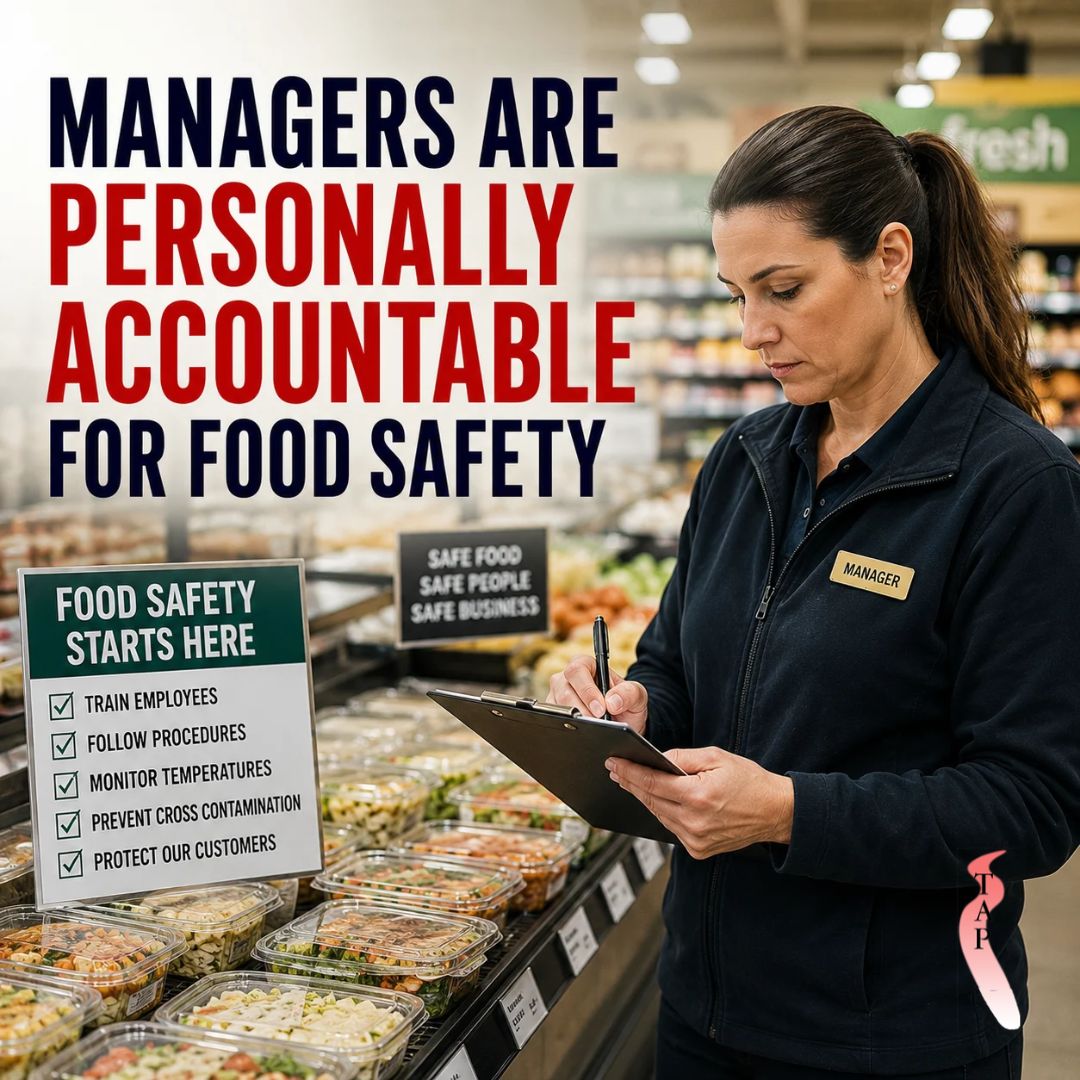
Food safety in grocery stores is not only the responsibility of front-line employees. Managers play a critical role in making sure food is stored, prepared, handled, and served safely.
When violations occur, management may face serious consequences if employees were not properly trained, procedures were not enforced, or known hazards were ignored. Strong food safety management helps grocery businesses protect customers while reducing preventable compliance problems.
Why Managers Matter in Food Safety
Grocery stores have multiple departments with different food safety risks, including deli, bakery, meat, seafood, and prepared foods.
Managers are responsible for ensuring employees understand and follow procedures involving:
- Temperature control
- Handwashing and personal hygiene
- Food storage
- Cross contamination prevention
- Cleaning and sanitation
- Allergen safety
- Food labeling
When the same mistakes happen repeatedly, managers should look beyond the individual employee and determine whether training, procedures, equipment, or supervision need improvement.
Temperature Control Requires Active Oversight
Managers should make sure employees understand how to properly monitor refrigerated, frozen, and hot foods.
They should also review temperature records and respond when problems are identified. A temperature log is only effective when employees record accurate information and management takes corrective action when necessary.
Allergen Safety Is a Management Responsibility
Grocery stores may prepare deli foods, bakery items, sandwiches, salads, and other products containing major food allergens. Managers need clear procedures to prevent allergen cross contact and ensure employees have accurate ingredient information.
Employees should understand:
- How to identify allergenic ingredients
- How to prevent cross contact
- How to handle customer allergy questions
- When to ask a manager for assistance
- How to follow labeling procedures
Allergen Plan Development | TAP Series® can help organizations strengthen their approach to allergen safety and create more consistent procedures.
Training Helps Managers Prevent Problems
Managers often make decisions when food safety issues arise. They need to know when food should be discarded, when employees need additional training, and how to correct unsafe practices.
Food Safety Manager Training | TAP Series® helps managers build knowledge of essential food safety principles and their responsibilities in maintaining safer food operations.
Managers Should Find Problems Before Inspectors Do
Regular internal checks can help identify food safety concerns before they become violations.
Managers can routinely review:
- Food temperatures
- Employee hygiene
- Food storage
- Equipment cleanliness
- Allergen controls
- Product labeling
- Cleaning procedures
When a problem is found, managers should correct it promptly, determine why it happened, and provide additional training when necessary.
Building a Culture of Accountability
Food safety starts with leadership. Employees need clear expectations, proper training, and consistent supervision to maintain safe practices.
By investing in Food Safety Manager Training | TAP Series® and Allergen Plan Development | TAP Series®, grocery businesses can strengthen management oversight, reduce preventable violations, and better protect customers.
Effective grocery store food safety management is not just about passing inspections. It is about making food safety part of everyday operations.