Employer Liability For Forklift Accidents
Warehouse Safety in Retail: Forklift Accidents and Employer Liability
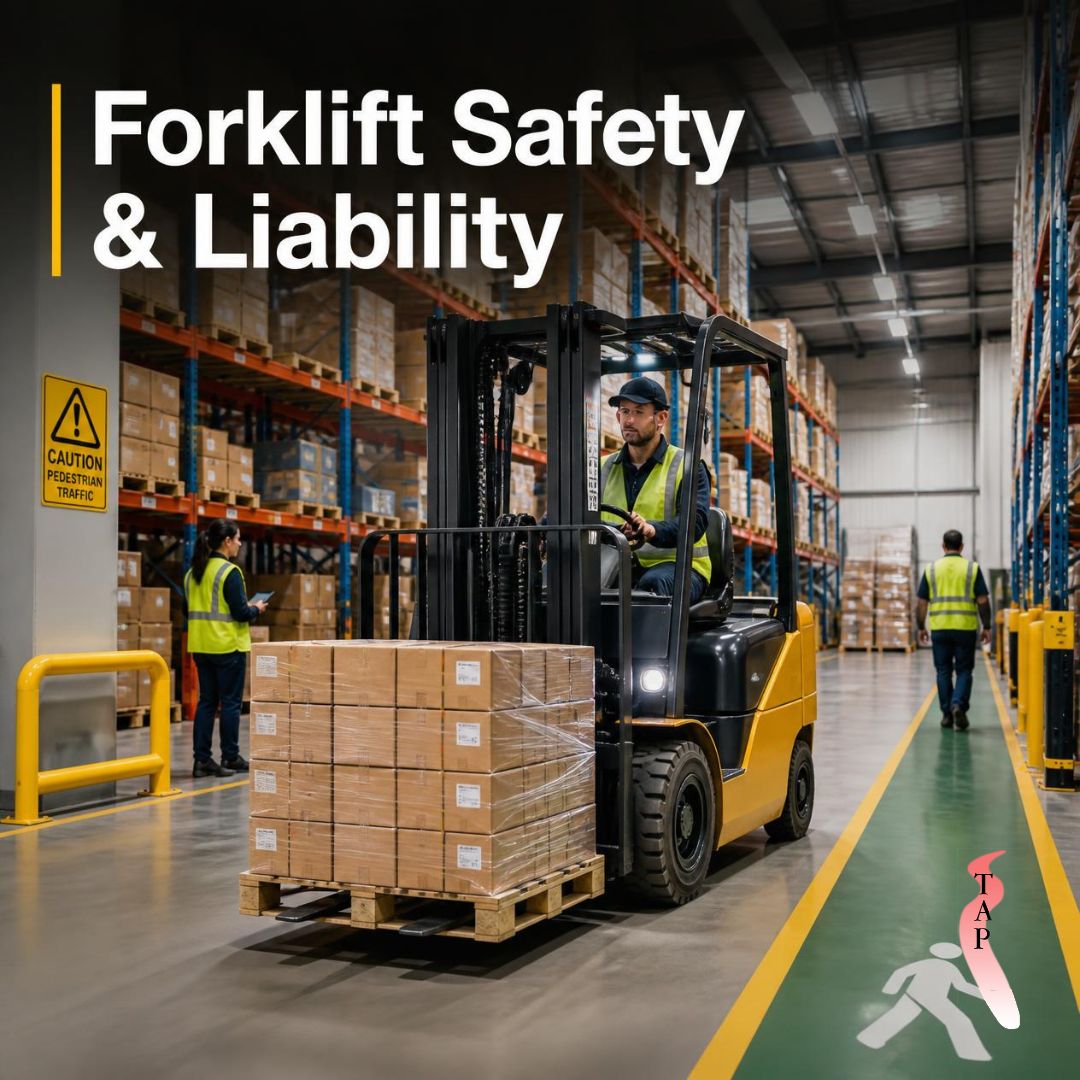
Forklift Safety Is a Management Responsibility
Retail warehouses are constantly moving. Employees receive deliveries, stock inventory, prepare orders, and move products through aisles and loading areas. Forklifts make these operations more efficient, but they can also create serious risks when they are not operated safely.
Forklift accidents can result in severe injuries, damaged inventory, disrupted operations, and significant liability for employers. OSHA identifies powered industrial trucks as a major warehouse hazard and notes that retail workplaces can face additional challenges when forklifts operate around pedestrians.
For retail companies, warehouse safety should not be treated as simply an operator's responsibility. Employers have an important role in making sure operators are properly trained, workplace hazards are addressed, and safe operating procedures are consistently enforced.
How Forklift Accidents Can Happen in Retail Warehouses
Retail warehouses often combine forklift traffic with employees who are stocking shelves, picking orders, receiving merchandise, and walking through work areas. This creates opportunities for accidents when traffic patterns, visibility, or operating practices are not properly controlled.
Common forklift hazards include:
- Pedestrian collisions: Employees may be struck when walking through forklift operating areas.
- Falling loads: Unstable or improperly handled loads can fall from elevated forks.
- Tip-overs: Improper operation, uneven surfaces, excessive loads, or unsafe turns can contribute to overturns.
- Loading dock accidents: Forklifts can fall from docks or become trapped between docks and trailers.
- Blind corners: Operators may have limited visibility when turning through warehouse aisles.
- Unsafe speeds: Moving too quickly can make it difficult to stop or react to pedestrians and obstacles.
- Untrained operation: Employees who have not completed the required training may not understand how to safely operate the equipment.
OSHA specifically requires employers to ensure that powered industrial truck operators are competent and have successfully completed the required training and evaluation before operating a truck in the workplace.
Why Forklift Accidents Can Create Employer Liability
When a forklift accident occurs, the focus may quickly shift from what the operator did to what the employer did to prevent the incident.
If a company allows an untrained employee to operate a forklift, fails to address known hazards, or does not enforce established safety procedures, the organization may face regulatory and financial consequences.
Employers are responsible for implementing an appropriate training program and ensuring that operators are properly trained and evaluated. OSHA also requires employers to certify each operator's training and evaluation.
Liability risks can become more complicated when temporary workers, contractors, delivery personnel, or other outside workers operate forklifts on company property. OSHA guidance emphasizes that employers have responsibilities for workplace safety and must take steps to ensure that individuals operating powered industrial trucks at their facilities are appropriately trained.
Training Can Help Reduce Preventable Forklift Risks
A strong forklift safety program should go beyond simply telling employees to "be careful." Operators need training that addresses the equipment they will use and the specific conditions they will encounter in the workplace.
OSHA's powered industrial truck requirements call for a combination of formal instruction, practical training, and workplace evaluation. Operators must also receive refresher training when certain circumstances occur, including unsafe operation, an accident or near miss, assignment to a different type of truck, or changes in workplace conditions that could affect safe operation.
Retail employers can strengthen their programs by focusing on:
- Operator training
Ensure employees complete appropriate forklift operator training before they are permitted to operate equipment. - Workplace evaluation
Evaluate whether operators can safely use the equipment under actual workplace conditions. - Pedestrian awareness
Establish clear expectations for interaction between forklifts and employees working or walking nearby. - Equipment inspections
Require forklifts to be examined before use and remove unsafe equipment from service when necessary. - Consistent enforcement
Make sure safety procedures are followed every day, not only after an accident occurs.
OSHA recommends inspecting forklifts before operation, maintaining safe distances from loading docks, using seat belts when available, staying within rated load capacities, and following safe load-handling procedures.
Preventing Accidents Before They Become Liability Issues
Forklift safety should be part of the company's overall risk management strategy. A written policy is important, but policies are only effective when employees understand them and supervisors consistently enforce them.
Retail managers can help reduce risk by regularly reviewing forklift traffic patterns, identifying blind spots, separating pedestrian and vehicle routes where practical, and addressing unsafe behaviors when they are observed.
Near misses should also receive attention. An incident that does not result in an injury can still reveal a serious hazard that could cause a much more severe accident later.
A proactive approach gives employers an opportunity to correct problems before they lead to injuries, property damage, regulatory action, or costly disruptions.
Build a Stronger Forklift Safety Program
Proper training is one of the foundations of a responsible warehouse safety program. TAP Series® provides Forklift Operator Safety | TAP Series® training to help organizations reinforce safe powered industrial truck practices and support their workplace safety efforts.
For retail companies that use forklifts for receiving, stocking, storage, and material handling, investing in appropriate operator training can help create safer working conditions while supporting compliance responsibilities.
A Safer Warehouse Starts With Prevention
Forklift accidents can affect far more than the employee operating the equipment. A single incident can impact coworkers, customers, inventory, operations, and the company's financial and legal exposure.
Retail employers should take a proactive approach by providing appropriate training, evaluating operator performance, maintaining equipment, controlling pedestrian traffic, and consistently enforcing safety procedures.
Forklift Operator Safety | TAP Series® is an important part of building a workplace where employees can move products efficiently without unnecessarily increasing the risk of injury or liability.