Retail De-Escalation Awareness
Customer Conflict Is a Workplace Safety Issue
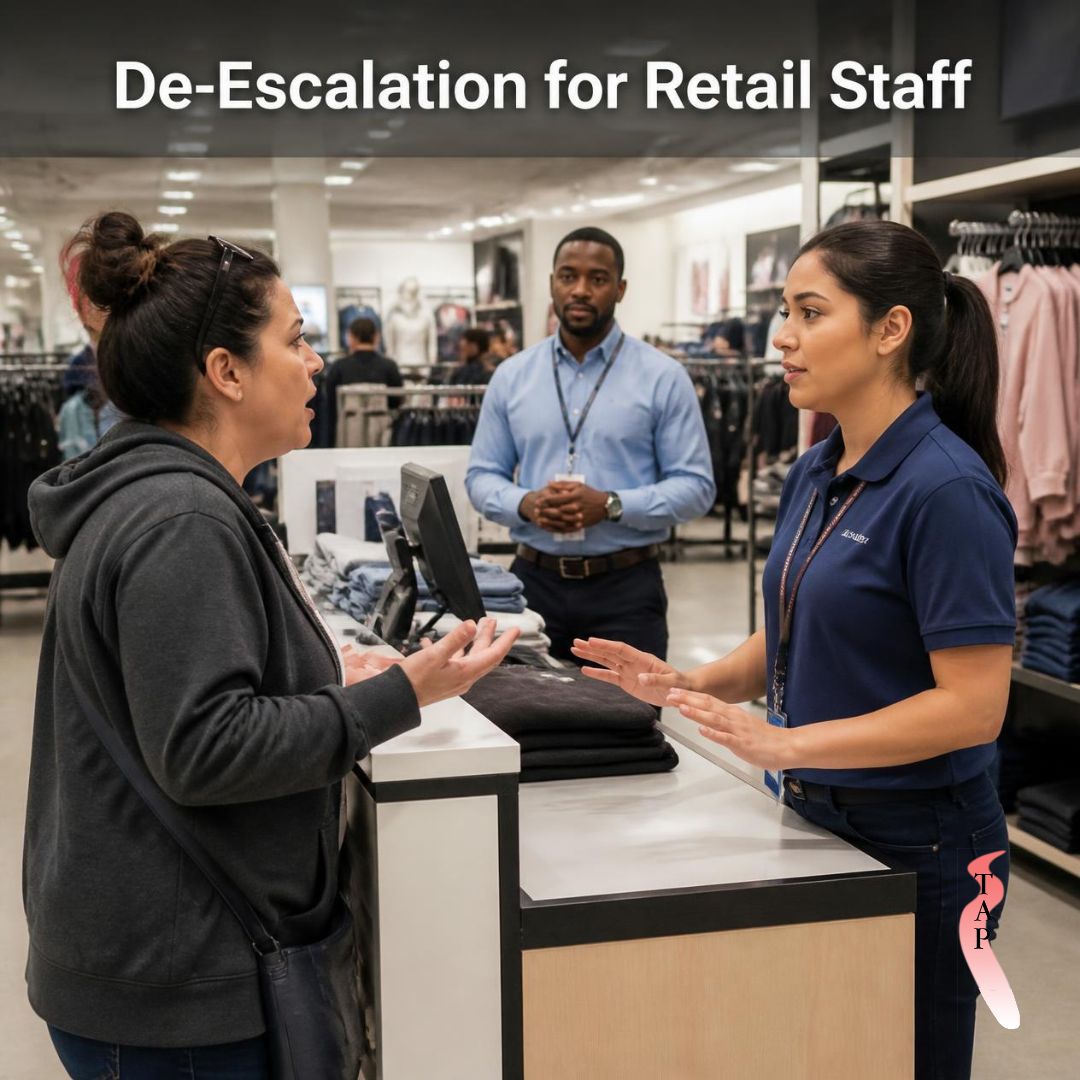
Retail employees interact with customers throughout every shift. Most interactions are routine, but difficult situations can escalate quickly when a customer becomes angry, frustrated, or confrontational.
A disagreement over a refund, product availability, pricing, store policies, or service can become more than a customer service problem. Customer conflict can create a workplace safety concern when emotions escalate into threats, aggressive behavior, or physical confrontation.
Retail companies need to prepare employees to recognize escalating situations and respond appropriately. De-escalation training can give staff practical strategies for managing tense interactions while knowing when to step away and seek additional support.
Why Retail Employees Need De-Escalation Skills
Customer-facing employees are often the first people to encounter an upset customer. They may be expected to resolve complaints while simultaneously protecting themselves, their coworkers, and other customers.
Without appropriate training, employees may unintentionally make a tense situation worse by arguing, responding emotionally, or continuing an interaction after it has become unsafe.
Effective de-escalation starts with understanding that the goal is not to win an argument. The goal is to reduce tension and maintain safety.
Retail employees should be prepared to:
- Recognize early signs of escalating behavior
- Maintain appropriate personal space
- Use calm and professional communication
- Avoid unnecessary confrontation
- Listen without escalating the disagreement
- Set reasonable boundaries
- Know when to involve a supervisor or security personnel
- Leave the situation when personal safety becomes a concern
Recognizing When a Customer Interaction Is Escalating
Not every frustrated customer presents a safety risk. However, employees should be able to recognize changes in behavior that may indicate an interaction is becoming more serious.
Potential warning signs can include:
- Increasingly loud or aggressive speech
- Repeated threats or intimidating statements
- Hostile gestures or body language
- Refusal to respect personal space
- Excessive pacing or agitation
- Attempts to intimidate employees
- Aggressive movements toward staff or others
- Continued escalation despite reasonable attempts to resolve the concern
Recognizing these warning signs early gives employees an opportunity to respond before the situation becomes more difficult to manage.
De-Escalation Starts With Staying Calm
When someone is angry, responding with anger can intensify the situation. Retail employees should be encouraged to maintain a calm, professional demeanor whenever it is reasonably safe to continue the conversation.
Simple communication techniques can help reduce tension:
Listen carefully
Allow the customer to explain the concern without immediately interrupting or arguing.
Use a calm tone
Speaking clearly and calmly can help prevent the interaction from becoming more emotionally charged.
Acknowledge the concern
Employees can recognize that a customer is frustrated without agreeing with inappropriate demands or behavior.
Explain available options
If there is a reasonable solution, explain what the employee can and cannot do within company policy.
Know when to disengage
If the customer becomes threatening or the employee feels unsafe, continuing the conversation may not be appropriate.
Employees Should Not Be Expected to Handle Every Situation Alone
De-escalation does not mean employees are responsible for resolving every difficult customer interaction.
Retail companies should establish clear procedures for situations involving threats, harassment, violence, or other unsafe behavior. Employees should know who to contact and what steps to take when they need assistance.
A strong workplace approach should make it clear that employee safety comes before completing a customer transaction.
Depending on the workplace and situation, employees may need to:
- Contact a supervisor or manager
- Request assistance from designated security personnel
- Move to a safer location
- Create distance between themselves and the customer
- Follow established emergency procedures
- Contact emergency services when there is an immediate threat
What Employees Should Avoid During a Conflict
Even when employees want to help, certain responses can unintentionally increase tension.
Employees should avoid:
- Arguing with an angry customer
- Insulting or challenging the customer
- Matching aggressive behavior with aggressive behavior
- Making threats or unnecessary ultimatums
- Physically touching or attempting to restrain a customer
- Blocking a customer's path unnecessarily
- Continuing an interaction after it becomes unsafe
- Making promises they cannot keep
Employees should understand their authority and limitations. Knowing when to stop trying to resolve a conflict can be just as important as knowing how to begin a conversation.
Retail Managers Have a Role in Staff Safety
De-escalation should not be treated as an individual employee's responsibility. Managers can support retail staff by establishing clear expectations and ensuring employees know how to respond to difficult situations.
Retail leaders should consider:
- Developing procedures for customer aggression and threats
- Training employees on appropriate de-escalation techniques
- Establishing clear escalation procedures
- Ensuring supervisors are available to support frontline employees
- Reviewing incidents and identifying opportunities for improvement
- Encouraging employees to report concerning behavior
- Making workplace safety part of the customer service conversation
A consistent approach helps employees understand that they have support when a routine customer interaction turns into a safety concern.
Training Can Prepare Employees for Difficult Interactions
Employees cannot always predict how a customer will respond to a situation. However, training can help them recognize warning signs and understand appropriate responses.
TAP Series® offers Retail De-Escalation Awareness | TAP Series® to help retail organizations build awareness around customer conflict and de-escalation.
Training can help employees better understand how to respond to challenging interactions while keeping personal safety at the forefront.
De-Escalation Is About Safety, Not Winning
Customer service is an important part of retail, but employees should never feel that they have to tolerate threatening or aggressive behavior simply to complete a transaction.
De-escalation gives retail staff a safer way to approach difficult interactions. By recognizing warning signs, communicating calmly, maintaining appropriate boundaries, and knowing when to seek help, employees can be better prepared when customer frustration escalates.
For retail companies, providing employees with retail de-escalation training is one way to strengthen workplace safety while giving frontline staff greater confidence in handling challenging customer interactions.