EEOC Conciliation
Everport Terminal Services Pays $200,000 in Disability Discrimination Settlement
Background
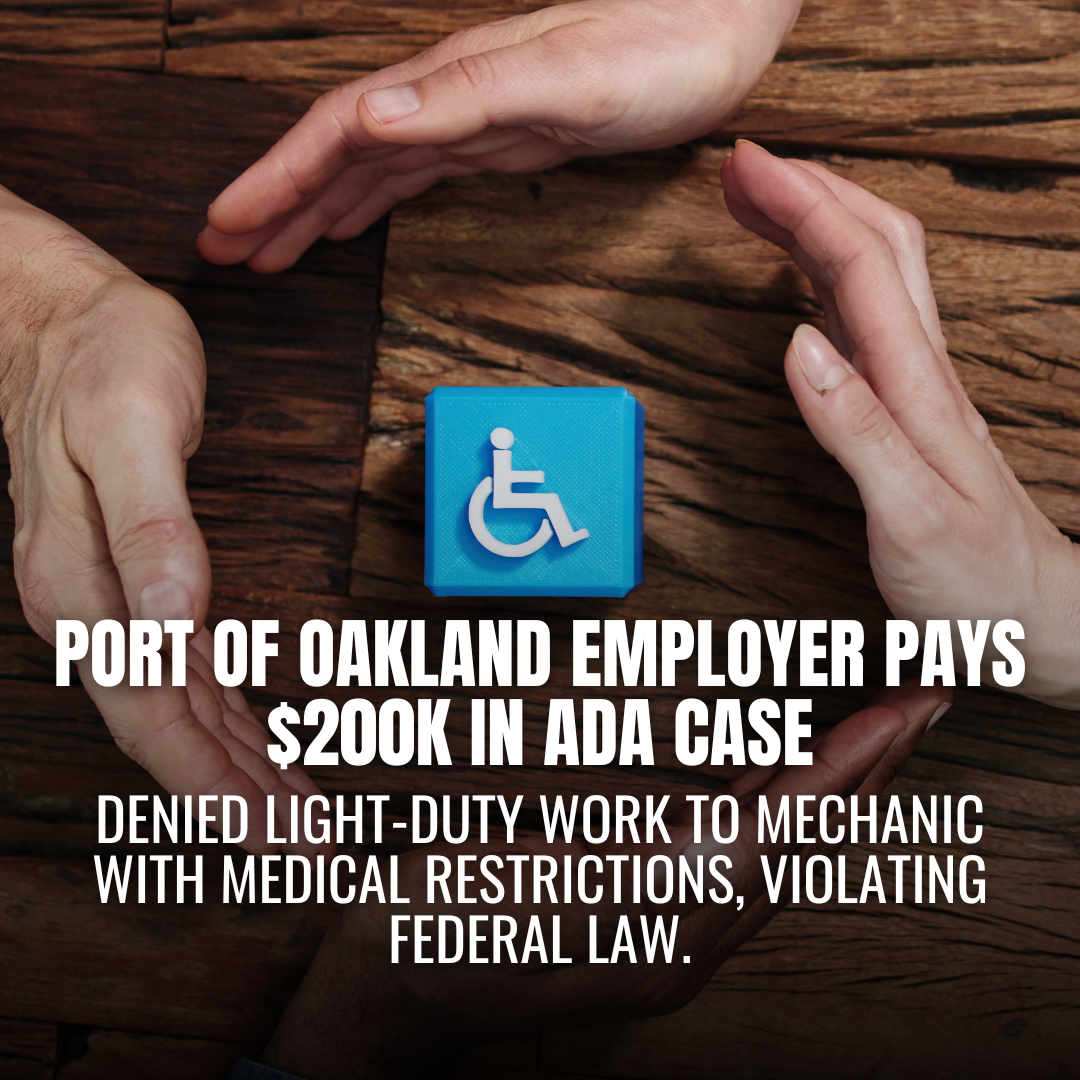
Everport Terminal Services (ETS), which operates a cargo terminal at the Port of Oakland, faced a federal investigation by the U.S. Equal Employment Opportunity Commission (EEOC) after a complaint from a former employee. The investigation centered on allegations that ETS failed to provide a reasonable accommodation to a mechanic with a documented disability.
Incident Details
The employee, classified as a steady longshoreman mechanic, had received medical restrictions and was approved for light-duty work. He appeared in person to accept a modified work assignment but was sent home by a supervisor, who claimed there was no suitable work available. ETS allegedly made no further effort to engage with the employee or explore accommodations that would allow him to perform the essential functions of his job within his medical restrictions.
Legal Background
Under the Americans with Disabilities Act (ADA), employers are required to provide reasonable accommodations to qualified individuals with disabilities, as long as doing so does not impose an undue hardship. The law also requires employers to engage in an interactive process—a collaborative discussion to identify and implement appropriate accommodations.
Settlement and Relief
Following a pre-litigation conciliation process with the EEOC, ETS agreed to pay $200,000 in back pay and compensatory damages to the former employee. The settlement also mandates that ETS:
- Revise its non-discrimination and accommodation policies.
- Provide training for all California-based employees, managers, and HR staff.
- Post workplace notices in English and Spanish regarding employee rights.
- Track and document all accommodation requests.
- Submit reports to the EEOC for a period of two years.
Key Takeaways
- Employers must engage in a meaningful interactive process when employees request accommodations.
- Simply denying modified duty without exploring options can result in ADA violations.
- Settlements may include both monetary damages and long-term compliance obligations.
Conclusion
The ETS case highlights the legal and operational risks of failing to accommodate disabled employees. Employers must ensure that managers and HR personnel are adequately trained to handle accommodation requests in compliance with ADA requirements. Failure to do so not only undermines employee rights but can also result in significant financial and reputational consequences.